
Physical preparation for ayahuasca is not about becoming perfect, pure, or spiritually impressive before ceremony.
It is about arriving steady enough to participate responsibly.
That means your body is rested. Your digestion is not overloaded. Your medication and supplement situation has been reviewed. You are not coming in sick, withdrawing, sleep-deprived, or hiding something important from the retreat team.
At Camino al Sol, we work with traditional Colombian yagé in the mountains of Antioquia, near Medellín. Yagé is the Colombian name for what many international visitors know as ayahuasca. The setting is traditional, but preparation needs to be practical and honest.
This page is educational and does not replace medical advice. Do not stop or change medication without speaking with a qualified medical professional.
If you are in crisis, experiencing suicidal thoughts, psychosis, chest pain, severe withdrawal, or another urgent medical issue, seek emergency care immediately.
Screening comes before preparation
Before thinking about diet, exercise, fasting, or what to pack, the first step is screening.
Physical preparation cannot make ayahuasca appropriate for everyone. Some people need more time. Some need medical review. Some should not participate at all, or should wait until their health situation is clearer.
Screening matters especially if you:
- Take antidepressants, psychiatric medication, stimulants, sleep medication, pain medication, blood pressure medication, or recreational substances
- Have a history of psychosis, mania, bipolar disorder, seizures, serious panic episodes, or hospitalization for mental health reasons
- Have heart disease, uncontrolled blood pressure, fainting episodes, or unexplained chest pain
- Are pregnant, breastfeeding, or trying to become pregnant
- Are recovering from surgery, infection, withdrawal, burnout, or a serious physical illness
- Feel pressured by someone else to attend
Ayahuasca contains compounds that affect serotonin and monoamine oxidase activity. This is one reason medication and substance interactions need careful review. The safe approach is not to guess, hide, or self-manage. The safe approach is to disclose everything during screening.
If you are considering a retreat with us, start with the application and screening form. You can also read our ayahuasca safety standards before applying.
What physical preparation really means
A good preparation plan should reduce avoidable stress on the body.
It does not guarantee a comfortable ceremony. It does not guarantee visions, healing, purging, release, or transformation. It simply gives your body a clearer baseline before entering a demanding ceremonial process.
Physical preparation usually includes:
- Eating lighter, simpler food before retreat
- Avoiding alcohol and recreational drugs
- Reviewing all medications and supplements honestly
- Sleeping enough before travel
- Staying hydrated without overdoing it
- Reducing extreme exercise
- Avoiding last-minute fasting experiments
- Giving your body time to recover from flights, stress, and altitude changes
- Coming with realistic expectations about nausea, vomiting, fatigue, and emotional intensity
In other words, you are not trying to force a “stronger” ceremony. You are trying to arrive stable.
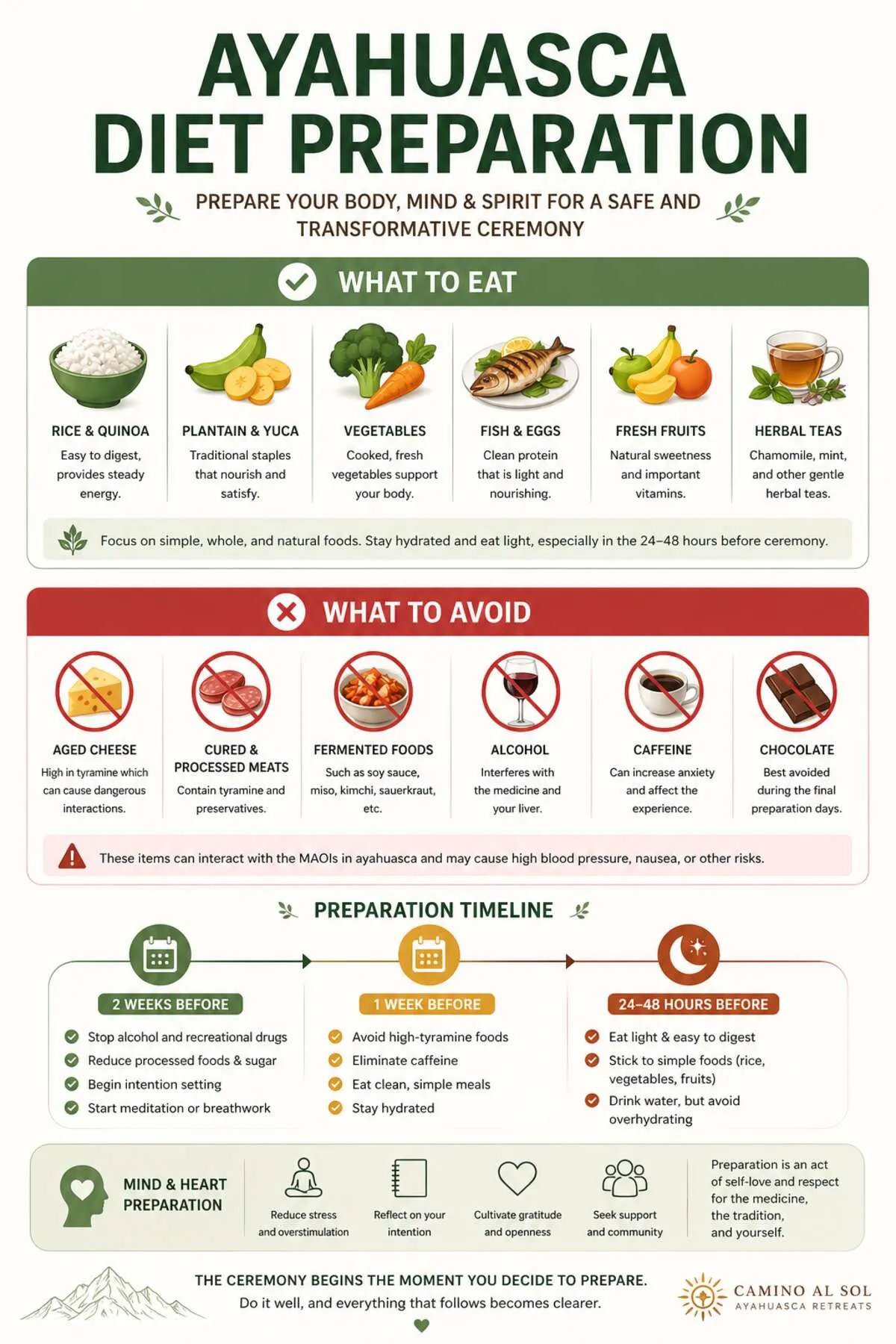
A simple physical preparation timeline
Different traditions give different preparation rules. Some are cultural. Some are symbolic. Some are practical. Some may reduce discomfort. Some relate to safety.
The timeline below is a grounded starting point. Your personal instructions may be stricter depending on your health history, medications, or the specific retreat.
| Time before retreat | Main focus | What to do |
|---|---|---|
| 2 weeks before | Honesty and stability | Complete screening, disclose medications, reduce alcohol and recreational substances, stabilize sleep |
| 7 days before | Lighter rhythm | Eat simpler meals, reduce heavy fried foods, reduce overstimulation, avoid extreme workouts |
| 48 hours before | Digestive calm | Avoid alcohol, recreational drugs, very heavy meals, intense exercise, and sleep deprivation |
| Day of ceremony | Low stress | Follow retreat instructions, eat only what is offered or approved, hydrate normally, rest |
Two weeks before retreat: get honest first
Two weeks before retreat is not mainly about food. It is about truth.
This is when you should disclose:
- Prescription medications
- Over-the-counter medications
- Supplements and herbs
- Recreational substances
- Recent substance use
- Sleep medication
- Psychiatric history
- Heart, blood pressure, neurological, digestive, or endocrine conditions
- Recent infections or surgery
- Pregnancy or breastfeeding
- Any recent crisis, panic, mania, psychosis, or suicidal thoughts
Do not decide alone that something is “probably fine.” Do not stop medication because a retreat blog says you should. Do not reduce psychiatric medication quickly to qualify for ceremony. That can be dangerous.
If a medication needs to be changed, paused, tapered, or reviewed, that decision belongs with a qualified medical professional who understands your case. A responsible retreat should not pressure you to make unsafe changes just to attend.
At Camino al Sol, acceptance comes after screening. Preparation supports that process, but it does not replace it.
Seven days before retreat: simplify food and rhythm
During the final week, aim for food that is simple, fresh, and easy to digest.
Good options usually include:
- Rice, potatoes, yuca, plantain, oats, quinoa, or other simple carbohydrates
- Vegetables cooked with minimal oil
- Fresh fruit
- Beans or lentils if they digest well for you
- Simple soups
- Lightly seasoned meals
- Plenty of water
- Herbal teas that have been approved by the retreat team
Keep meals boring if needed. This is not the week for food experiments.
Try to reduce:
- Fried food
- Heavy dairy
- Processed meats
- Very spicy food
- Excess salt
- Excess sugar
- Large late-night meals
- Energy drinks
- Too much coffee
- Ultra-processed snacks
This does not mean one imperfect meal ruins your retreat. The point is to reduce digestive load and arrive with a calmer body.
What should you avoid before ayahuasca?
The safest answer is: follow the instructions from the retreat team after your screening.
In general, avoid alcohol and recreational drugs before ceremony. These are not just “diet” concerns. They can affect sleep, blood pressure, anxiety, judgment, dehydration, emotional regulation, and medication interactions.
Common things to avoid or review include:
| Category | Why it matters |
|---|---|
| Alcohol | Can affect sleep, hydration, liver load, mood, and judgment |
| Recreational drugs | Can increase psychological and physical risk |
| Antidepressants and psychiatric medication | Some combinations may be unsafe and require medical review |
| Stimulants | May affect blood pressure, anxiety, and cardiovascular load |
| Opioids, cough medicines, sleep medicines, and sedatives | May interact with the process or affect safety monitoring |
| Herbal supplements | Some affect serotonin, blood pressure, bleeding risk, or sedation |
| Very heavy meals | Can increase nausea and digestive discomfort |
| Extreme fasting | Can increase weakness, dizziness, irritability, or instability |
Do not assume that “natural” supplements are safe. St. John's wort, ginseng, 5-HTP, kanna, kratom, and other herbs or compounds can matter. List everything during screening.
Should you fast before ayahuasca?
Do not create your own fasting protocol.
Some traditions use fasting or very light eating before ceremony. But fasting is not automatically better. For some people, aggressive fasting can cause weakness, dizziness, headaches, irritability, low blood sugar, or emotional volatility.
A more grounded approach is:
- Eat simply in the days before retreat
- Avoid very heavy meals before ceremony
- Follow the retreat's meal schedule
- Do not arrive dehydrated
- Do not do a hard cleanse, juice fast, parasite cleanse, or detox protocol unless your medical professional and retreat team have reviewed it
At Camino al Sol, food guidance is part of the wider preparation process. The goal is not punishment. The goal is steadiness.
Sleep may matter more than the perfect diet
Many people obsess over food and ignore sleep.
That is backwards.
Arriving sleep-deprived can make the retreat harder. Poor sleep can increase anxiety, emotional reactivity, headaches, nausea, and difficulty regulating yourself during ceremony.
In the week before retreat:
- Keep a regular sleep schedule where possible
- Avoid all-night travel immediately before ceremony if you can
- Reduce late caffeine
- Avoid intense screen use late at night
- Do not pack your final work deadlines into the night before flying
- Give yourself time to land, shower, eat, and breathe before retreat begins
If you are traveling internationally to Medellín, consider arriving at least one day early if your schedule allows. Your body may need time after flights, airport stress, and changes in food or climate.
Hydration: steady, not excessive
Hydration matters, but more is not always better.
Do not arrive dehydrated. Also do not force large amounts of water right before ceremony. Overhydration can make nausea worse and may be unsafe in extreme cases.
A practical approach:
- Drink water regularly in the days before retreat
- Add electrolytes if you are sweating heavily or recovering from travel, if appropriate for you
- Reduce alcohol and excess caffeine
- Pay attention to urine color, thirst, headaches, and dizziness
- Follow the team's instructions on ceremony day
If you have kidney disease, heart disease, blood pressure issues, or take diuretics or other relevant medication, hydration advice should be individualized.
Exercise before retreat
Exercise is useful when it helps you regulate stress. It becomes a problem when it exhausts you.
In the week before retreat, favor:
- Walking
- Gentle mobility
- Light stretching
- Easy yoga
- Calm swimming
- Breath awareness without force
- Moderate movement you already know well
Avoid:
- Personal records
- Extreme endurance events
- Heavy leg days right before travel
- Hot yoga or sauna dehydration
- New intense routines
- Training through injury
- Breathwork that makes you dizzy or dysregulated
You do not need to become fitter before ceremony. You need to avoid arriving depleted.
Sex, ejaculation, and physical restraint
Many traditions recommend sexual abstinence before and after ayahuasca. The reasons vary. Some are energetic, spiritual, relational, or cultural. Some people also find that abstinence helps them conserve attention and reduce distraction before ceremony.
From a practical perspective, the key is not to turn this into shame or superstition.
Use the days before retreat to reduce compulsive behavior, overstimulation, and emotional drama. If sexual abstinence is part of your retreat's preparation instructions, follow it respectfully. If you are in a relationship, communicate clearly rather than making it strange or secretive.
Travel preparation for Colombia
Camino al Sol is located in the mountains of Antioquia, accessible from Medellín and the airport area.
Travel itself can affect your body. Flights, delays, airport food, dehydration, poor sleep, and stress can all shape how you arrive.
Before traveling:
- Keep your arrival day as simple as possible
- Avoid arriving intoxicated, hungover, or severely sleep-deprived
- Bring any approved medications in original packaging
- Bring comfortable clothing for cool mountain evenings
- Bring layers, as mountain weather can shift
- Avoid scheduling intense tourism immediately before retreat
- Give yourself margin for traffic and transport
If you are coming from sea level, the Antioquia mountains may feel different at first. Most people adjust fine, but it is still worth arriving rested and hydrated.
What to bring for physical comfort
Your retreat team will give you a specific packing list, but physical comfort usually improves with a few simple items:
- Comfortable loose clothing
- Warm layers for night
- Rain jacket or light waterproof layer
- Comfortable shoes or sandals
- Personal toiletries without strong fragrances
- Reusable water bottle
- Journal and pen
- Any approved medication
- Basic travel documents
- Earplugs if you are sensitive to sound
- A small flashlight or headlamp if recommended
Avoid bringing strong perfumes, unnecessary supplements, recreational substances, or hidden medications.
When you should delay your retreat
Sometimes the best preparation is postponing.
Consider delaying if you:
- Are acutely sick with fever, infection, vomiting, diarrhea, or severe flu symptoms
- Recently had surgery or a serious medical event
- Are in withdrawal from alcohol, benzodiazepines, opioids, stimulants, or other substances
- Recently stopped psychiatric medication without medical supervision
- Are experiencing mania, psychosis, severe paranoia, or suicidal thoughts
- Have unstable blood pressure, chest pain, fainting, or unexplained neurological symptoms
- Are pregnant or breastfeeding
- Feel pressured to attend by a partner, friend, family member, influencer, or facilitator
- Are hiding important medical or psychological information from the retreat team
Waiting is not failure. It is sometimes the responsible decision.
The day before ceremony
The day before ceremony should be quiet and practical.
Do:
- Eat simple food
- Hydrate normally
- Sleep as well as possible
- Finish work and travel logistics early
- Reduce phone use
- Avoid conflict-heavy conversations if possible
- Follow the retreat's food and substance guidance
- Tell the team if anything has changed medically or emotionally
Do not:
- Drink alcohol
- Use recreational drugs
- Take unapproved supplements
- Do intense exercise
- Fast aggressively
- Hide symptoms
- Try to force a breakthrough through deprivation
Preparation is not a performance. It is a way of reducing unnecessary noise.
The day of ceremony
On ceremony day, follow the retreat's instructions.
Do not improvise with food, supplements, herbs, fasting, tobacco, cannabis, breathwork, or medication. If you feel unwell, say so early. If you are anxious, say so. If you forgot to disclose something, disclose it before ceremony.
The team can only make good decisions with accurate information.
This is especially important in a small traditional retreat setting. The ceremony is not only about what happens after drinking yagé. It includes the entire container: preparation, safety, music, guidance, rest, and integration.
After ceremony: physical recovery matters
Physical preparation does not end when ceremony ends.
After ceremony, your body may need rest. You may feel clear, tired, emotional, sensitive, hungry, quiet, or disoriented. Some people want to talk. Others need silence.
Support your body by:
- Resting
- Eating gently
- Rehydrating steadily
- Avoiding alcohol and recreational drugs
- Avoiding major life decisions immediately
- Taking time before returning to intense work
- Continuing integration practices
Integration is where the experience meets daily life. You can read more about our integration approach if you are preparing for the full retreat process, not just the ceremony itself.
Physical preparation checklist
Use this as a final review before retreat.
- I completed screening honestly
- I disclosed all medications, supplements, and substances
- I did not stop or change medication without medical guidance
- I avoided alcohol and recreational drugs according to retreat guidance
- I simplified my diet without extreme fasting
- I slept enough to arrive reasonably rested
- I avoided intense exercise before travel
- I am not acutely sick
- I am not in withdrawal
- I have my approved medication and travel documents
- I understand that ayahuasca is not a guaranteed cure or treatment
- I know who to contact if my health situation changes before arrival
If several of these are not true, pause and contact the retreat team before traveling.
Preparing with Camino al Sol
Camino al Sol offers traditional Colombian yagé retreats in the mountains of Antioquia, near Medellín. Our process includes small groups, preparation guidance, medical screening before acceptance, traditional ceremonies, medicine music, and integration support.
Physical preparation helps, but screening comes first.
If you are considering joining, start with Apply for Screening. If you are comparing dates and logistics, visit our ayahuasca retreat near Medellín page or check upcoming retreat dates.
You can also use our ceremony preparation app for practical preparation support, including recipe ideas.
