
A founder can take a holiday without ever really leaving the company.
The laptop closes, but decisions continue. Messages arrive. Problems are rehearsed in the background.
Sometimes the need is not simply for more rest. It is for enough distance to look at the life built around the work, and to ask whether the role has become larger than the person living it.
In this guide, an executive retreat means an individual retreat for a CEO, founder, entrepreneur, business owner, investor, or senior leader who wants to step away from professional responsibility for a defined period. It is not the same thing as taking a leadership team away to plan the next quarter.
What is an executive retreat?
An executive retreat can mean either a corporate offsite for a leadership team or a personal retreat for someone carrying substantial responsibility. This article focuses on the second kind: time away from ordinary demands to rest, reflect, examine priorities, or enter a structured contemplative or traditional practice.
The search term often leads to strategy workshops, team building, and executive coaching. Those can be useful, but they still keep the professional role at the center.
A personal retreat asks a different question:
What happens when the role is temporarily set down?
That does not make one format superior to another. It simply means you should choose according to what you are actually trying to step away from and what you hope to examine.
Why can it be difficult for founders and executives to genuinely step away?
Founders and executives often remain psychologically available even when they are physically away. Responsibility for employees, investors, customers, family, and unfinished decisions can make disconnection feel irresponsible, while constant digital access makes it easy to keep working without admitting that the break has ended.
If important decisions usually stop with you, stepping away can expose weak delegation, unclear ownership, or a fear that momentum will disappear.
Some leaders feel guilty when they are not producing. Wellness can become work wearing softer clothes.
None of this proves clinical burnout. The World Health Organization describes burnout as an occupational phenomenon, not a medical condition, and it should not become a casual diagnosis for every period of fatigue or doubt.
If distress is severe, persistent, or affecting your safety or ability to function, a retreat is not a substitute for qualified medical or mental-health care.
When does professional success become part of identity?
Work becomes part of identity when “I run a company” quietly turns into “I am the company,” or when CEO, founder, provider, and problem-solver become the main ways a person understands their worth.
This is not universal, and identifying strongly with your work is not inherently unhealthy. Building something can provide meaning, direction, community, and a sense of responsibility.
But founder research has also examined how closely entrepreneurs can identify with the organizations they create. A company may become more than somewhere a founder works; it can become part of how that person understands themselves.
That makes temporary distance interesting.
Achievement offers clear measures. Revenue, users, deals, promotions, fundraising rounds, and milestones answer “Am I progressing?” with numbers. Life outside work rarely behaves so neatly.
External validation can reinforce the pattern. Friends ask about the business. New introductions begin with the title. Eventually, the next milestone can become the default answer to a dissatisfaction it was never designed to solve.
Consider the difference between these statements:
-
I lead a company.
-
I am a CEO.
-
People depend on my decisions.
-
I only feel useful when I am solving something.
The first three may be simple facts. The fourth raises a different question.
A retreat cannot answer it for you. Removing familiar social cues may simply make the question harder to avoid.
Can a founder realistically disconnect for six days?
For some executives, this is the practical question underneath everything else.
If you cannot leave without checking messages every few hours, the issue may not be solved by choosing a more remote destination. It may require preparation inside the company before you leave.
That can mean:
-
Appointing someone who can make operational decisions in your absence
-
Defining what genuinely constitutes an emergency
-
Giving that person actual authority rather than asking them to wait for your approval
-
Informing relevant partners, board members, employees, or clients that you will be unavailable
-
Resolving predictable deadlines before departure
-
Avoiding important launches, transactions, investor meetings, or board meetings immediately after returning
-
Creating a clear emergency contact path rather than monitoring normal communication
If the company cannot operate for several days without your routine involvement, the retreat may expose an operational question before it exposes a philosophical one.
The objective does not have to be perfect digital abstinence. The important point is to decide beforehand what stepping away actually means rather than renegotiating it every time the phone vibrates.
What can stepping away actually provide?
Stepping away can provide conditions that ordinary life rarely protects: fewer incoming demands, less digital stimulation, time in an unfamiliar environment, structured reflection, and conversations that do not depend on your professional status.
These conditions may support perspective, but they do not guarantee a conclusion or a particular change.
The retreat does not necessarily provide the answer.
It may provide enough distance to ask better questions.
The value is measured less by intensity than by what remains relevant once normal life returns.
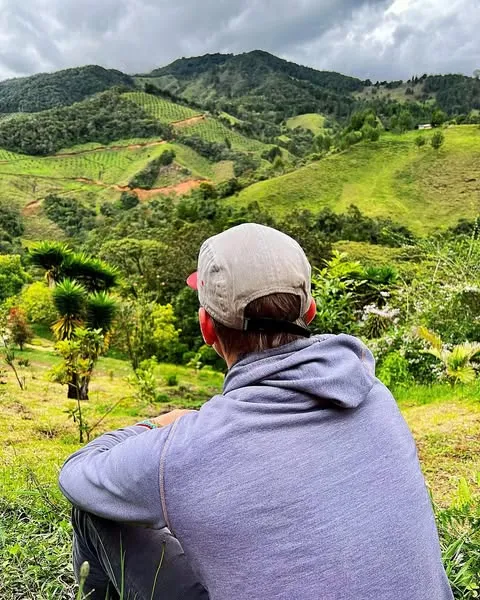
The mountain landscape can create space for reflection without promising a particular outcome.
What kinds of executive retreats exist?
There is no single executive-retreat format. Several very different experiences are marketed under the same broad term.
Corporate offsite
For: Strategy, planning, alignment, and team cohesion.
Usually includes: Workshops, facilitated discussions, team activities, and decisions that require the leadership group to be together.
Consider it when: The company problem is the thing you need to work on.
Look closely at: The agenda, facilitation, inclusion, business outcomes, and follow-through after everyone returns.
Executive wellness retreat
For: Rest, physical recovery, and a period with fewer demands.
Usually includes: Sleep support, movement, nutrition, coaching, treatments, or quiet time in a nature or wellness setting.
Consider it when: You primarily need recovery rather than a ceremonial or spiritual container.
Look closely at: Staff credentials, medical language, privacy, program intensity, and whether “optimization” is still the central goal.
Silent or contemplative retreat
For: Meditation, solitude, reflection, and reduced stimulation.
Usually includes: Silence, walking, meditation, teachings, journaling, and simple daily routines.
Consider it when: You want sustained attention without a business agenda.
Look closely at: The tradition, teacher experience, silence requirements, psychological fit, and available support.
Traditional plant-medicine retreat
For: Ceremonial practice, introspection, community, and integration.
Usually includes: Preparation, ceremony, traditional music, circles of word, rest, and integration within a small group.
Consider it when: You are specifically drawn to the tradition and pass the screening process.
Look closely at: Practitioner experience, medical and psychiatric screening, medication interactions, group size, ceremony support, emergency planning, and integration.
If your real aim is to resolve a strategy problem, a contemplative or plant-medicine retreat may be the wrong tool.
If your aim is to discover what remains when the strategy problem is temporarily removed, an offsite built around business outputs may not create enough distance.
Can you approach a retreat like another performance goal?
Executive life rewards preparation, measurement, and control.
Those habits are useful in business. They can create unrealistic expectations around a retreat.
It is easy to arrive with an implicit project plan:
I have six days, three ceremonies, and a problem I want resolved.
A traditional ceremony does not operate according to a corporate timetable. Camino al Sol does not promise that yagé will tell someone whether to sell a company, change careers, repair a relationship, become a better leader, or make a particular decision.
Preparation matters.
Expectations require more caution.
The experience may be profound, subtle, difficult, peaceful, confusing, physically demanding, or very different from what someone anticipated.
Trying to optimize for a particular outcome can simply turn another part of life into a performance test.
Why are some entrepreneurs exploring psychedelic and plant-medicine retreats?
Psychedelics have become increasingly visible in technology, entrepreneurship, wellness, spirituality, and mental-health research. High-profile entrepreneurs have publicly discussed psychedelic experiences, and retreats and programs now exist specifically for founders and executives.
That visibility can create its own mythology: that psychedelics reliably produce creativity, better leadership, clearer strategy, or unusually important insight.
Personal accounts cannot establish those outcomes.
Clinical studies, traditional ceremonies, and commercial retreat programs are also different contexts and should not be treated as interchangeable.
Clinical psychedelic research uses defined protocols, eligibility criteria, documented doses, and research oversight. A registered study means a question is being investigated, not that a substance is proven effective or appropriate for a particular person.
For example, ClinicalTrials.gov lists controlled research involving mindfulness and psychedelics, but that setting is not a traditional Colombian yagé ceremony.
Traditional practice has its own history, language, relationships, and responsibilities.
Camino al Sol does not treat yagé as an executive-performance technology. There is no responsible basis for promising better leadership, increased creativity, clearer strategy, relief from burnout, or improved business performance after an ayahuasca retreat.
What is different about a traditional Colombian yagé retreat?
Yagé is the term commonly used in Colombia for the preparation known internationally as ayahuasca.
A traditional Colombian retreat centers ceremony, experienced traditional practitioners, music, preparation, community, and integration. At Camino al Sol, the ceremonial lineage comes from Putumayo, while the retreat itself takes place in El Retiro, Antioquia, near Medellín.
Camino al Sol is not located in Putumayo.
The retreats take place at Yaogará Natural Reserve near El Retiro, around 45 to 60 minutes from Medellín.
The ceremonies are guided within the Colombian yagé tradition by Taita Diego Marmolejo and other experienced ceremonial leaders. The retreat also includes bilingual facilitation, live medicine music, circles of word, time in nature, and support before and after ceremony.
Taita Diego puts one of the central selection questions plainly:
“The important thing is where you are going to drink, and who you are going to drink with.”
That question is more useful than searching for the most dramatic promise.
It directs attention to the people, the lineage, the screening, the setting, and the quality of care.
There is no separate ceremony for CEOs
Camino al Sol does not conduct a different ceremony because someone runs a company, manages hundreds of employees, controls significant capital, or holds a prominent position.
In a standard group retreat, professional status does not determine ceremonial importance, access to the taita, or whose experience matters most.
Participants arrive as individuals.
For someone accustomed to entering rooms where their title immediately changes how people relate to them, that can be unfamiliar.
The retreat does not require anyone to reject their professional identity. It simply creates a setting in which that identity does not need to organize everything around it.
What does care look like outside the ceremony?
A retreat is not only the hours spent in ceremony.
Much of the process takes place in quieter periods: waking after a difficult night, eating together, walking outside, resting, talking, receiving a plant bath, or deciding that what someone needs most is space.
Andrea Díaz works closely with participants throughout Camino al Sol retreats, with particular attention to women, personal care, plant baths, rest, and the periods between ceremonies.
She describes her role simply:
“My role is to observe, to be available, and to accompany.”
That does not mean keeping someone constantly occupied or asking them to explain everything they are experiencing.
Sometimes accompaniment means listening.
Sometimes it means practical care.
Sometimes it means recognizing that someone has already had enough stimulation for one day.
And sometimes it means giving them space.

Andrea Díaz supports participants through the quieter parts of the retreat as well as the periods surrounding ceremony.
For first-time participants, uncertainty often begins before the first ceremony. Knowing who is present, what their role is, and who can be approached matters more than abstract claims about providing a “safe space.”
What would an executive experience at Camino al Sol?
The standard Camino al Sol retreat is a five-night, six-day small-group process at Yaogará near El Retiro.
It includes three guided yagé ceremonies, accommodation and meals, preparation, integration, live medicine music, transport from Medellín or the airport, and screening before acceptance.
Standard public groups are capped at 12 participants.
People attend as individuals, not as a management team.
There are no quarterly objectives to finalize. The professional role can become secondary while the participant enters the same rhythm as everyone else:
arrival → preparation → ceremony → rest → conversation → nature → integration
The title does not create a different relationship with the ceremony.
For someone who wants a more private setting, Camino al Sol also offers information about private retreat options. Privacy should still be considered alongside screening, practitioner experience, emergency planning, and whether a private format is genuinely the right container.
If you want to understand the standard group format first, see the ayahuasca retreat near Medellín and the broader Colombia retreat guide.
What about privacy and confidentiality?
Privacy can matter particularly to people with public-facing careers, employees, investors, clients, patients, or professional responsibilities.
Before attending any retreat, ask how personal information is handled rather than assuming that “private” or “confidential” has a universal meaning.
Relevant questions include:
-
Who can access your medical screening information?
-
Are photographs or videos taken during the retreat?
-
Can you opt out of appearing in photographs or social media?
-
What information is shared with other participants?
-
How are personal conversations handled?
-
Can you participate without discussing your profession?
-
If you choose a private retreat, what does “private” actually include?
You are not required to make your professional identity the subject of your retreat.
At the same time, medical and psychiatric information relevant to screening should never be withheld for professional or privacy reasons. Screening only works when the information provided is complete.
What should a CEO or founder consider before choosing a plant-medicine retreat?
Choose a plant-medicine retreat by examining the people, screening, support, and operational reality rather than the marketing.
Ask who conducts the ceremonies, how medical and psychiatric risk is reviewed, what happens in an emergency, and what support exists before, during, and after the retreat.
Use this checklist:
-
Traditional practitioner experience: Who actually conducts the ceremony, and how were they trained or authorized within their tradition?
-
Medical screening: Is every participant reviewed before confirmation?
-
Medication contraindications: Does the team ask for a complete medication and supplement list? Do they avoid telling people to stop prescriptions on their own?
-
Psychiatric screening: How are histories of psychosis, schizophrenia, bipolar disorder, mania, severe instability, or recent crisis handled?
-
Group size: How many participants attend, and how many sober support people are present?
-
Ceremony support: Who remains available during the night, and what are their roles?
-
Emergency procedures: What is the response plan, and how accessible is outside medical care?
-
Integration: What support is offered between ceremonies and after departure?
-
Accommodation: Is the room shared or private, and what quiet space is available?
-
Privacy: How are medical information, photography, and participant confidentiality handled?
-
Language support: Can you communicate clearly with the people holding the retreat?
-
Transport: Who coordinates arrival and departure, particularly after an intense week?
-
Number of ceremonies: Is the schedule clear, and is there enough recovery time?
-
Costs: Are inclusions, private-room supplements, deposits, and cancellation terms transparent?
When might this be the wrong kind of executive retreat?
An executive retreat at Camino al Sol may not match what you actually need if:
-
You primarily need a business strategy session or leadership offsite
-
Your main objective is to increase productivity, creativity, or company performance
-
You need sleep and a conventional holiday more than an intensive retreat
-
You are experiencing an acute medical or psychiatric crisis
-
You cannot safely meet the screening requirements
-
You are unwilling to disclose medications or relevant medical history
-
You expect the ceremony to make an important business or personal decision for you
-
You cannot realistically step away from routine professional communication
-
You are looking primarily for luxury executive hospitality
-
You need psychotherapy, addiction treatment, or another form of specialist clinical care
Calling something an executive retreat does not make it the appropriate response to every problem an executive can have.
Choose the support that matches the actual need.
Is an ayahuasca retreat appropriate for everyone?
No.
Ayahuasca or yagé is not appropriate for everyone, and professional success does not reduce medical or psychological risk.
Certain medications, cardiovascular conditions, pregnancy, and psychiatric histories can make participation inappropriate. A responsible center screens the individual before accepting them and does not guarantee safety.
Ayahuasca contains compounds that inhibit monoamine oxidase A, which creates important interaction concerns. A systematic review of drug interactions involving classic psychedelics advises caution around combinations involving ayahuasca and serotonergic medications such as SSRIs and SNRIs.
A separate 2024 systematic review of ayahuasca and DMT adverse events found that severe events appear uncommon but do occur, and that some cases require professional or hospital care.
At Camino al Sol, screening reviews medical history, medication use, mental-health history, and relevant physical risks before confirmation.
Histories involving psychosis, schizophrenia, bipolar disorder or mania, uncontrolled high blood pressure, significant heart conditions, pregnancy or breastfeeding, and certain medicines may lead to rejection or further review.
Do not stop or change prescribed medication in order to attend.
Speak with the prescribing clinician and disclose the medication honestly during screening.
Read the full Camino al Sol safety and contraindications guidance before making a decision.
This page is educational and does not replace medical advice. Do not stop or change medication without speaking with a qualified medical professional.
If you are in crisis, experiencing suicidal thoughts, psychosis, chest pain, severe withdrawal, or another urgent medical issue, seek emergency care immediately.
What happens when you return to work?
Returning to work is often where integration becomes concrete.
Slack, email, employees, family, deadlines, and familiar expectations return quickly, while the meaning of a retreat experience may still be unsettled.
The difficult part can be opening the same inbox in the same room and noticing that the external conditions have not changed.
Integration is less about preserving an intense feeling and more about testing what remains useful in ordinary life.
For executives, there is another consideration: decisions made at work rarely affect only the person making them.
An intense experience may leave someone feeling unusually certain that they should sell the company, leave a role, dismiss a colleague, change a relationship, make an investment, or reorganize their life.
A strong sense of certainty is not the same thing as accuracy.
Consequential decisions may affect employees, shareholders, business partners, and family as well as the individual. Important conclusions can be given time to survive contact with ordinary life.
Practical integration may include:
-
Leaving space before returning to a full meeting schedule, when possible
-
Writing down observations without forcing an immediate conclusion
-
Discussing the experience with an appropriate integration professional, therapist, trusted person, or retreat facilitator
-
Avoiding major career, relationship, or financial decisions during a period of heightened emotional intensity
-
Returning to important observations after several days or weeks and seeing whether they still hold
-
Making small changes to routines and watching whether they remain useful
-
Distinguishing a temporary sense of certainty from a durable priority
-
Separating insights about yourself from conclusions about what other people should do
At Camino al Sol, integration happens between ceremonies and continues after departure.
The point is not to turn every image, emotion, or realization into a command.
It is to notice what remains meaningful and what the experience asks you to take responsibility for.
Read more about integration after ceremony and the practical process of returning to daily life.
What questions are worth asking before taking an executive retreat?
The most useful questions identify what you expect the retreat to do, what you may be avoiding, and what will still be waiting when you return.
They are reflective prompts, not a diagnostic exercise.
Write the answers privately and notice where your reasoning becomes vague or overly certain.
-
If nobody needed anything from me for six days, what would I think about?
-
How much of my identity comes from what I do professionally?
-
What happens emotionally when I am not useful to someone?
-
Am I looking for rest, perspective, spiritual exploration, support, or escape?
-
What am I secretly hoping the retreat will change for me?
-
Am I expecting an experience to make a decision I have been avoiding?
-
What happens if I return home and nothing external has changed?
-
What parts of my current life would I still choose if nobody were impressed by them?
-
Can I step away without converting the retreat into another performance test?
-
Can my company function without my routine involvement for several days?
-
Am I prepared for the possibility that the experience is different from what I expect?
-
Am I willing to hear that this particular retreat may not be appropriate for me?
If the honest answer is that you need sleep, medical care, psychotherapy, addiction treatment, business restructuring, or a real vacation, choose that support directly.
A retreat title should not distract from the actual need.
Considering an executive retreat in Colombia
Camino al Sol offers traditional Colombian yagé retreats at Yaogará Natural Reserve near El Retiro, Antioquia.
The standard five-night format includes screening, preparation, three ceremonies, bilingual support, accommodation, meals, transport, live medicine music, nature, and integration.
It is not a corporate strategy retreat.
It is not designed to make you a more productive CEO.
It does not promise to tell you what to do with your company.
For several days, professional performance does not have to be the point.
If this approach resonates, you can explore upcoming retreat dates and details.
If you are still deciding what responsible selection looks like, begin with the guide to choosing a retreat in Colombia.
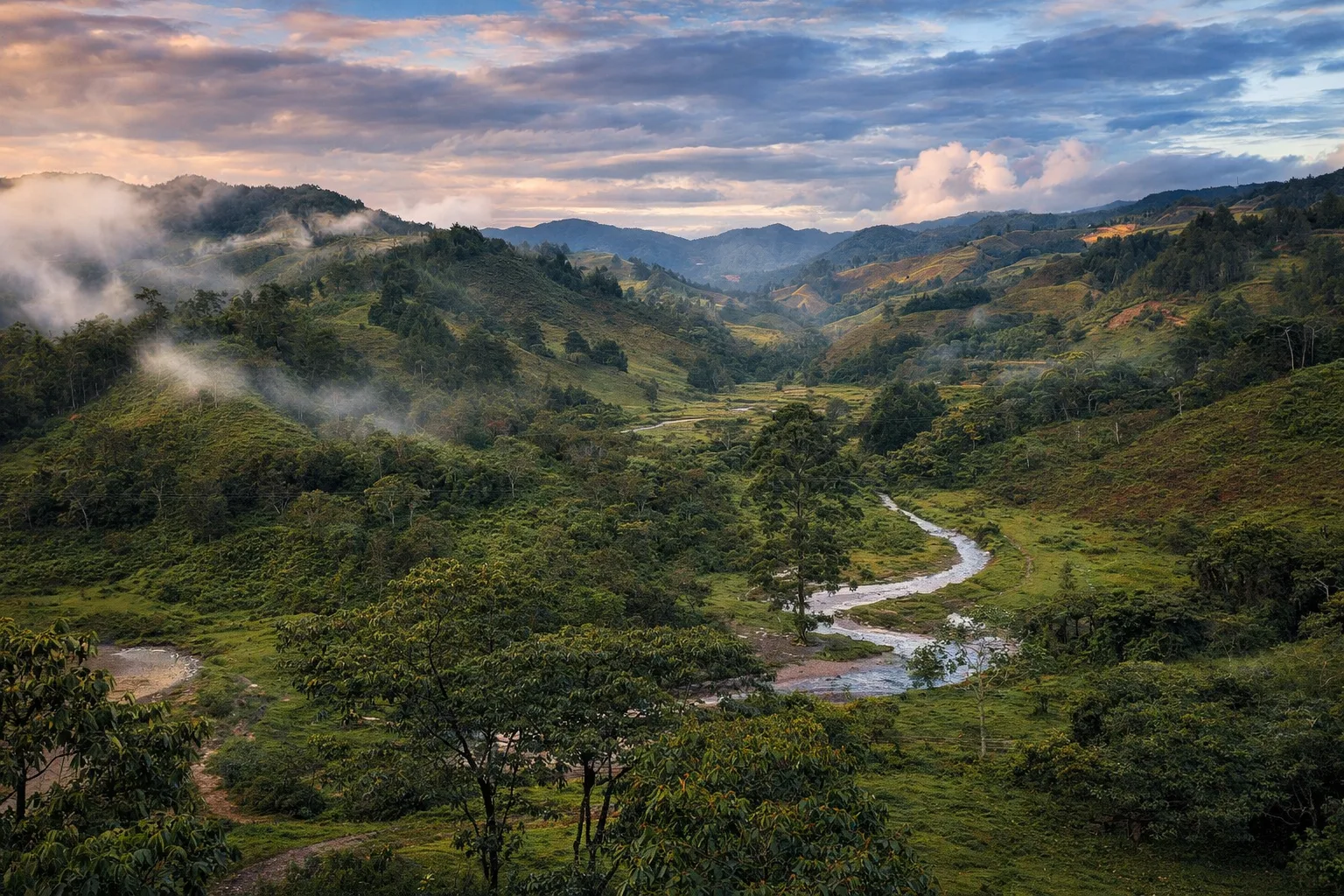
Yaogará is close enough to Medellín for practical travel while still removed from the city.
