
That question comes up a lot. And it deserves a real answer - not mythology, not marketing, but what the evidence actually shows.
The short answer: at least a thousand years. Probably much older.
The longer answer matters more. Because the age of this tradition isn't what makes it valuable. What matters is whether it's alive - whether the knowledge has been passed forward with care, whether someone received it from an elder who received it from an elder before them.
That's different from old.
What the archaeological evidence actually shows
In 2019, researchers published findings from a ritual bundle recovered from the Lípez Altiplano of southwestern Bolivia, associated with the Tiwanaku period and dated to roughly 900-1000 CE. Chemical analysis identified several psychoactive compounds, including DMT, harmine, and bufotenine. The researchers described this as chemical evidence of an ayahuasca-type preparation or knowledge system involving plants that, when combined, could produce effects different from either plant alone. PNAS
This wasn't random. Combining harmine-containing plants with DMT-containing plants requires knowledge. Not just of one plant, but of relationship - what happens when one thing meets another. That kind of knowledge usually does not come from a single accident. It comes from repeated observation, memory, and transmission.
The evidence reaches further, though less directly. Rock art in the Colombian Amazon - at sites like the Serranía de la Lindosa - includes tens of thousands of painted motifs, including human figures, animals, therianthropes, geometric forms, and plant imagery. Recent research interprets the art through Indigenous belief systems and ritual life, while being careful not to reduce it to a single explanation. Arts Journal / MDPI
Whether those images specifically represent ayahuasca is debated. That distinction matters. What they do confirm is a deep, long-standing relationship between Amazonian peoples, ceremony, territory, and non-ordinary ways of knowing.
The honest answer to "how old is ayahuasca?" is: we don't fully know. Organic materials don't always survive. These cultures did not depend on written records. What we can say is that ayahuasca-type plant knowledge is at minimum around a thousand years old in the archaeological record - and the living traditions connected to these territories may reach much further back.
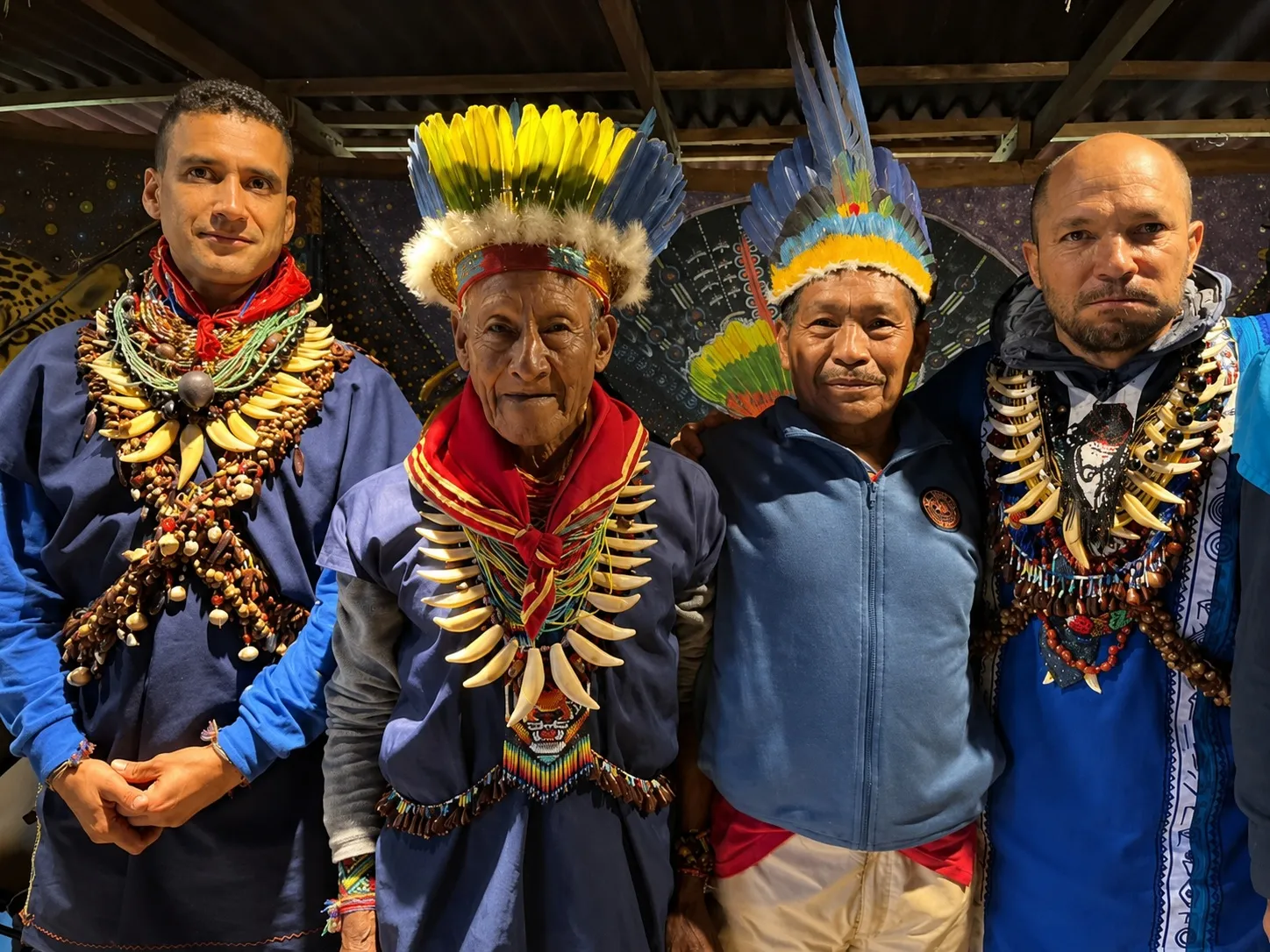 The continuity of lineage matters more than the exact number of years.
What the archaeological record can't capture
Here is what a Bolivian cave bundle cannot tell you: the conversation between a student and a Taita. The years of formation. The specific songs passed from one generation to the next. The knowledge of which person needs what, and when, and why.
In the Siona and Kamentsá communities of Colombia's Putumayo region - the lineage that roots the Yagé ceremonies practiced near Medellín - this knowledge has been transmitted from Taita to Taita across generations. It is an oral tradition. That doesn't make it imprecise. It means it is held in people rather than in documents.
Oral transmission at its most intact is extraordinarily careful. It has to be. There is no manual to fall back on.
As Taita Diego Marmolejo has said: "The knowledge of the original peoples is like a hidden treasure. It is like a puzzle - and each people holds a piece. If we lose those pieces, humanity will remain incomplete."
The age of the tradition isn't measured only in years. It's measured in how many hands have held this fire without letting it go out.
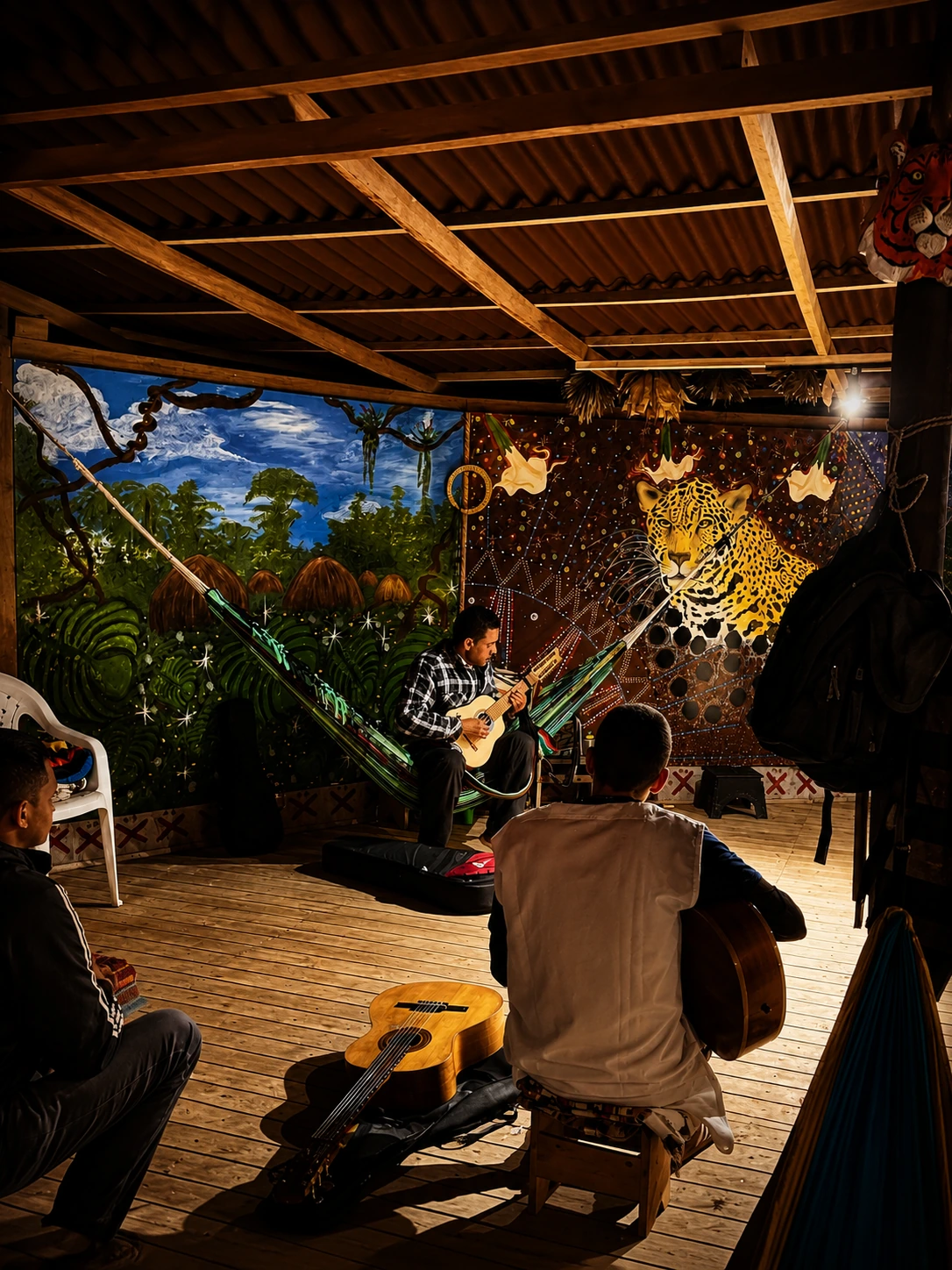 Ceremony knowledge is transmitted through lived practice, not books.
The Colombian Yagé tradition is distinct
People often treat all ayahuasca practice as one tradition. It isn't.
In Peru, the Shipibo-Konibo tradition carries its own ceremonial forms, songs, healing practices, and relationship to the brew. Research on Shipibo healing work describes ayahuasca ceremony as part of an Indigenous medical and cultural system, not simply an isolated psychedelic experience. Frontiers in Pharmacology / PMC
In Brazil, movements like Santo Daime, Barquinha, and União do Vegetal developed their own religious frameworks in the twentieth century, shaped by Amazonian, Christian, and syncretic influences. Scholars describe these as Brazilian ayahuasca religions with distinct doctrines and ritual structures. Anthropology of Consciousness
Across the Amazon basin broadly, there are many distinct traditions - each with its own protocols, plant combinations, songs, restrictions, and understanding of what the medicine asks.
In Colombia, the brew is called Yagé. In the Putumayo, it is held by Taitas - traditional doctors whose formation takes years and whose authorization to guide others comes not from self-declaration but from the elders who trained them. The title Taita is not something you give yourself.
This specificity matters when you're doing research. When someone asks "how old is the ayahuasca tradition?", they may be asking about many different traditions at once. The Colombian Yagé tradition has its own roots, its own elders, its own way of preparing the medicine and caring for the people who come to ceremony.
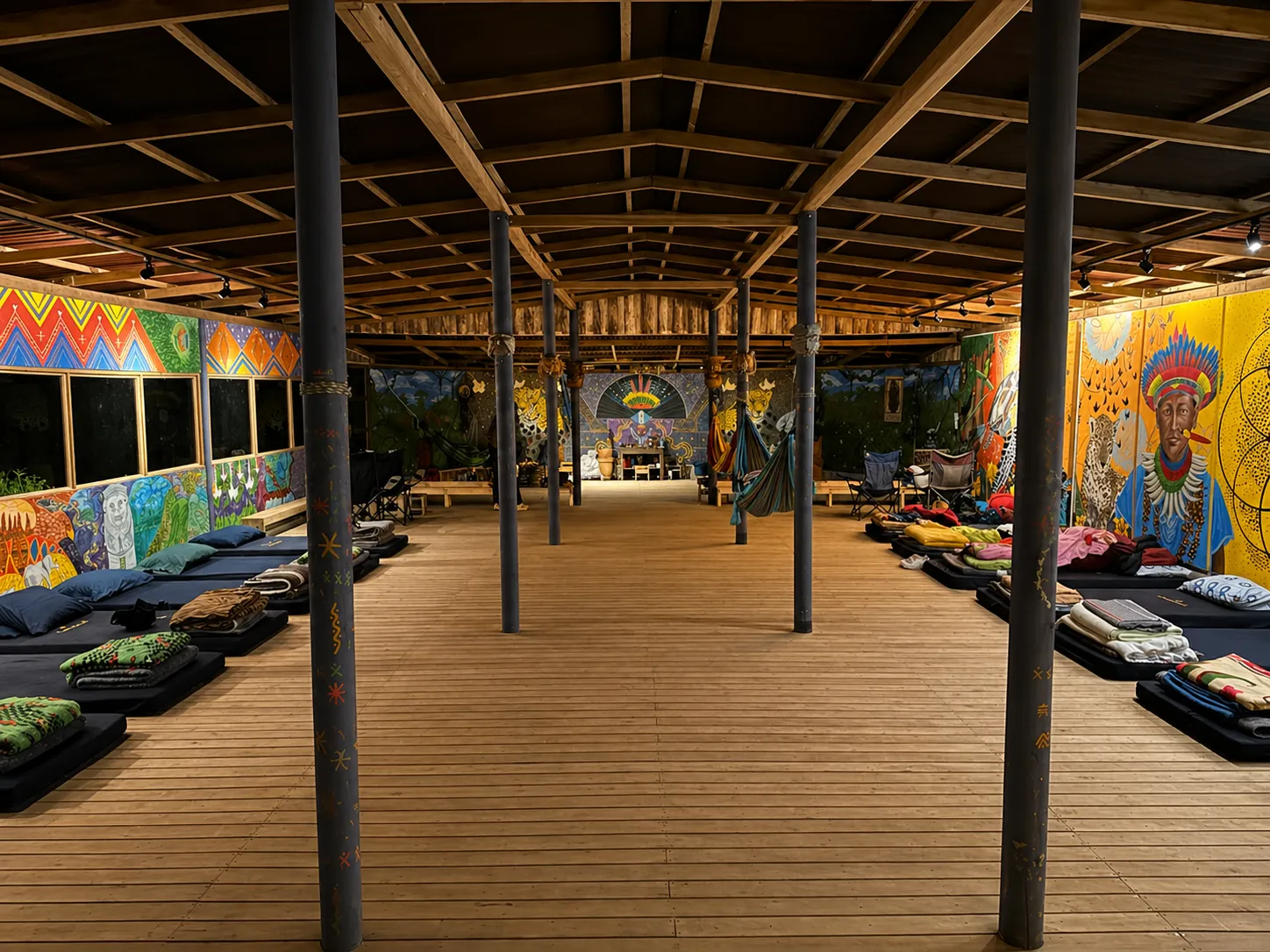 The Colombian Yagé tradition carries its own ceremonial structure and lineage.
How old is old enough?
There is a particular kind of person who asks this question: someone doing real research. Someone who wants to understand whether they can trust what they're considering.
Age matters - but not in isolation. A practice with deep historical roots that has been broken, commercialized, or passed forward carelessly is not more trustworthy than a younger practice held with genuine integrity. The lineage is what carries the knowledge, not the number.
What actually matters when you're evaluating where to go:
- Is there a traceable lineage? Can the people guiding the ceremony point to specific teachers, specific elders, specific communities who formed them?
- Was there real formation? Not a weekend training or an online course - but years, often decades, of apprenticeship under people who had themselves gone through the same process.
- Is the ceremony held with accountability? Are participants screened? Are the facilitators answerable to something beyond commercial interest?
The Tiwanaku-period bundle tells us these roots run deep. What you need to determine is whether the branch you're considering still connects to them.
 Researching lineage and accountability matters more than searching for the oldest claim.
The living evidence
The most compelling evidence for the age and continuity of the Yagé tradition isn't in a museum. It's in the existence of families who have held this knowledge across generations - who grew up inside it, who were shaped by it, who pass it forward not as a product but as a responsibility.
Taita Diego has spoken about what that continuity actually requires: "Being a traditional doctor is years of formation. A constant study. The elders only say 'you can give the medicine to people' after years of guidance and practice."
And about what's at stake if that transmission breaks: "This memory must be cared for. It is like a fire - if you don't add wood, it goes out."
That's the real answer to how old the tradition is. Not a count of years - but a living chain of transmission that has survived colonization, displacement, cultural pressure, and the noise of a world that often mistakes novelty for depth.
That chain exists in some places. In others, it was broken long ago, or was never there.
Knowing the difference is the only question that actually matters when you're deciding where to go.
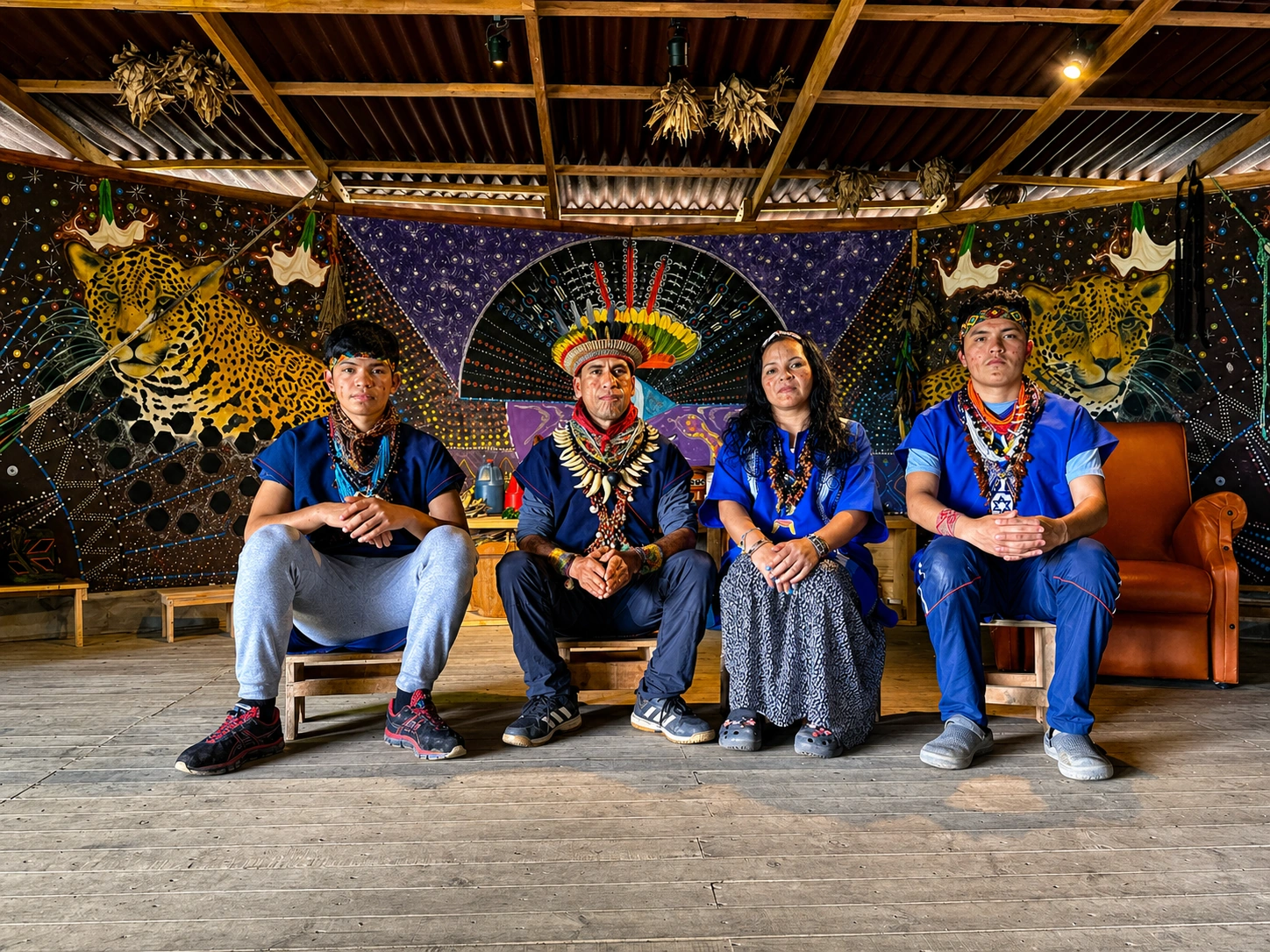 Living traditions survive because families and communities continue carrying them forward.
If this is the kind of depth you're looking for, the next step is understanding what responsible participation requires. Our safety and screening process is a good place to start. And if you want to understand what the Colombian tradition looks like in practice, the retreat page is there when you're ready.
