
Ayahuasca is not one thing to all people.
For some, it is part of a formal religious path. For others, it is a traditional medicine, a ceremony, a psychological mirror, or a spiritual experience that does not fit inside any church.
That difference matters.
At Camino al Sol, we do not ask people to adopt a religion. We also do not treat Yagé as entertainment, spectacle, or a shortcut. The medicine is approached with respect, screening, preparation, and integration.
Is ayahuasca a religion?
Ayahuasca itself is not a religion.
It is a traditional plant medicine used in Indigenous Amazonian ceremonial contexts. In Colombia, the medicine is commonly called Yagé. The word ayahuasca is more widely recognized internationally, but Yagé carries the Colombian context more directly.
Some religious movements have incorporated ayahuasca into formal practice. The best-known examples are Brazilian ayahuasca religions such as Santo Daime and União do Vegetal, which use the medicine as a sacrament within structured spiritual communities.
So the honest answer is this:
Ayahuasca is not a religion by itself. But it can be part of a religion.
The Indigenous roots come first
Before ayahuasca became known in churches, retreats, documentaries, or clinical research, it belonged to Indigenous knowledge systems.
These traditions are not all the same. Colombian Yagé, Peruvian ayahuasca, Brazilian Daime, and other regional practices have different languages, songs, lineages, cosmologies, and ceremonial forms.
That is why vague language like “ancient shamanic wisdom” is not enough.
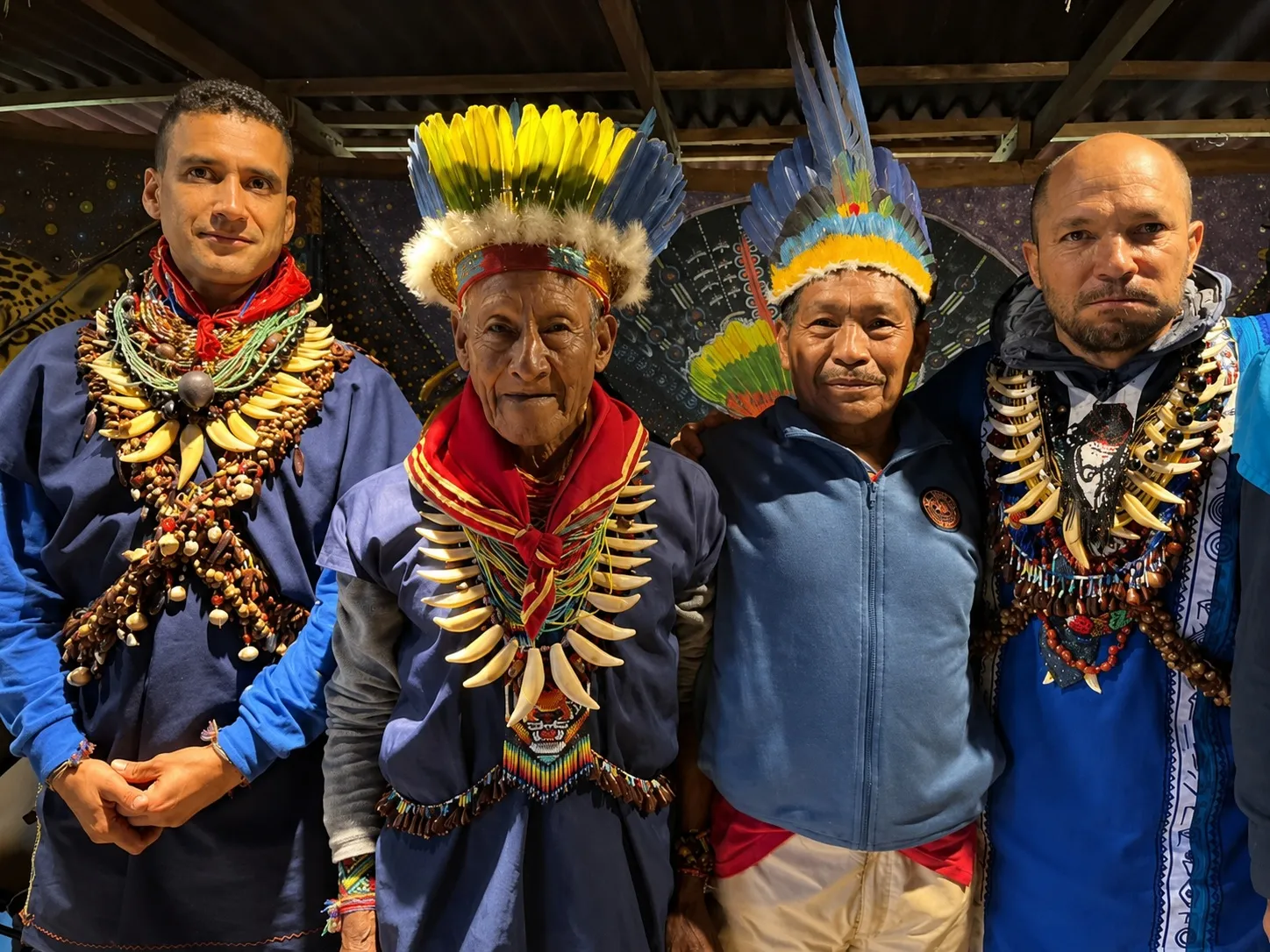
At Camino al Sol, our work is rooted in the Colombian Yagé tradition. Ceremonies are led by Taita Diego Marmolejo, a traditional doctor from Putumayo with roots in the Indigenous Amazonian lineage of Colombian Yagé.
Taita Diego says:
“The important thing is where you are going to drink, and who you are going to drink with.”
That is not marketing language. It is practical advice.
Where you drink matters. Who holds the ceremony matters. The tradition behind the work matters.
Ayahuasca churches and formal religion
Some ayahuasca traditions are explicitly religious.
Santo Daime, founded in Brazil, combines ayahuasca with hymns, prayer, Christian symbolism, Indigenous influence, and communal ritual structure. União do Vegetal describes itself as a Christian Spiritist religion and uses Hoasca tea in a formal religious setting.
These are not casual ceremonies. They are organized religious communities with doctrine, ritual, leadership, and shared spiritual practice.
In some countries, religious use has also been part of legal discussions. For example, União do Vegetal notes the 2006 United States Supreme Court decision that allowed its religious use of Hoasca tea in the United States.
That does not mean ayahuasca is broadly legal everywhere. It does not mean every retreat is protected. It means specific religious groups have sometimes received specific legal recognition.
This is where people get confused.
A religious exemption is not the same as general permission.
Can you drink ayahuasca without being religious?
Yes.
Many people who attend ayahuasca retreats are not religious. Some are skeptical. Some are spiritual but not religious. Some are recovering from religious trauma and do not want another belief system placed on top of them.
That is understandable.
A responsible retreat should not pressure you into belief. It should not tell you what your experience must mean. It should not turn visions, emotions, or fear into doctrine.
You may interpret the ceremony through spirituality, psychology, symbolism, nature, memory, grief, or silence.
The point is not to force a conclusion.
The point is to listen carefully and integrate responsibly.
Why ayahuasca can feel religious or spiritual
Ayahuasca can bring people into contact with material that feels larger than ordinary thinking.
People may experience:
- deep emotional release
- a sense of connection with nature or family
- symbolic visions
- memories that feel charged with meaning
- encounters with spiritual figures or ancestral imagery
- a feeling of being shown something important
Some people call this God. Some call it the unconscious. Some call it the medicine. Some do not name it at all.
At Camino al Sol, we leave room for mystery without making claims we cannot prove.
The medicine can show you something. What you do with it afterward is the real work.
When spirituality becomes unstable
Spiritual experience is not automatically healthy.
For some people, especially those with a history of psychosis, mania, severe dissociation, or recent crisis, intense altered states can increase confusion or destabilization. This is why screening matters.
A serious retreat does not accept everyone.
This page is educational and does not replace medical advice. Do not stop or change medication without speaking with a qualified medical professional.
If you are in crisis, experiencing suicidal thoughts, psychosis, chest pain, severe withdrawal, or another urgent medical issue, seek emergency care immediately.
Research on ayahuasca is still developing, and safety depends heavily on context, screening, medications, mental health history, and the people holding the ceremony. For a broader scientific overview, see this 2024 review on ayahuasca history, pharmacology, and research. For a plain-language risk overview, the Alcohol and Drug Foundation notes that ayahuasca may worsen some mental health conditions, including psychosis risk.
This is not something to minimize.
If you are unsure, start with screening.
Religion, consent, and power
Any spiritual container creates power dynamics.
That is true in churches. It is true in retreats. It is true in ceremony.
A good facilitator does not use spiritual authority to override consent. A good retreat does not pressure you to accept someone else’s interpretation. A good ceremony space gives structure without taking away your agency.
Be cautious with anyone who says:
- the medicine is safe for everyone
- your fear means you need to surrender more
- questioning the leader means you are blocked
- you must return repeatedly to be healed
- they alone understand what your experience means
That is not wisdom.
That is control.
How Camino al Sol approaches belief
Camino al Sol is not a church.
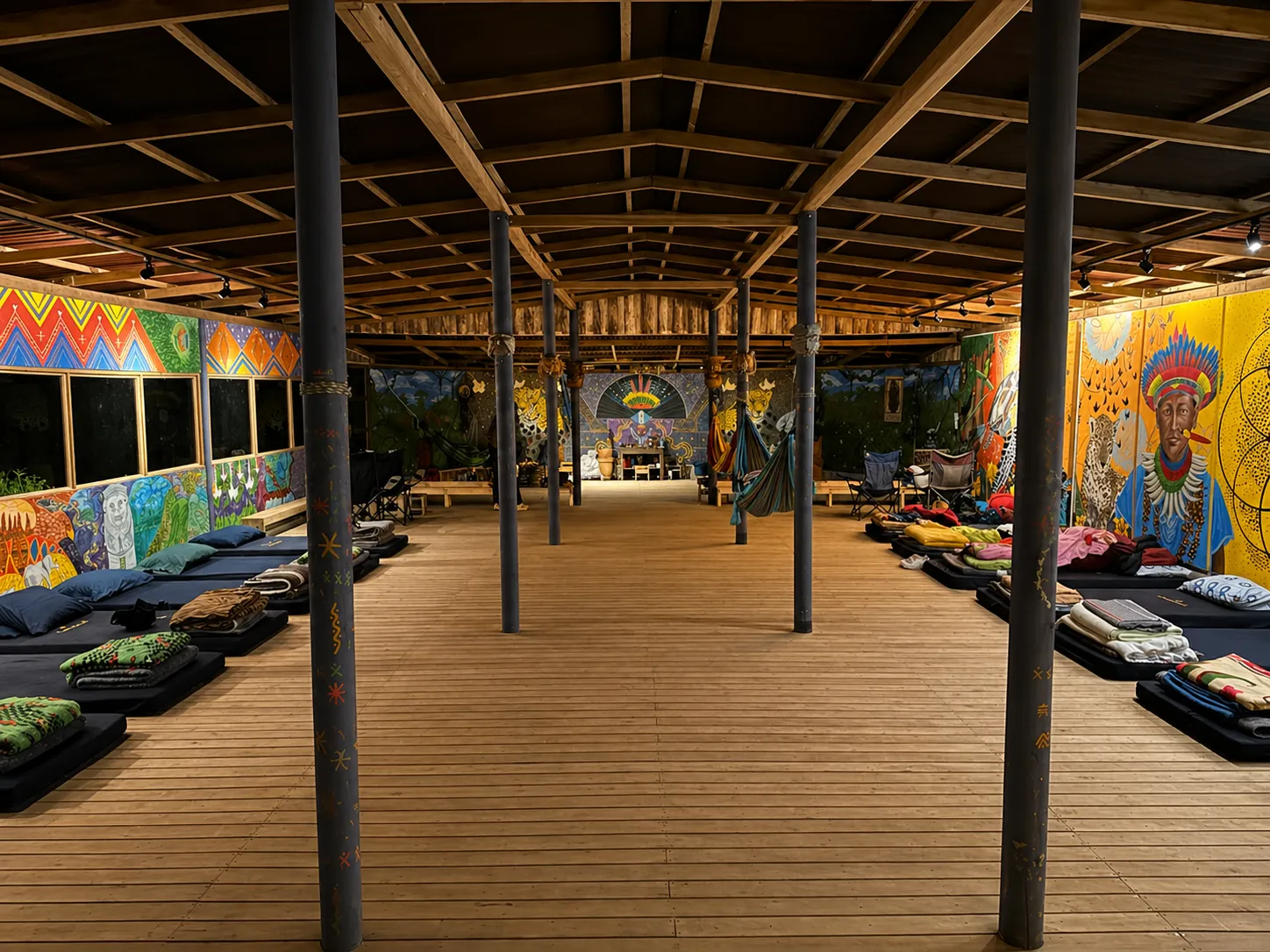
We hold traditional Colombian Yagé ceremonies with respect for lineage, nature, music, preparation, and integration. Participants come from many backgrounds, including Christian, Jewish, Buddhist, atheist, agnostic, Indigenous, spiritual-but-not-religious, and secular worldviews.
The work is not about converting anyone.
It is about responsibility.
You are asked to come with honesty. To disclose medications and health history. To prepare seriously. To listen. To integrate what the ceremony shows into your actual life.
That is where spirituality becomes real.
Not in what you say you believe.
In how you live after.
What to ask before choosing a retreat
Before attending any ayahuasca ceremony, ask direct questions.
Who leads the ceremony? What is their training or lineage? Is there medical and psychological screening? Are medications reviewed carefully? Is the group small enough to be held well? What happens if someone becomes overwhelmed? Is integration support available afterward?
Also ask whether the retreat is religious.
Not because religious retreats are automatically wrong. They are not. But you should know what kind of container you are entering.
If you want a formal religious path, a church setting may be appropriate. If you want traditional Colombian Yagé ceremony without being asked to join a religion, a retreat like Camino al Sol may be a better fit.
You can learn more about our approach to Yagé in Colombia, our ayahuasca safety process, and our retreats near Medellín.
The real question
The question is not only whether ayahuasca is religious.
The deeper question is whether the space is honest.
Does it respect the medicine? Does it respect your autonomy? Does it screen carefully? Does it avoid promises? Does it support integration after the ceremony?
Taita Diego says:
“The medicine is wise. It knows what to show and what not to show.”
But wisdom still needs a responsible container.
If this resonates, you can begin with our application and screening process.
