
Ayahuasca and Anxiety
People often speak about anxiety as if it were one thing.
It is not.
Some people live with a constant low hum of worry that never fully switches off. Others experience sudden waves of terror that arrive in the body before the mind can explain them. Some become trapped in self-monitoring. Watching every word. Every expression. Every mistake. Others carry anxiety that grew out of grief, shock, abandonment, or experiences the nervous system never fully resolved.
Yagé meets each of these differently.
Not because the medicine changes from person to person.
Because the person changes the encounter.
And this matters.
Because the relationship between anxiety and Yagé is not simple relief. It is often confrontation first. Awareness first. Sometimes intensity first.
Not punishment.
Not randomness.
A revealing.
For people wondering what the research suggests about anxiety relief, we explore that separately. This page is about something more practical:
What the experience itself often feels like when an anxious mind enters ceremony.
Near Medellín, at Camino al Sol, ceremonies are held by Taita Diego Marmolejo in the Colombian Yagé tradition at Yaugara nature reserve in the mountains of Antioquia. The work is quiet. Deliberate. Without pressure to perform an experience.
That matters more than many people realise.
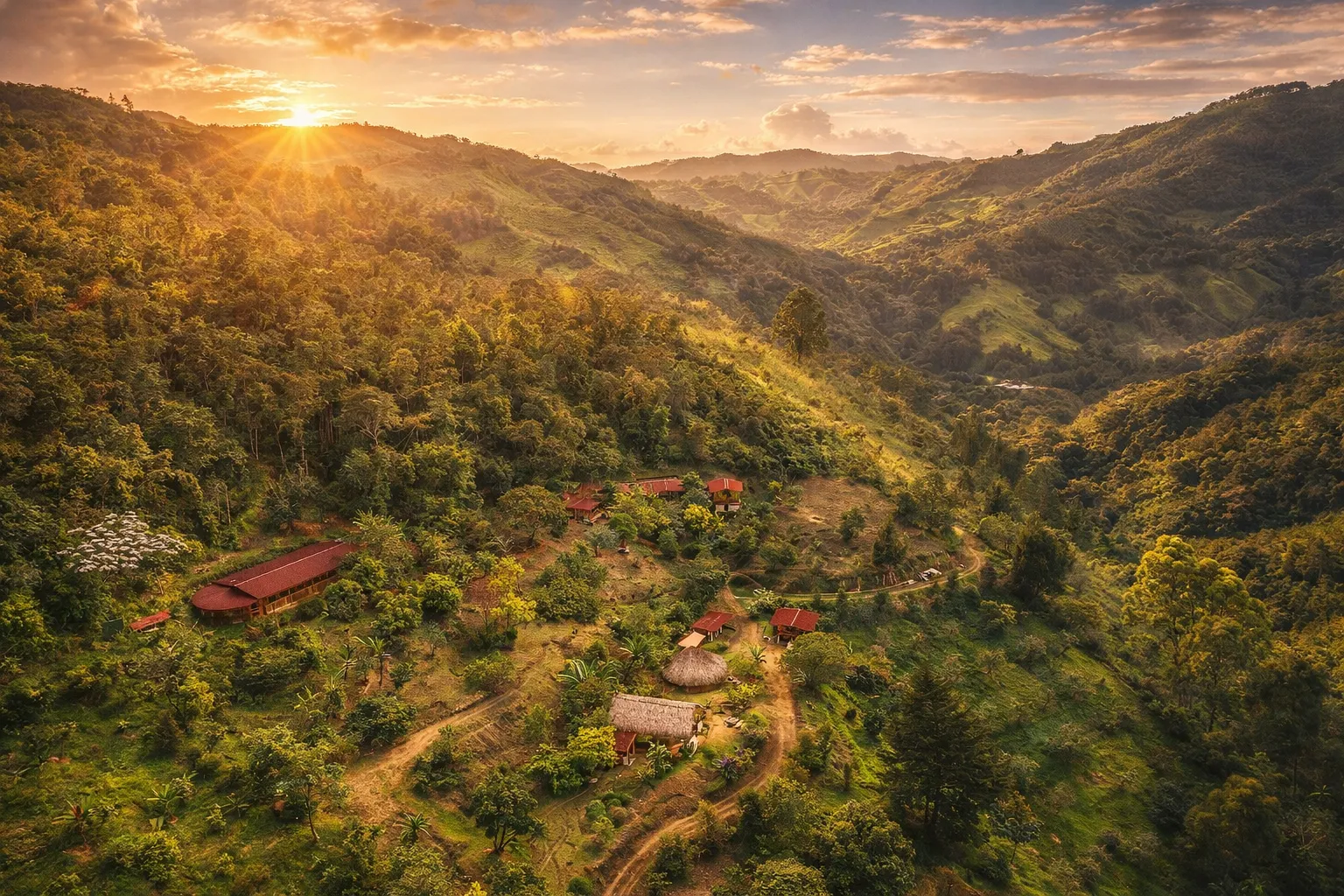
Anxiety is not one thing - and that matters here
Generalised anxiety often carries a feeling of permanent anticipation.
The mind scans ahead constantly.
What if this goes wrong?
What if I miss something?
What if I lose control?
Clinically, generalized anxiety disorder is often described through excessive worry, difficulty controlling that worry, restlessness, sleep disruption, and physical tension. But in ceremony, it is not a checklist. It is a lived pattern.
For some people with this pattern, the stillness of ceremony can initially feel uncomfortable rather than peaceful. When the constant movement of thought slows down, there can be a strange emptiness underneath it. Silence where vigilance used to live.
That silence can feel relieving.
Or frightening at first.
Panic disorder is different.
Here, the fear is often physical before it is conceptual. Rapid heart rate. Tight chest. Disorientation. The sensation that something catastrophic is happening inside the body. Panic attacks can involve sudden intense fear with bodily symptoms such as chest pain, shortness of breath, palpitations, and fear of losing control.
During ceremony, these individuals may encounter the body's fear response directly. Not as theory. As sensation.
This is one reason honesty matters so much around anxiety and Yagé. Ceremony is not always soothing in the way people imagine.
Social anxiety also has its own structure.
Often there is intense self-awareness. Monitoring how one appears. Fear of judgment. Fear of exposure. The NHS describes social anxiety as more than shyness, with worry before, during, and after social situations. In ceremony, some people begin to see how much of their life has been shaped by watching themselves from the outside.
Then there is anxiety rooted in unresolved grief or trauma.
In these cases, anxiety is sometimes less about future fear and more about protection. The nervous system learned that staying alert was necessary. Useful once. Exhausting now. The VA National Center for PTSD describes trauma responses as reactions that may continue after overwhelming events, especially when symptoms persist and interfere with life.
When deeper emotional material surfaces in ceremony, the anxiety around it can surface too.
Not because something has gone wrong.
Because the body remembers.
This is part of why not everyone is automatically a good candidate for this work. Questions around panic history, mental health background, and whether it's medically safe for your situation belong inside a careful review process, not guesswork. You can also read more about our approach to screening.
What actually happens when an anxious mind meets Yagé
Anxiety usually exists for a reason.
Even when the pattern has become disproportionate, exhausting, or disconnected from present reality, it often began as protection.
Protection from chaos.
Protection from abandonment.
Protection from feeling too much too quickly.
Yagé does not necessarily suppress those patterns immediately.
Quite often, it reveals them.
A person may suddenly notice how relentlessly they scan for danger. Or how they tighten against uncertainty. Or how much energy goes into avoiding certain feelings entirely.
This can be uncomfortable.
Especially for people who hoped the ceremony would remove anxiety without asking anything in return.
"The medicine is wise. It knows what to show and what not to show."
Taita Diego often speaks about the experience this way. Not as random visions or psychological chaos, but as a reflection of what is ready to be seen according to the person's state, preparation, and history.
Sometimes the anxious person realises they have not actually been feeling their emotions fully for years. Only managing them. Controlling them. Staying ahead of them.
Yagé can interrupt that strategy.
Not violently in every case.
But directly.
This is also why two people with anxiety can have completely different ceremonies.
One person may spend hours in emotional release.
Another may sit in deep stillness.
Another may confront fear physically before clarity arrives later.
The medicine does not follow a script.
Neither does the nervous system.
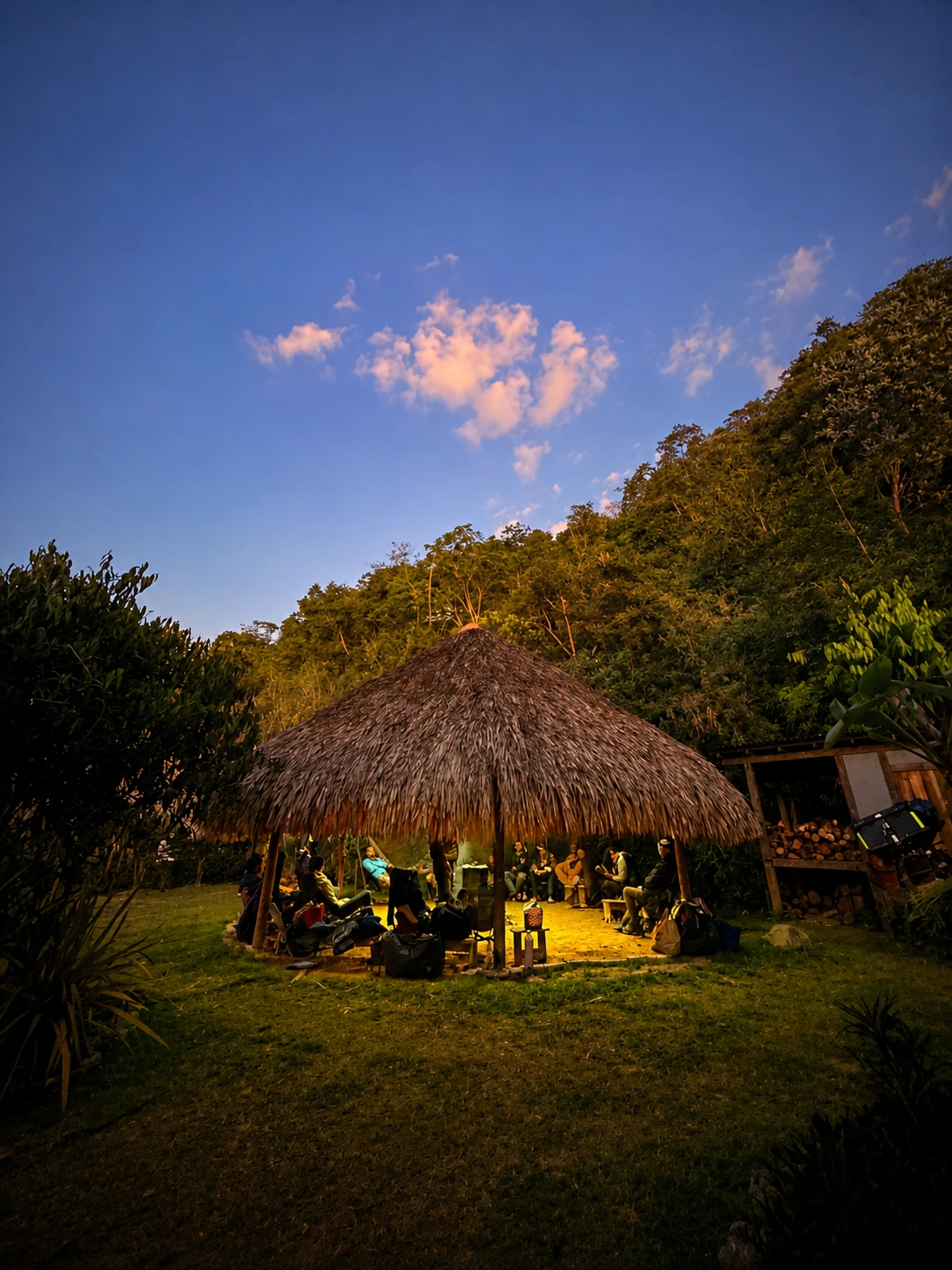
The early phase: why anxiety often intensifies first
For many people, the first phase of ceremony is the hardest.
Usually the first 60 to 90 minutes.
The body begins responding before the mind fully understands what is happening. Heart rate may change. Temperature may fluctuate. Spatial awareness can shift. The body can feel unusually heavy, sensitive, restless, or open.
For someone already conditioned to monitor bodily sensations for signs of danger, this phase can trigger alarm quickly.
This is especially true for people with panic-oriented anxiety.
The mind starts interpreting sensations:
Something is wrong.
I am losing control.
I need this to stop.
That escalation can temporarily amplify anxiety.
This is important to say plainly because many people feel ashamed when this happens. They assume they are failing the ceremony.
Usually they are encountering the exact pattern that governs much of their daily life.
The difference is that in ceremony, there is less distraction from it.
And paradoxically, this confrontation is sometimes where the shift begins.
Not because the fear disappears immediately.
But because the person starts recognising the difference between sensation and catastrophe.
Between activation and actual danger.
This requires support. Time. A stable environment.
Not force.
Why the setting matters more for anxious people
People with anxiety are often highly sensitive to environment long before they realise it consciously.
Noise matters.
Crowded spaces matter.
Emotional unpredictability matters.
Facilitators who create pressure matter.
An anxious nervous system notices instability quickly.
This is one reason the setting around Yagé matters so deeply. A difficult ceremony inside a grounded container can still become meaningful. Inside a chaotic or performative environment, the same ceremony may become overwhelming.
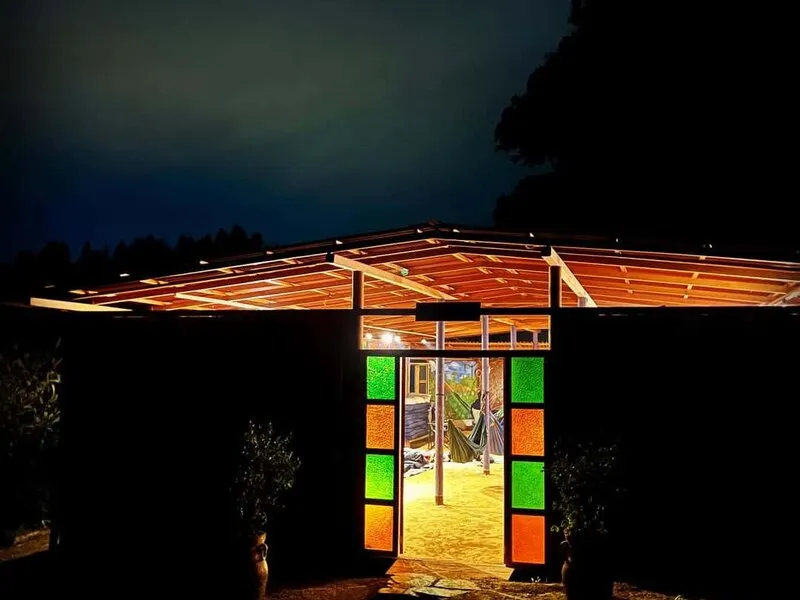
At Camino al Sol, ceremonies take place at Yaugara, surrounded by forest and mountain silence outside Medellín. The structure is intentionally calm. Smaller groups. Clear guidance. Space to step back from stimulation rather than intensify it.
Not because discomfort is avoided entirely.
But because anxious people do not need more chaos added to an already activated nervous system.
They need steadiness.
People sometimes underestimate this and focus only on the medicine itself. But for anxiety especially, the relational field around the ceremony often shapes the experience as much as the brew.
This becomes even more important when fear surfaces strongly during ceremony. A person needs to feel that the space can hold intensity without panic spreading through the room.
That trust changes things.
If you are already thinking practically about environment and support, this guide on choosing the right retreat for anxiety goes deeper into what to look for.
What shifts - and what doesn't
For some people, one of the biggest shifts is surprisingly simple:
They realise how much of their life has been organised around avoiding fear.
Not actual danger.
Fear itself.
Others begin noticing the constant self-monitoring that had become invisible through repetition. The endless internal checking. Am I okay? Did I say the wrong thing? What does this person think of me?
Some people feel grief underneath the anxiety for the first time.
Others discover anger. Exhaustion. Loneliness. A body that has been braced for years.
Sometimes the shift is dramatic.
Sometimes quiet.
A person leaves recognising that the alarm system inside them is old. Familiar. Learned. Not always truthful.
But ceremony alone does not automatically reorganise a life.
The person still returns home.
Back to relationships. Habits. Work stress. Sleep patterns. Isolation. Avoidance behaviours. Nervous system conditioning built over decades.
This is where ongoing support and integration matter. Not as a spiritual slogan. As practical reality.
Insight is one thing.
Living differently is another.
What Yagé cannot do
Yagé cannot remove anxiety permanently in a single night.
It cannot replace therapy.
It cannot replace nervous system work.
It cannot replace honest relationships, rest, boundaries, movement, nutrition, or daily choices.
And it cannot guarantee relief.
Sometimes people leave ceremony feeling lighter immediately. Sometimes they feel emotionally opened for weeks before understanding what is changing. Sometimes difficult material continues surfacing afterward and requires real support to process responsibly.
This does not mean the ceremony failed.
It means the work continued.
There is also a deeper truth here that many people resist at first:
Anxiety is not always only a chemical problem. Sometimes it is also a life problem.
Living too disconnected from the body.
Too disconnected from grief.
Too disconnected from truth.
Too disconnected from rest.
Yagé may illuminate those realities sharply.
But the person still has to make decisions afterward.
Different decisions.
Repeated consistently.
Otherwise the nervous system often returns to familiar patterns, even after profound insight.
If this resonates, move carefully. Not fearfully. Carefully.
Ask better questions.
Choose the environment well.
Tell the truth about your history.
Do not romanticise the process.
And do not expect the medicine to do the living for you.
Disclaimer: This page is educational and does not replace medical advice. Do not stop or change medication without speaking with a qualified medical professional.
