
Something brought you here.
Maybe anxiety has been running your life quietly for years. Maybe therapy helped, but not enough. Maybe medication took the edge off, but something deeper still feels unresolved.
So the question is simple.
Can ayahuasca actually help with anxiety?
The honest answer is: it may help some people, but it is not a cure, and it is not right for everyone.
That distinction matters.
Ayahuasca, known in Colombia as Yagé, can open a space where people see their fear, patterns, memories, and defenses more clearly. For some, that brings relief. For others, it can feel difficult, overwhelming, or destabilizing — especially without proper screening and support.
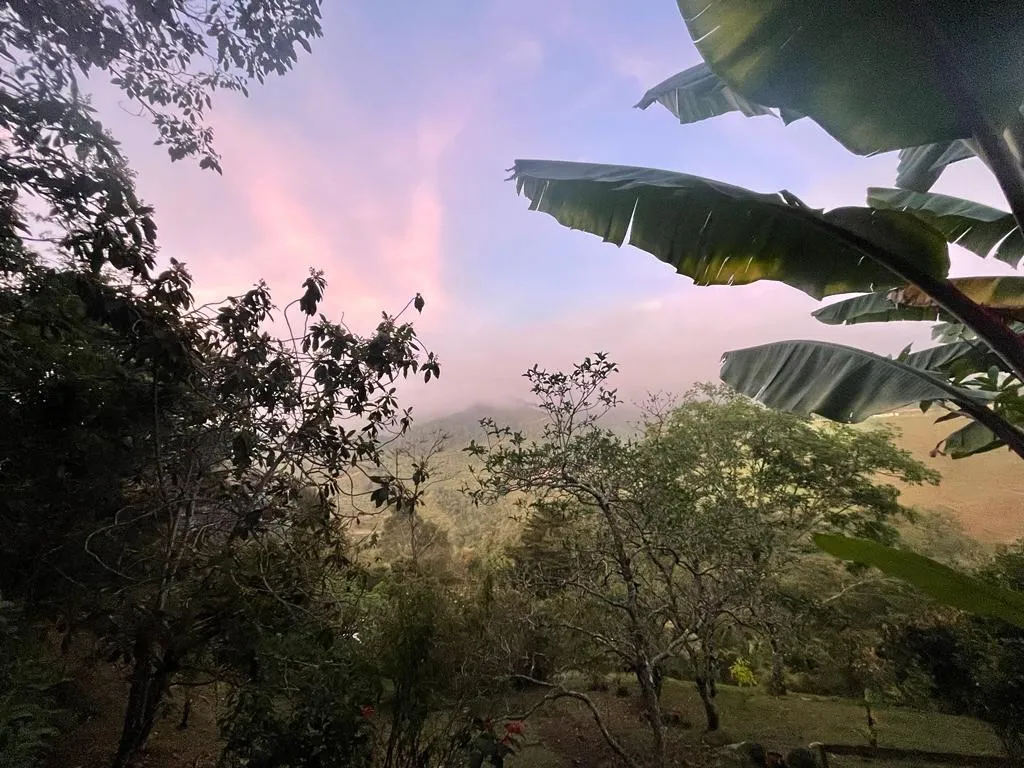
What people mean when they say ayahuasca helped their anxiety
When people say ayahuasca helped their anxiety, they usually do not mean the medicine simply removed anxiety like turning off a switch.
More often, they mean something shifted.
They saw the fear differently. They understood where it came from. They felt emotions they had been holding back for years. They stopped identifying so completely with the anxious voice in their mind.
That can be powerful.
But it is also not the same as a guaranteed treatment. Anxiety has many roots: trauma, stress, nervous-system dysregulation, family patterns, lifestyle, biology, medication history, sleep, substances, and unresolved grief. Yagé may touch some of those layers. It may not touch all of them.
This is why the question is not only "does ayahuasca work?"
The better question is: what kind of anxiety are you carrying, and are you prepared to meet what sits underneath it?
What the research suggests so far
Research on ayahuasca and anxiety is promising, but still early.
The 2017 Global Ayahuasca Survey — one of the largest studies of its kind, with over 10,000 respondents — found that a significant portion of people who drank ayahuasca for mental health reasons reported reductions in anxiety, depression, and stress. A 2019 study published in Scientific Reports found rapid antidepressant and anxiolytic effects following a single ayahuasca dose in a clinical setting. More recent work from Imperial College London has examined how ayahuasca affects the default mode network — the brain system associated with rumination, self-referential thinking, and the kind of mental looping that characterises anxiety.
The findings are consistent but not conclusive. Survey research cannot prove causation. People who had positive experiences are more likely to respond. Clinical studies use controlled settings that differ significantly from retreat environments.
What the research does suggest, repeatedly, is that context matters. Preparation, setting, guidance, group support, and integration all influence the outcome — sometimes as much as the medicine itself.
That makes sense.
Yagé is not only a chemical event. In the Colombian tradition, it is held inside relationship: with the medicine, the Taita, the chants, the space, the people around you, and the life you return to afterward.
At Camino al Sol, we do not present Yagé as a medical treatment for anxiety. We hold it as traditional medicine, with careful screening, preparation, ceremony, and integration. If you want a broader overview of potential outcomes and limits, you can also read our guide to ayahuasca benefits.
How Yagé may help anxiety
Anxiety often keeps you moving.
Thinking. Planning. Avoiding. Controlling. Rehearsing what could go wrong. Trying to stay safe by never fully arriving in the present.
Yagé can interrupt that pattern.
For some people, the medicine brings them into direct contact with what they have been avoiding. A memory. A truth. A grief. A habit of self-protection that once made sense, but now keeps them small.
Yagé may help by showing you your relationship to fear — not by erasing it. It may reveal what you have been carrying. It may give you a direct experience of release, grief, or clarity. It may help you step outside the anxious loop long enough to see that you are not only your thoughts.
You may see the difference between real danger and old fear. You may feel emotion that was previously locked in the body. You may recognise how much of your anxiety comes from trying to control things that cannot be controlled.
You may also see your own responsibility more clearly.
That part can be uncomfortable. But it can also be freeing.
Taita Diego Marmolejo describes the medicine this way:
"The medicine is wise. It knows what to show and what not to show."
That does not mean the experience is always gentle. It means the work is not random. Your state, your preparation, your history, and the setting all shape what emerges.
Anxiety can also come up during ceremony
This needs to be said clearly.
Ayahuasca can make anxiety feel stronger during the ceremony.
Not always. But it can.
The medicine can bring up fear, grief, shame, confusion, physical intensity, and emotional release. For someone who already lives with anxiety, that may feel confronting. A racing mind may get louder before it softens. A fear of losing control may become the exact doorway the person has to face.
This does not mean something has gone wrong.
But it does mean the setting matters.
You do not want to meet that kind of intensity in a careless environment — large group, unclear leadership, no screening, facilitators who treat anxiety as something to push through.
The question is not only whether ayahuasca can help anxiety. The question is whether the container is strong enough to hold you if anxiety appears.
For this reason, every applicant at Camino al Sol goes through medical and psychological screening before being accepted. You can read more about our safety approach here: ayahuasca safety.
It is not a shortcut around therapy or real life
Some people come to ayahuasca hoping it will do what years of effort did not.
That hope is understandable.
But the medicine does not live your life for you. It may show you the pattern. It may show you the wound. It may show you the way anxiety has shaped your relationships, your work, your body, and your choices.
Then you still have to live differently.
That is integration.
Without integration, even a powerful ceremony can fade into memory. You may feel clear for a few days or weeks, then slowly return to the same patterns because nothing changed in your daily life.
Integration is where insight becomes practice.
For anxiety, that may mean changing how you respond to fear. It may mean therapy, breathwork, body-based support, honest conversations, less stimulation, better sleep, different boundaries, or learning to stop abandoning yourself when discomfort appears.
At Camino al Sol, we speak about integration because the ceremony is not the finish line. You can explore this more deeply on our integration page.
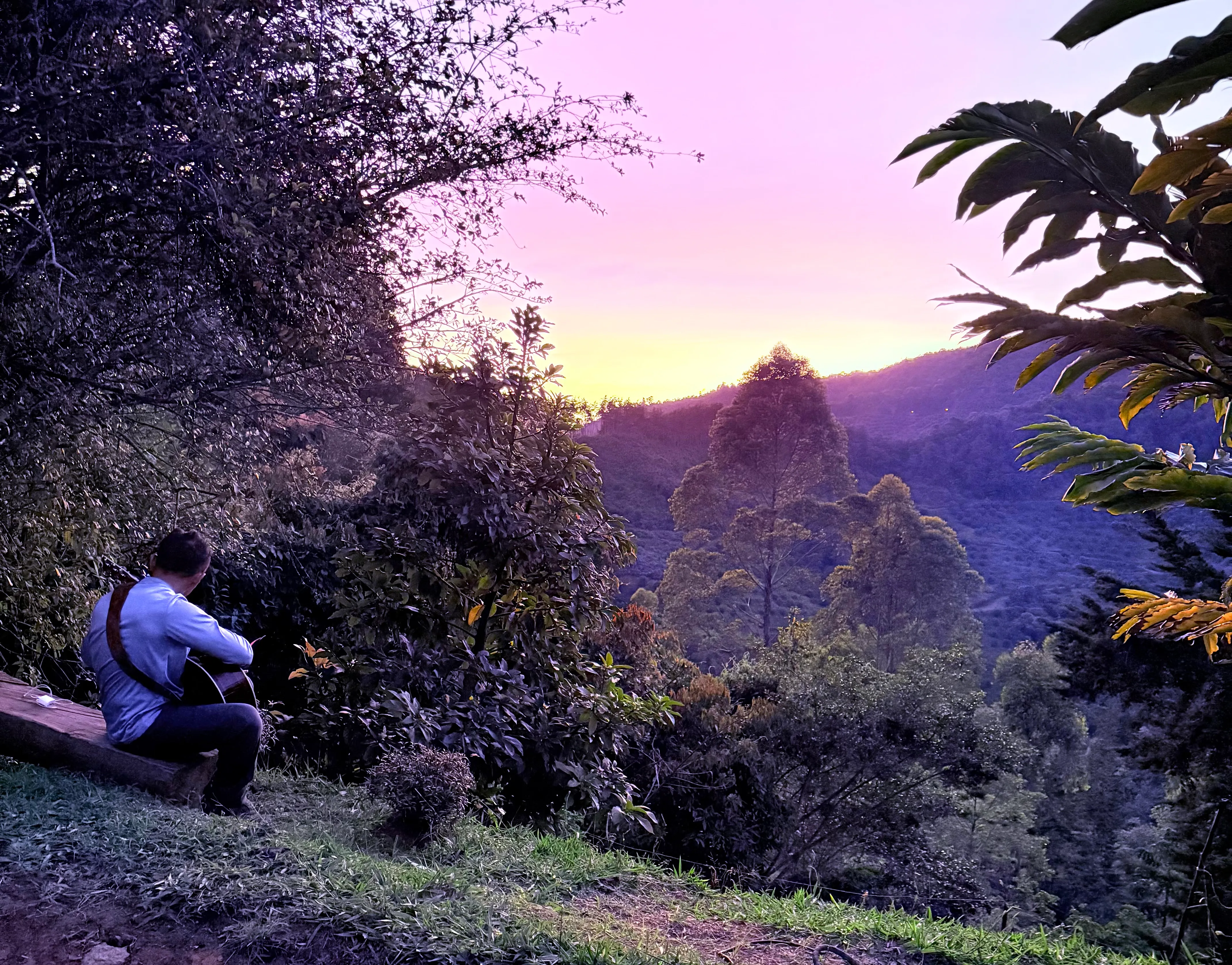
Does ayahuasca help anxiety permanently?
Sometimes people feel long-lasting change.
Sometimes they feel temporary relief.
Sometimes they feel clearer, but still have to work with anxiety afterward. Sometimes anxiety returns in a new form because life keeps asking for attention.
This does not mean the ceremony failed.
It means healing is not a single event.
Anxiety often formed over years. It may be tied to survival strategies, family conditioning, trauma, nervous-system habits, or the way you learned to stay safe in the world. One ceremony can reveal something important, but revelation is not the same as embodiment.
This is why a responsible retreat should never promise permanent relief.
A better promise is honesty: Yagé may help you see what anxiety is protecting, what it is costing you, and what life asks of you now.
What you do with that matters.
Why the retreat setting matters
For anxiety, the environment is not a detail.
It is central.
A person with anxiety needs to feel that the container is steady. Not flashy. Not chaotic. Not performance-based. Not overcrowded.
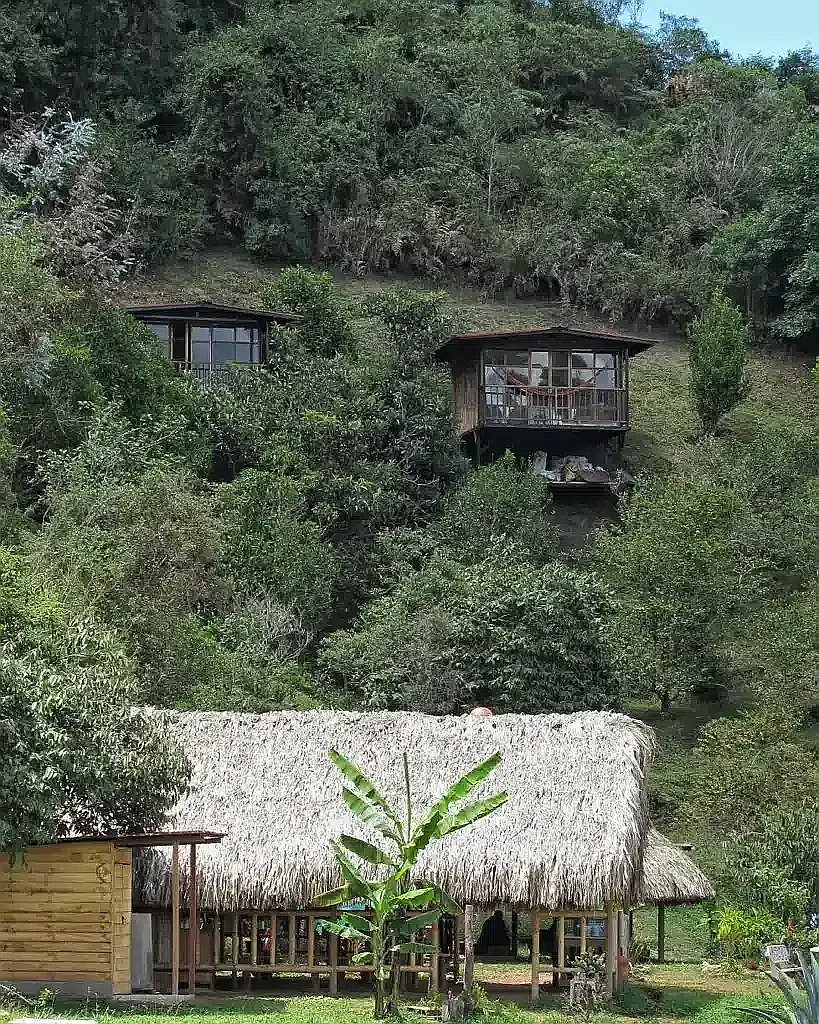
At Camino al Sol, retreats are held near Medellín, Colombia, at Yaugara — a nature reserve and botanical garden in the mountains of Antioquia. Ceremonies are led by Taita Diego Marmolejo, a traditional doctor from Putumayo with roots in the Colombian Yagé tradition.
Groups are small. Applications are reviewed before acceptance. The work is not recreational.
If you are moving from "does this work?" into "what kind of retreat would be safe and supportive for me?", read our guide to the best ayahuasca retreat for anxiety. You can also learn more about our ayahuasca retreat near Medellín.
So, can ayahuasca help with anxiety?
Yes, it may.
But not because it erases fear.
It can be intense. It can bring anxiety to the surface before it offers relief. It requires preparation, honest screening, and integration. It is not a replacement for therapy or medical care.
This is not something to approach casually.
If you feel called to this work, begin with honesty. Be clear about your anxiety, your medications, your history, and what you are hoping for. The right next step is not to force a decision.
If your anxiety involves psychiatric medication, a history of psychosis or mania, or active mental health instability, read our full guide on whether ayahuasca is safe for anxiety before going further.
The right next step is to be screened.
You can apply for screening if you feel ready to explore whether Camino al Sol is an appropriate fit.
This page is educational and does not replace medical advice. Do not stop or change medication without speaking with a qualified medical professional. If you are in crisis, experiencing suicidal thoughts, psychosis, chest pain, or another urgent medical issue, seek emergency care immediately.
