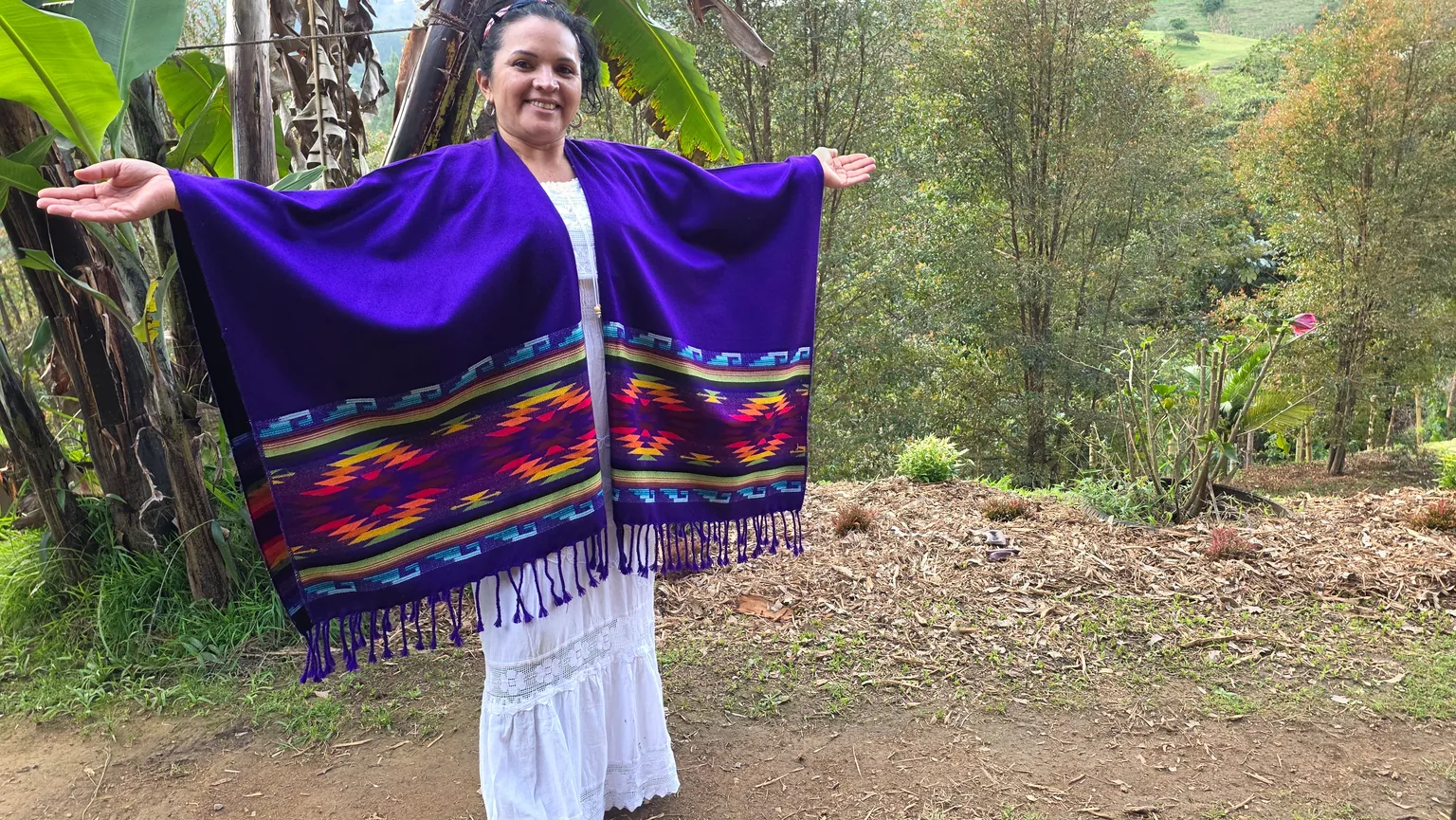
At Camino al Sol, Andrea Díaz works closely with participants throughout the retreat, with particular attention to women, personal care, plant baths, rest, and the quieter moments between ceremonies.
Her approach is simple to describe.
"My role is to observe, to be available, and to accompany."
For Andrea, accompaniment doesn't mean keeping someone constantly occupied or asking them to talk about what they're experiencing. Sometimes it means listening. Sometimes it means preparing a plant bath. Sometimes it means noticing that someone has already had enough for one day.
And sometimes it means giving them space.
What Andrea notices during a retreat
People arriving for their first yagé retreat often don't know what to expect.
Andrea sees that uncertainty before anything has happened.
"Especially with people who are coming for the first time, there is this uncertainty. They are asking themselves, 'What is going to happen? What is going to happen to me during the retreat?' You can see it in their face and in their attitude."
She is careful not to suggest that everyone follows the same pattern. In her experience, a first ceremony can involve tiredness, sensitivity, a desire for silence, crying, or simply wanting to rest.
By the second or third ceremony, she often notices something different.
"They are more trusting, and they can observe what is happening to them in another way. But every body and every process is different."
For some, she sees that early uncertainty gradually soften.
"By the second or third day, you can see them calmer, smiling more, more trusting, more connected with themselves."
Andrea doesn't attribute that change to something a facilitator says or does. Part of the work, for her, is creating an environment where people gradually feel comfortable enough to be themselves.
Knowing when not to do more
A retreat can hold many different activities, but Andrea doesn't believe more is necessarily better. She describes this as learning to read the moment.
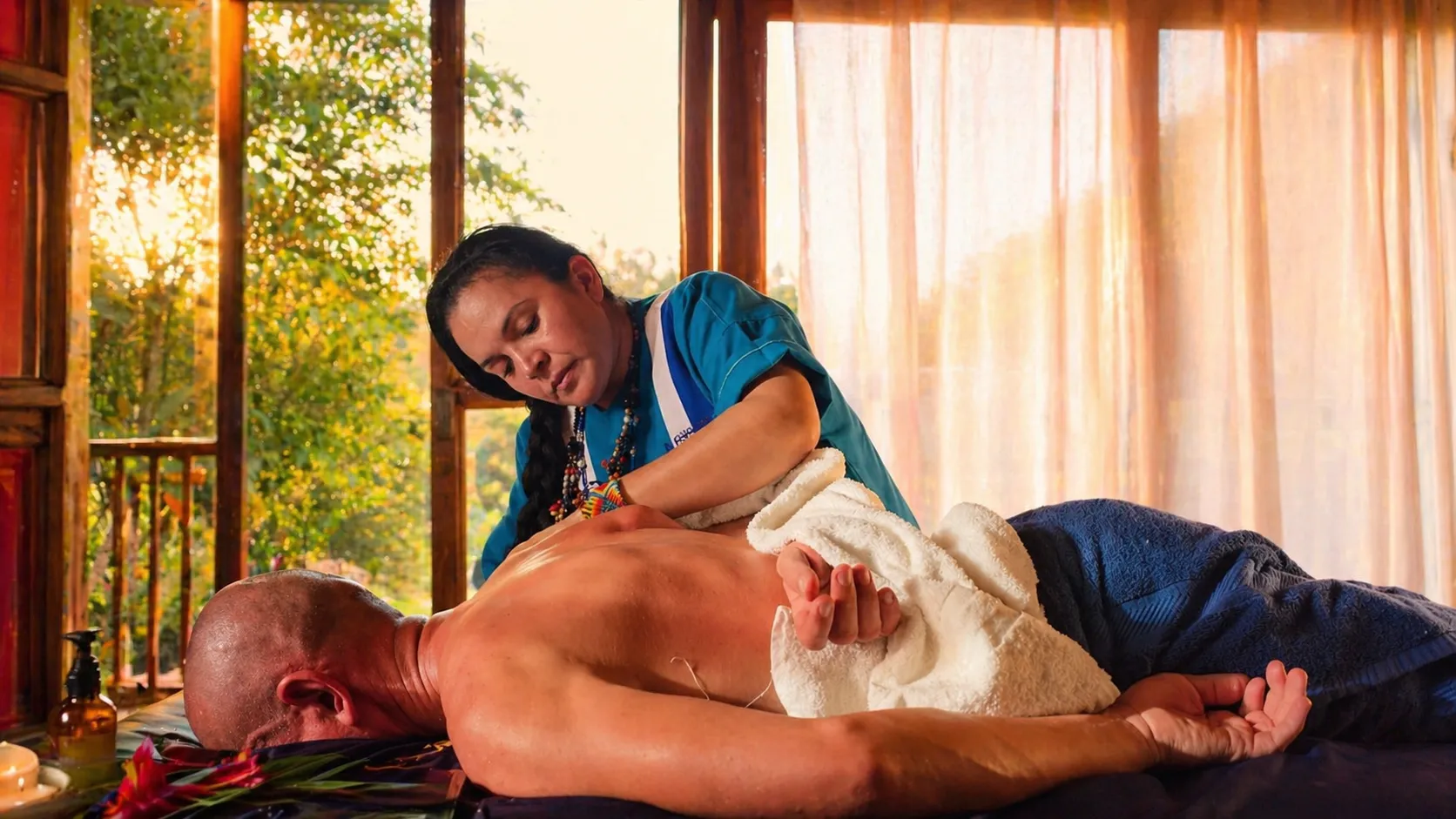
Plant baths and body therapies are part of the care she offers, but their timing matters.
"If the person wants to rest and it isn't the moment for the treatment, that is respected. I don't think we need to insist."
She gives a practical example: if someone has already gone to the waterfall and taken part in the melaza practice at the river, adding a plant bath and another therapy on the same day may simply be too much. The bath can wait until tomorrow.
"You have to observe how much the body has already received during the day. Not everything has to happen on the same day."
For Andrea, this is at the heart of care: the schedule exists, but the person in front of her matters more than getting through every activity on it.
Plant baths as an act of care
Plant baths hold a particularly personal place in Andrea's work.
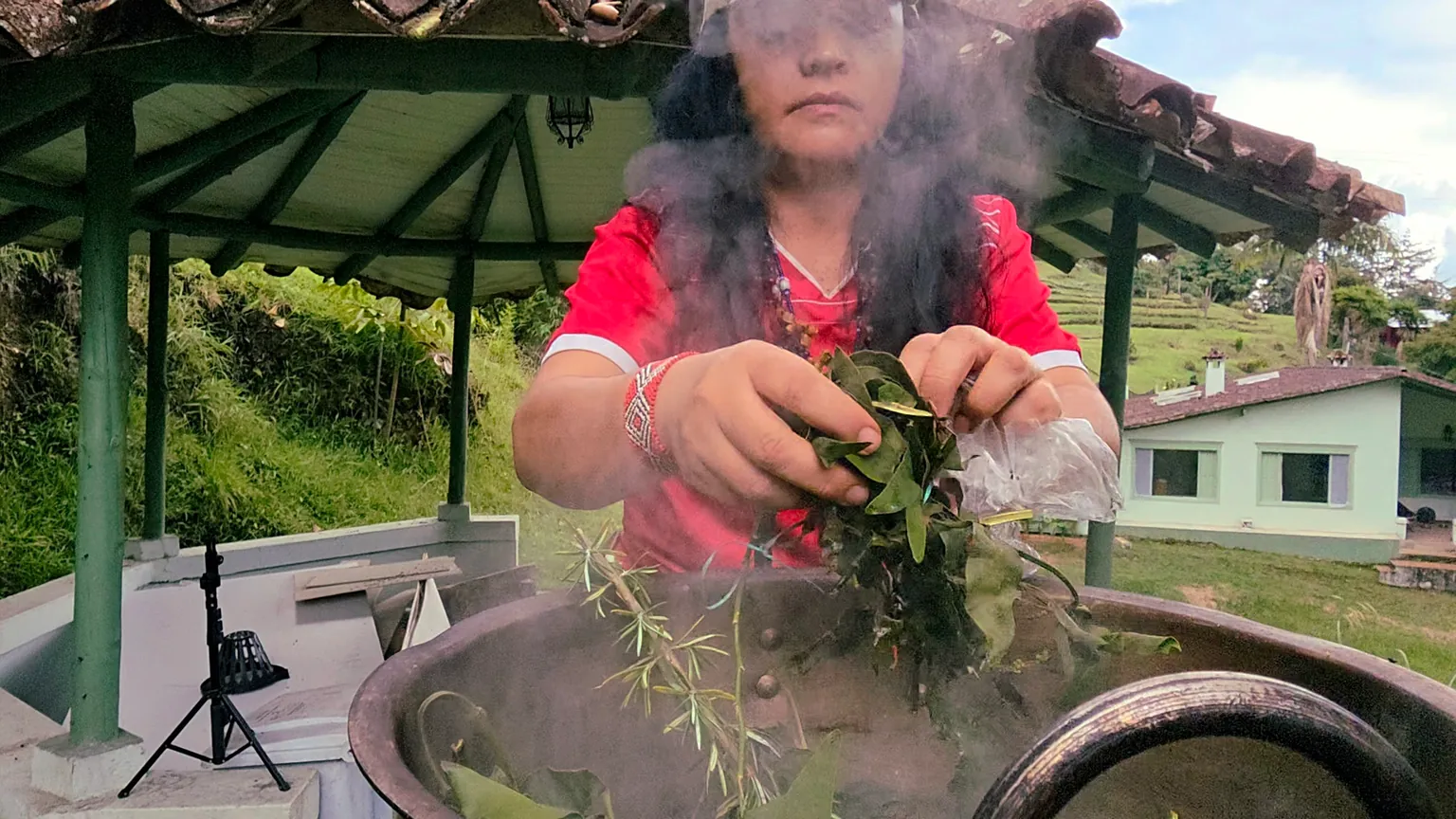
From her experience with plant baths, Andrea says the plants have many functions. She describes the baths as relaxing and says they help the nervous and circulatory systems. She also understands them through the emotional and traditional context in which she works.
"Sometimes people arrive with fears, sadness, or mixed feelings. A bath helps relax that. For me, it's a very special moment within the retreat."
But her description of giving a bath has less to do with a list of effects than with the relationship between two people.
"I experience it as a maternal act from my side. Many times I feel that they receive it almost like children, from a beautiful place of trust and care."
For Andrea, part of the significance of the bath is allowing someone to receive care.
"It's like reminding each person who they are, reminding them that they are valuable, sublime beings, and that sometimes we all need to receive."
The exact plants used, how the baths are prepared, and their wider traditional context are areas we're continuing to document with Andrea and the other people who hold and practice this knowledge.
A space where women can speak without being judged
Andrea has accompanied many women through retreats, through both the physical and emotional aspects of the experience.
She says the first requirement isn't having an answer for everything — it's building enough trust for someone to speak openly.
"For me, the most important thing in women's circles is to open a space of trust where they can be themselves and express what they feel without being afraid of being judged or singled out."
Sometimes that means a woman begins talking without ever having meant to ask Andrea anything. Other conversations are more private: women have approached Andrea about irregular periods, changes in sexual desire, or discomfort in the lower abdomen.
Andrea draws a clear line between accompanying someone from her own experience and taking on a role that isn't hers.
"I can listen, accompany them, and share from my experience, but these symptoms also need to be attended to."
Often, she says, what someone needs first is simpler.
To be listened to.
To be able to talk without shame.
To know she isn't being judged.
What makes someone feel safe?
For Andrea, care is often practical. She pays attention to whether someone needs something, whether they've eaten, how they're feeling, and whether they want company or space.
She also pays attention to the physical environment.
"The place where we're going to work should be clean, pleasant and organized, and it should create an atmosphere of trust. For me, those details are also part of care."
Information matters too. Andrea believes participants should understand what's happening during the retreat, but she prefers explaining activities progressively rather than laying everything out at once.
"When a person knows what is going to happen and understands the activities, they can feel safer and calmer."
Her sense of safety, then, is broader than any single protocol or activity. It includes being present. Observing. Listening. Keeping the environment organized. Explaining what is happening. And making sure someone knows they can ask for help.
You don't have to speak in the Circle of Word
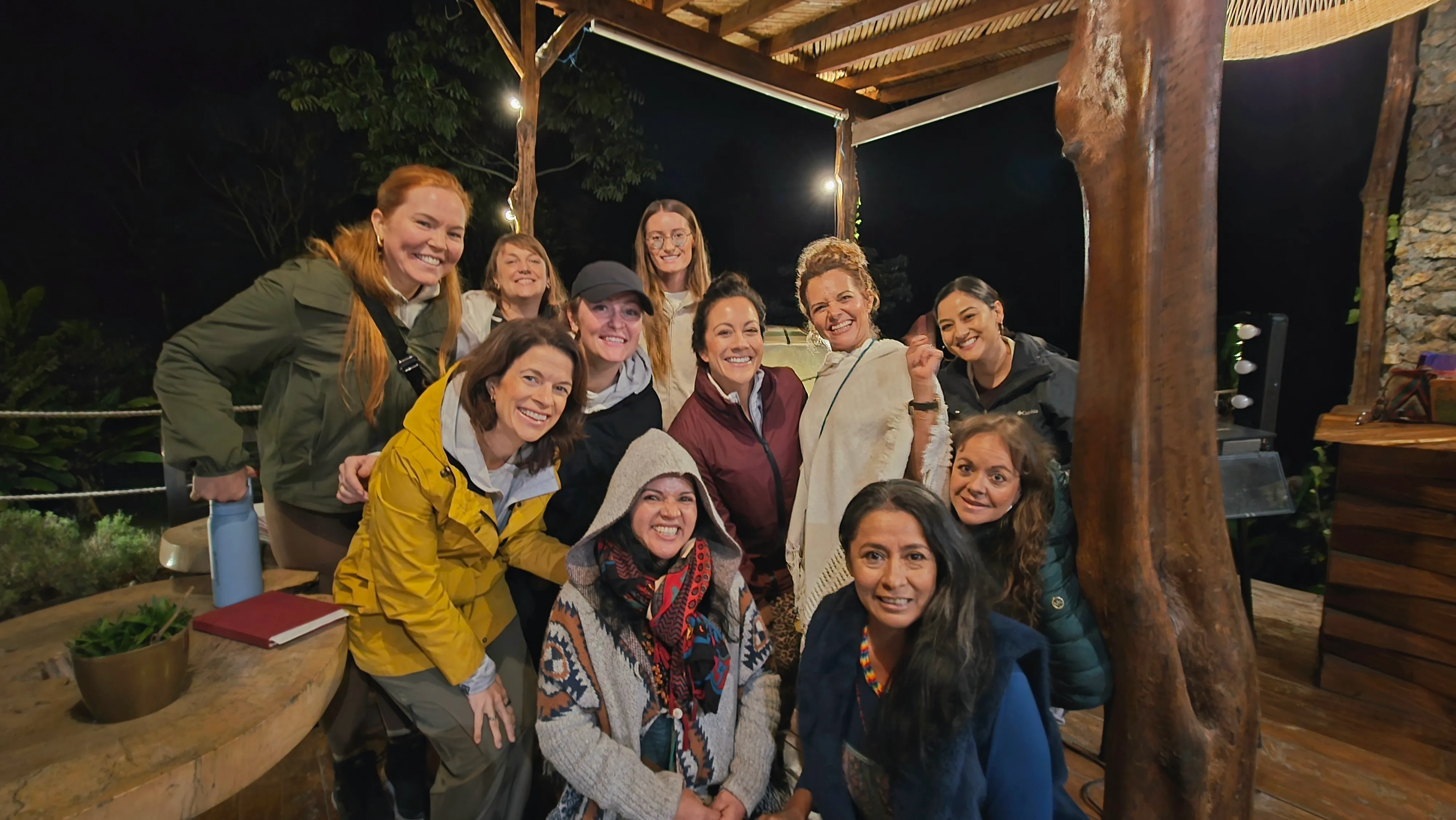
One practice Andrea considers particularly important at Camino al Sol is the Circle of Word.
After an intense personal experience, people sometimes assume they'll be expected to explain what happened to them. Andrea says they don't have to.
"A person doesn't necessarily have to talk about what they experienced in their ceremony. If they don't want to, that is completely respected."
Someone can sit with the group and simply listen. As one person speaks, another may recognize something of their own experience in what's being said. Andrea sees value in that kind of participation, even when the listener never shares their own story.
"Even if someone doesn't want to talk directly about their ceremony, they can feel accompanied simply by listening to others. They don't have to explain, justify, or tell anything they don't want to."
For Andrea, this too is part of what it means to hold space for someone.
"It means allowing the person to be present, to listen, to feel part of the group, and to find their own moment to express themselves, without pressure."
Sometimes accompaniment means giving someone space
The same principle holds outside the circle. Andrea doesn't believe retreat participants need to be continually talking, processing, or participating.
Sometimes the clearest information comes straight from the person.
"They might say, 'I need to rest. Today I don't want to participate. I want to sleep. I'd rather not be in ceremony.' For me, that has to be completely respected."
She doesn't see rest as something that necessarily needs to be overcome.
"Not everyone needs to keep processing, talking, or participating all the time. There are moments when they simply need to sleep, be quiet, and rest."
If someone tells Andrea they need that space, she doesn't try to talk them out of it. It comes back to the same principle running through much of her work at Camino al Sol:
"For me, accompanying someone also means knowing when to give them space."
This profile draws from a recorded conversation with Andrea Díaz in September 2026 and reflects her own experience, observations and approach to accompaniment at Camino al Sol.
