
Something in you may be looking for a place that feels real.
Not flashy. Not performative. Not another spiritual product with beautiful photos and empty promises.
Choosing an ayahuasca retreat is not like choosing a hotel. You are choosing the people, setting, structure, and tradition that will hold you during one of the most vulnerable experiences of your life.
That deserves care.
A good retreat will not rush you into saying yes. It will help you understand whether this work is appropriate for you in the first place.
That is where discernment begins.
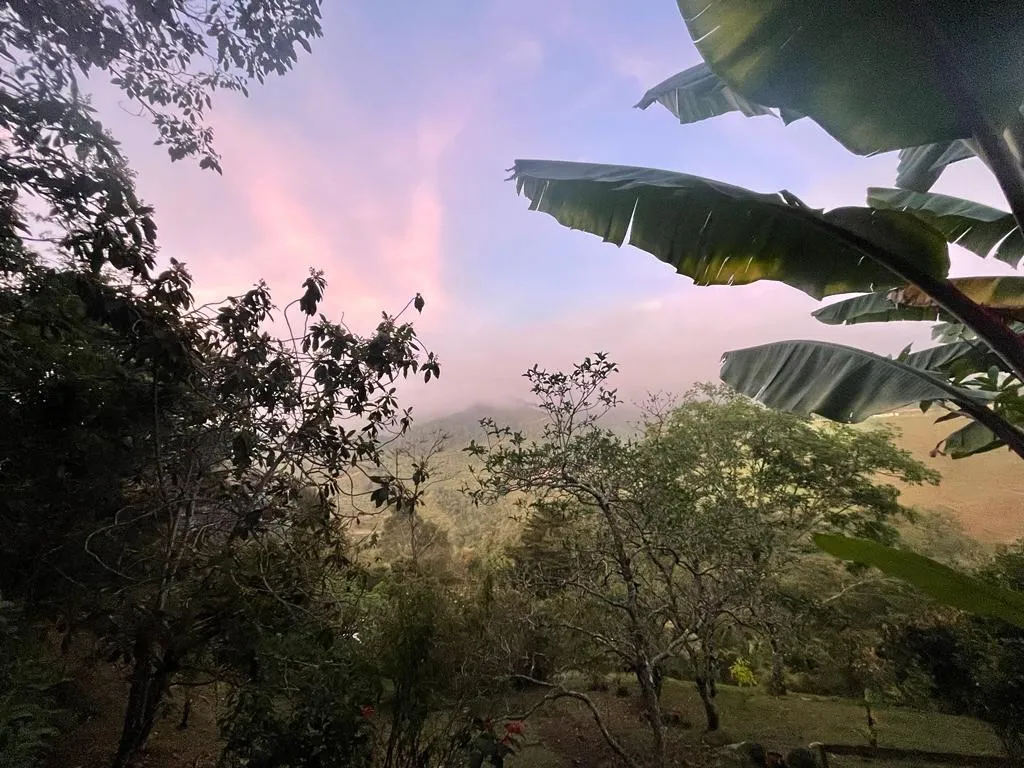
The first red flag is being accepted too easily
If a retreat lets you book instantly without real medical and psychological screening, pause.
That is not convenience. It is a risk.
Ayahuasca, or Yagé in the Colombian tradition, is not appropriate for everyone. Certain medications, psychiatric histories, cardiovascular conditions, substance use patterns, and current life circumstances may require careful review before participation.
A responsible retreat should ask about your health before taking your place in ceremony.
Not after payment. Not when you arrive. Before acceptance.
At Camino al Sol, every applicant goes through screening before being accepted. This is not a formality. It is part of the protection of the work.
This page is educational and does not replace medical advice. Do not stop or change medication without speaking with a qualified medical professional.
If you are in crisis, experiencing suicidal thoughts, psychosis, chest pain, severe withdrawal, or another urgent medical issue, seek emergency care immediately.
You can read more about our approach to ayahuasca safety.
Be careful when a retreat promises healing
A retreat should never promise that ayahuasca will cure depression, anxiety, trauma, addiction, PTSD, or any medical condition.
That kind of promise may sound comforting.
It is not honest.
The medicine may bring insight. It may show patterns. It may help someone meet grief, fear, memory, or truth in a different way. But healing is not guaranteed, and it does not happen because a website says it will.
Healing requires preparation. It requires responsibility. It requires integration. It requires your life after ceremony.
A red flag is language like:
- “Guaranteed transformation”
- “Heal your trauma in one weekend”
- “Cure anxiety naturally”
- “Everyone should do ayahuasca”
- “No risk if your intention is pure”
These are not signs of wisdom. They are signs of marketing.
A trustworthy retreat speaks clearly about possibility and risk.
No medication review is a serious warning sign
Ayahuasca contains MAO-inhibiting compounds. That means medication review matters.
Some antidepressants, psychiatric medications, stimulants, recreational substances, blood pressure medications, and other medicines may create serious risks or require medical review.
A retreat should not casually tell you to stop medication.
That decision belongs with a qualified medical professional who understands your history. Stopping medication suddenly can be dangerous. Continuing certain medications into ceremony can also be dangerous.
Both things can be true.
A responsible center will not improvise with your nervous system. It will ask questions, review carefully, and may say no or ask you to wait.
That is protection.
Watch how they speak about mental health
Some people seek ayahuasca because they are carrying depression, anxiety, trauma, grief, or burnout.
That does not automatically mean ayahuasca is appropriate.
It also does not mean someone is broken.
A responsible retreat will ask about mental health history with care. They should want to understand whether there has been psychosis, bipolar disorder, hospitalization, suicidal crisis, severe dissociation, recent destabilization, or other factors that could make ceremony unsafe.
If a retreat says, “The medicine is safe for everyone,” walk away.
If a retreat says, “We accept all mental health conditions,” ask harder questions.
If they dismiss your concerns with spiritual language, be careful.
The medicine is powerful. But power without discernment is not care.
Unclear facilitators are another red flag
You should know who is holding ceremony.
Not just a brand name. Not just a vague “team of shamans.” Not just a beautiful photo and a few mystical phrases.
Ask who leads the ceremony. Ask about their training, lineage, experience, and role. Ask who supports participants during the night. Ask how many people are in the room and who is responsible if someone becomes distressed.
In Colombia, the word Taita refers to a traditional doctor within specific Indigenous and ancestral contexts. It should not be used as decoration.
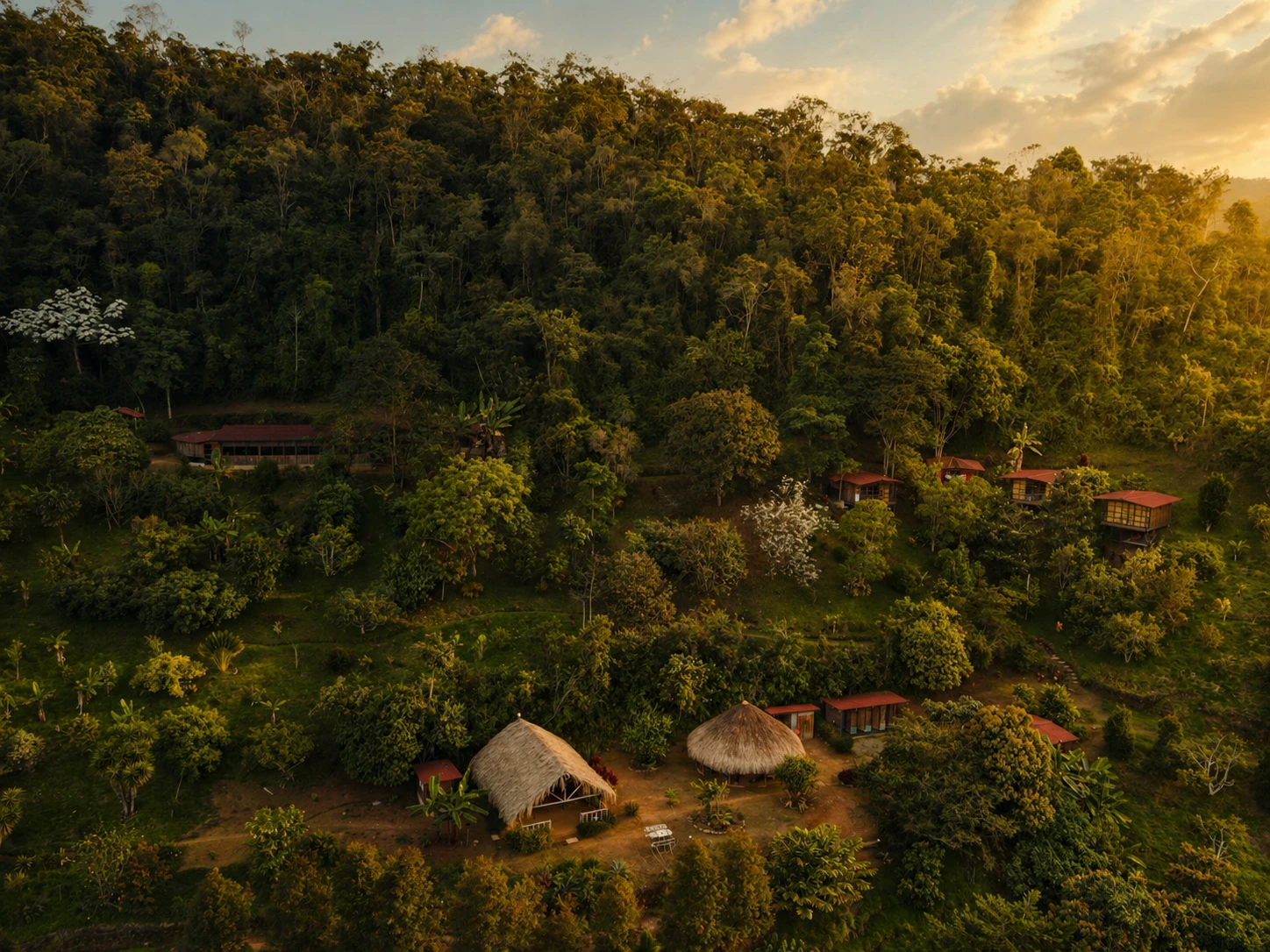
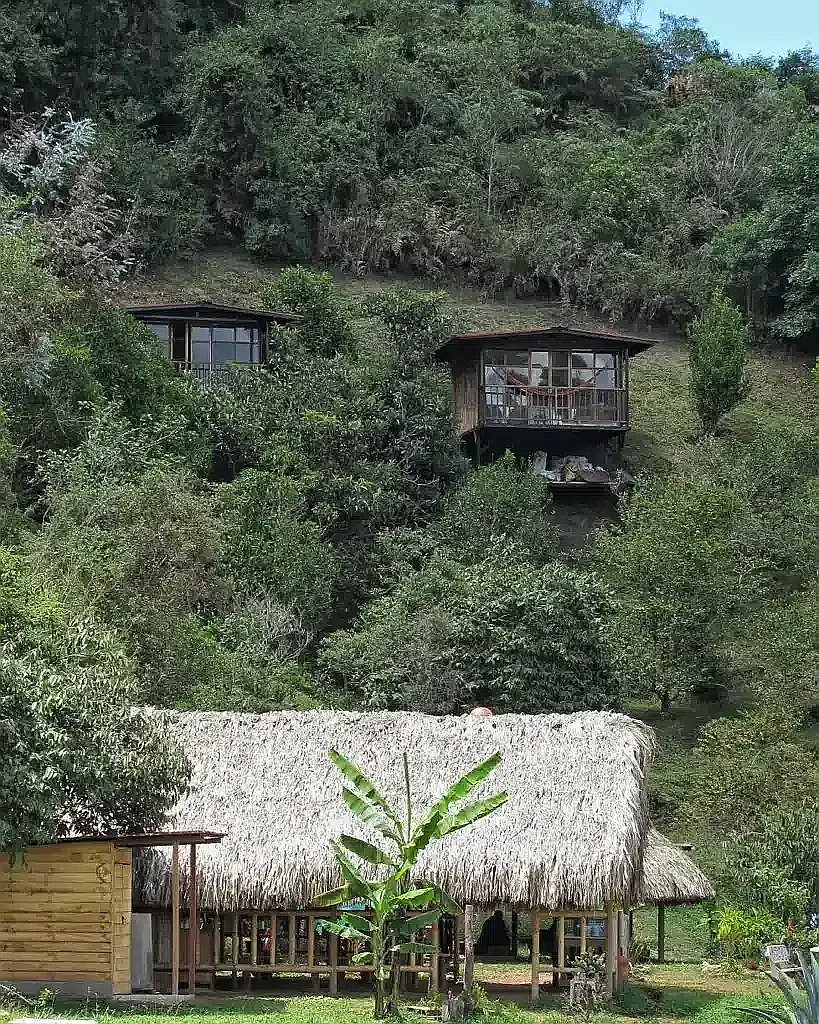
At Camino al Sol, ceremonies are held in the Colombian Yagé tradition with Taita Diego Marmolejo, a traditional doctor from Putumayo. The setting is Yaugara, a nature reserve and botanical garden in the mountains of Antioquia near Medellín.
Lineage matters. Experience matters. Accountability matters.
If a retreat cannot clearly explain who holds the work, that is not a small detail.
It is the center of the container.
High-pressure sales do not belong here
Pressure is not medicine.
Be cautious if a retreat pushes you to pay quickly, uses fear of missing out, pressures you into ceremonies you are unsure about, or makes you feel weak for asking questions.
You should be allowed to move slowly.
You should be allowed to ask direct questions.
You should be allowed to decide that now is not the right time.
A retreat that respects the medicine should also respect your pace.
The application process should help both sides listen. It should not feel like a sales funnel.
No clear emergency plan is a problem
Ceremony is spiritual work, but bodies are still bodies.
People can faint. People can panic. People can have medical complications. People can become disoriented. People can need more support than expected.
A retreat should have a clear plan for what happens when something goes wrong.
That does not mean fear should guide the work. It means reality should be respected.
Ask:
- What happens if someone has a medical emergency?
- How far is the nearest medical facility?
- Who stays present during ceremony?
- What support exists if someone becomes psychologically overwhelmed?
- How are participants watched through the night?
- What is the plan after ceremony if someone is not stable?
If the answer is vague, spiritualized, or dismissive, listen carefully.
A safe container is not built by hope alone.
Too many people can weaken the container
Large groups are not always unsafe. But group size matters.
In an ayahuasca ceremony, people may need support at different moments. Some may vomit. Some may cry. Some may need grounding. Some may become frightened. Some may need quiet reassurance.
If the group is too large and the support team is too small, the container can become thin.
Ask about group size. Ask how many facilitators or helpers are present. Ask whether participants are monitored during the ceremony.
At Camino al Sol, we work with small, carefully screened groups. This is intentional.
Smaller groups do not make the work easy.
They make it more held.
Boundary issues should make you leave
A retreat should be clear about boundaries.
Physical boundaries. Sexual boundaries. Financial boundaries. Emotional boundaries. Ceremonial boundaries.
No facilitator should pressure you into touch, private meetings, intimacy, secrecy, or special treatment. No one should use spiritual authority to override your consent.
Be careful with anyone who presents themselves as beyond questioning.
Be careful with anyone who says discomfort means you must surrender to whatever they want.
Surrender to the medicine is not surrender of your dignity.
A good retreat protects participants from manipulation. It does not ask them to confuse manipulation with healing.
Be cautious when medicine is mixed casually
Some retreats combine ayahuasca with many other substances, practices, or extreme experiences.
More is not always better.
A center should be able to explain what is being served, why it is being served, who prepares it, and what risks are involved. If the brew contains unknown additives, or if the retreat casually mixes substances without clear rationale and screening, that is a red flag.
You do not need a spectacle.
You need a responsible container.
No integration support means the work may be left unfinished
The ceremony is not the whole work.
What happens afterward matters deeply.
Insights can fade. Emotions can continue moving. Old patterns can return. New clarity can feel difficult to live. Without integration, people may leave with powerful experiences but no grounded way to carry them into daily life.
A responsible retreat should speak about integration before you arrive.
Not as an afterthought. Not as a vague promise. As part of the work.
At Camino al Sol, integration is part of how we understand healing. The ceremony may open something, but your life is where it must become real.
You can explore more about integration after ayahuasca.
Poor transparency around food, lodging, transport, and costs matters too
Safety is not only medical.
It is also practical.
Before choosing a retreat, you should understand what is included, where you will sleep, how you will arrive, what food is served, what preparation is expected, and what happens if you are not accepted after screening.
Confusion creates stress. Stress weakens trust.
A retreat does not need to be luxurious. It needs to be clear.
Ask about:
- Accommodation
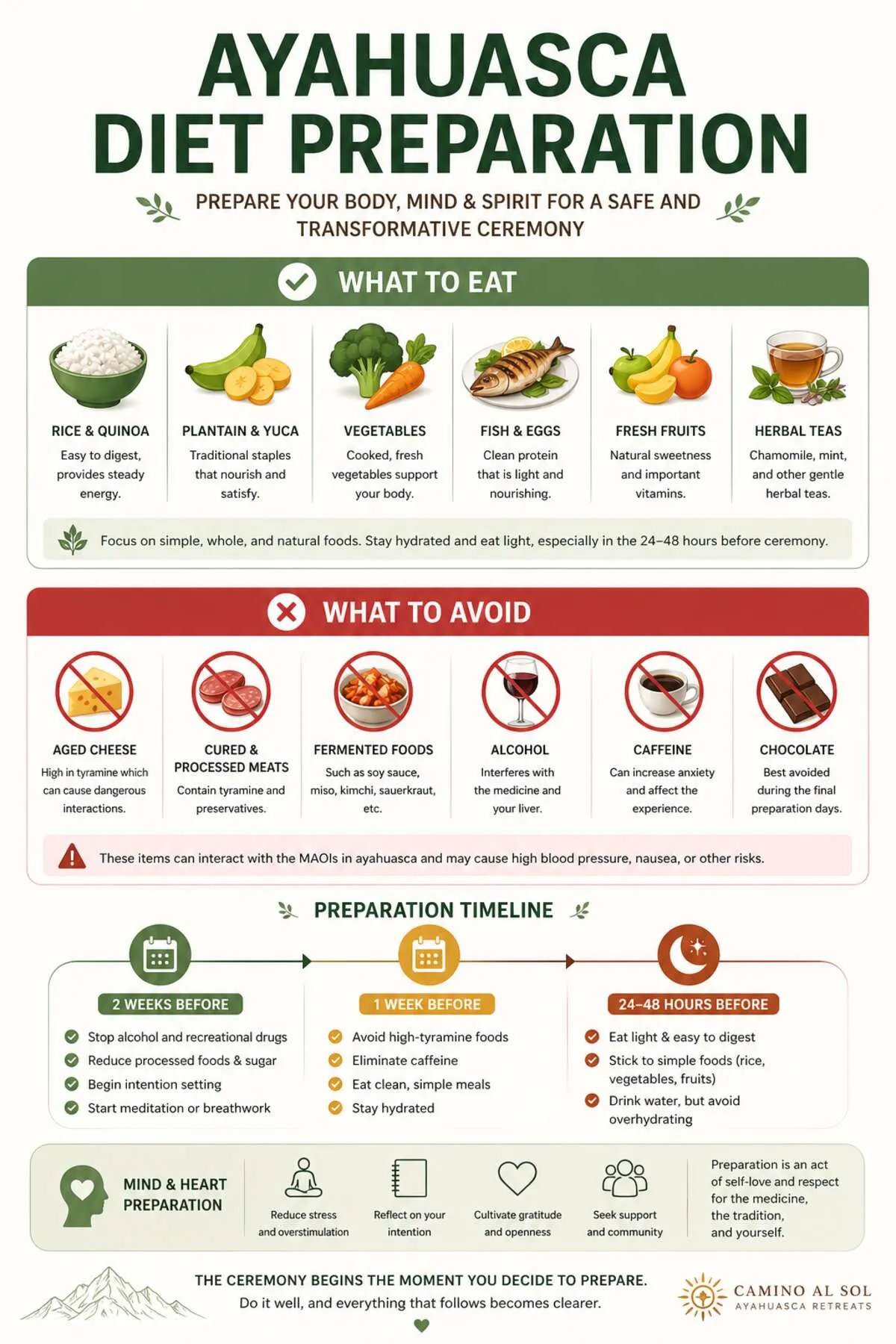
- Food and preparation guidelines
- Transport
- Group size
- Ceremony schedule
- Screening process
- Refund or cancellation policy
- Integration support
- What is not included
If the retreat avoids simple practical questions, pay attention.
The strongest green flag is the willingness to say no
This may be the clearest sign of responsibility.
A trustworthy retreat does not accept everyone.
Sometimes the right answer is wait. Sometimes the right answer is not now. Sometimes the right answer is no.
That can feel disappointing. But in this work, a careful no is more trustworthy than an easy yes.
The medicine is not recreational. It is not a shortcut. It is not something to squeeze into a travel itinerary because the dates are convenient.
It asks for respect.
A responsible retreat will ask whether you are ready, whether the setting is right, and whether the risks are understood.
That is not gatekeeping.
That is care.
Questions to ask before choosing an ayahuasca retreat
Before applying or paying, ask direct questions.
A serious retreat should be able to answer them without becoming defensive.
Screening
- Do you require medical and psychological screening before acceptance?
- Who reviews the screening?
- What conditions or medications may make someone ineligible?
- Do you ever decline applicants?
Medication and health
- How do you handle antidepressants, psychiatric medications, stimulants, blood pressure medication, or other prescriptions?
- Do you ever advise people to stop medication?
- Do you require medical clearance when needed?
Ceremony
- Who leads the ceremony?
- What is their background, lineage, and experience?
- How many people attend each ceremony?
- Who supports participants during the night?
Safety
- What happens if someone has a medical or psychological emergency?
- Where is the nearest medical facility?
- Are participants monitored after drinking?
- What is your plan if someone remains distressed after ceremony?
Integration
- What support is offered after ceremony?
- How do you help people ground insights into daily life?
- Is integration included or separate?
Ethics
- What boundaries are in place between facilitators and participants?
- How do you handle complaints or concerns?
- Are participants allowed to decline touch, practices, or additional offerings?
The answers matter.
The way they answer matters too.
Choosing slowly is part of the work
If you are looking for an ayahuasca retreat, do not only ask, “Can I go?”
Ask a better question.
“Should I go here?”
Look at the screening. Look at the people. Look at the promises. Look at the silence between the words.
A safe retreat does not need to convince you with urgency. It should help you become more honest about what you are seeking, what you are carrying, and whether this is the right moment.
At Camino al Sol, we hold traditional Colombian Yagé ceremonies in the mountains of Antioquia, near Medellín. We work with small groups, screening before acceptance, preparation, and integration support.
If you feel called to this work, begin with discernment.
You can learn more about our ayahuasca retreat near Medellín, explore our wider Colombia retreat page, or apply for screening when you are ready.
No rush.
The right door does not need to push you through it.
