
The honest answer requires more nuance than either yes or no.
Ayahuasca can be intensely confronting. It can bring up fear, grief, confusion, and physical discomfort. It can dissolve the familiar sense of who you are. It does not always do these things, but it can.
Anyone telling you otherwise is either softening the truth to sell you something, or has not sat in many ceremonies.
That is not a warning against it.
It is just where an honest answer starts.
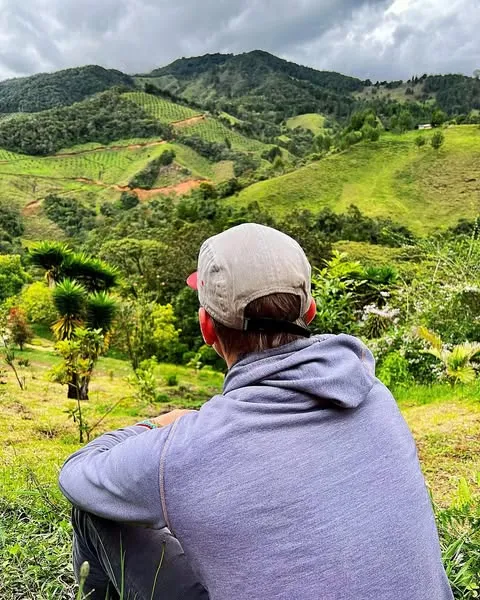
Fear before ceremony often becomes clearer when there is space, preparation, and respect.
What “scary” usually means in ceremony
When people describe ceremony as frightening, they are usually describing one of a few things.
The physical experience can be overwhelming. Ayahuasca commonly causes nausea, purging, trembling, sweating, and waves of physical intensity. The body undergoes a real physiological process. For people who are not prepared for this, it can feel alarming.
In the Colombian tradition, this cleansing is often understood as la purga. Still uncomfortable. But not meaningless.
The loss of control is real. Once the medicine begins, you are in it. It does not negotiate. For people whose nervous systems are organized around maintaining control, that can feel threatening in a way that has less to do with danger and more to do with surrender.
The content of the experience can be difficult. People encounter grief they have been carrying for years. They see patterns in themselves they would rather not see. They revisit memories they have set aside.
This is not the medicine being cruel.
It is showing what is already there.
And yes, the visionary experience itself can be disorienting. Not always. But sometimes.
Fear is not the enemy
This is where the Colombian yagé tradition says something that takes time to understand: fear itself is not always the problem.
As Taita Diego says:
“It depends on how you think, how you feel, and how your heart is. If there is humility and respect, the visions are one thing.”
Fear that comes from resistance, from the part of us trying to maintain control, is different from genuine danger. The medicine can bring up the former. And in a proper ceremonial container, that kind of fear has somewhere to go.
What separates a difficult experience from a traumatic one is rarely the experience alone. It is the quality of what surrounds it: the skill of the healer, the safety of the space, the preparation you brought, and what you do afterward.
A ceremony that moves through fear and finds something on the other side is not a failure.
It is often exactly what the work looks like.
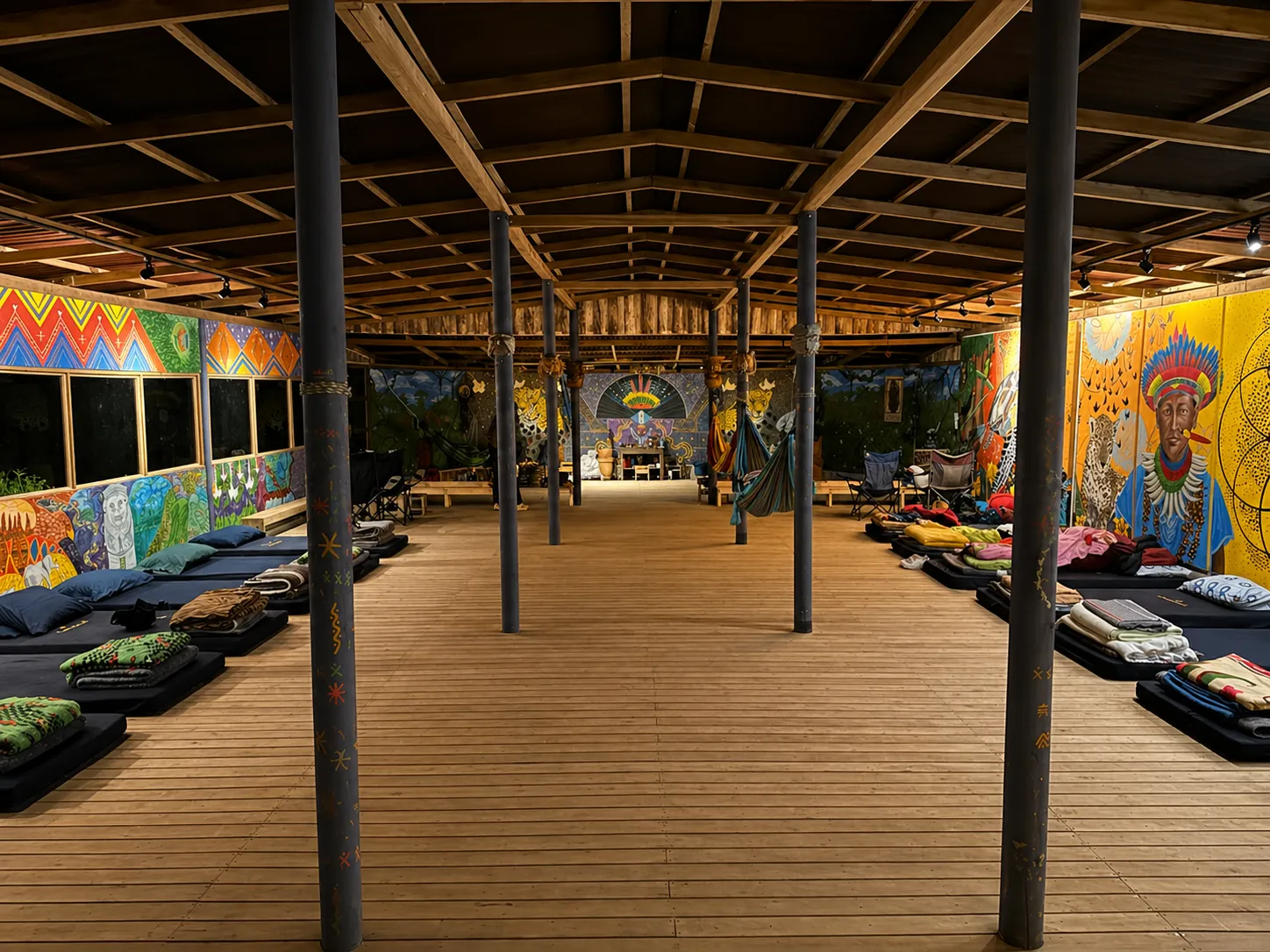
The container matters: where you drink, who holds the ceremony, and how carefully you are screened.
The difference between intensity and danger
This distinction matters before you decide anything.
Intensity is part of the work. Crying, trembling, purging, or confronting something difficult are not automatically signs that something is wrong. Often, they are signs that something real is moving.
Danger is different.
Danger involves specific medical and psychological conditions that need to be assessed before anyone drinks. Certain heart conditions. Active psychosis. Severe untreated bipolar disorder. Recent psychiatric crisis. And medications that may interact with the brew’s harmala alkaloids.
Certain medications, including some antidepressants, stimulants, and compounds that affect serotonin systems, may create serious risks when combined with ayahuasca.
A responsible retreat will screen for these.
Not as paperwork.
Because they matter.
If a retreat accepts you without asking direct questions about your health, current medications, and mental health history, that is the real warning sign. Not whether the experience is intense.
You can learn more about responsible screening on our ayahuasca safety page.
This page is educational and does not replace medical advice. Do not stop or change medication without speaking with a qualified medical professional.
If you are in crisis, experiencing suicidal thoughts, psychosis, chest pain, severe withdrawal, or another urgent medical issue, seek emergency care immediately.
What actually helps when things get hard
Preparation makes a difference.
Not in a way that guarantees ease. Nothing can guarantee that.
But preparation changes how you meet difficulty.
People who arrive having followed the dietary preparation, reduced alcohol and stimulants, rested properly, and spent real time in reflection often have more access to the experience. There is less physical and mental turbulence in the way.
Setting an honest intention also matters.
Not a wish list.
A real question you are willing to look at.
That kind of intention becomes an anchor when the experience gets disorienting.
The healer’s presence matters in ways that are hard to describe until you have experienced it. A Taita with genuine formation, whose training comes from years of practice under the guidance of elders, changes the quality of the space.
The medicine music, the chants, the protection of the ceremonial circle: these are not decoration. Taita Diego describes the chants as:
“Coordinates from heaven.”
They do something.
Not as metaphor. As support.
And integration matters perhaps more than all of it. The ceremony is one night. What you carry out of it, whether you sit with it, act on what you saw, and let it change how you live, is where the medicine actually does its work.
You can read more about this on our integration page.
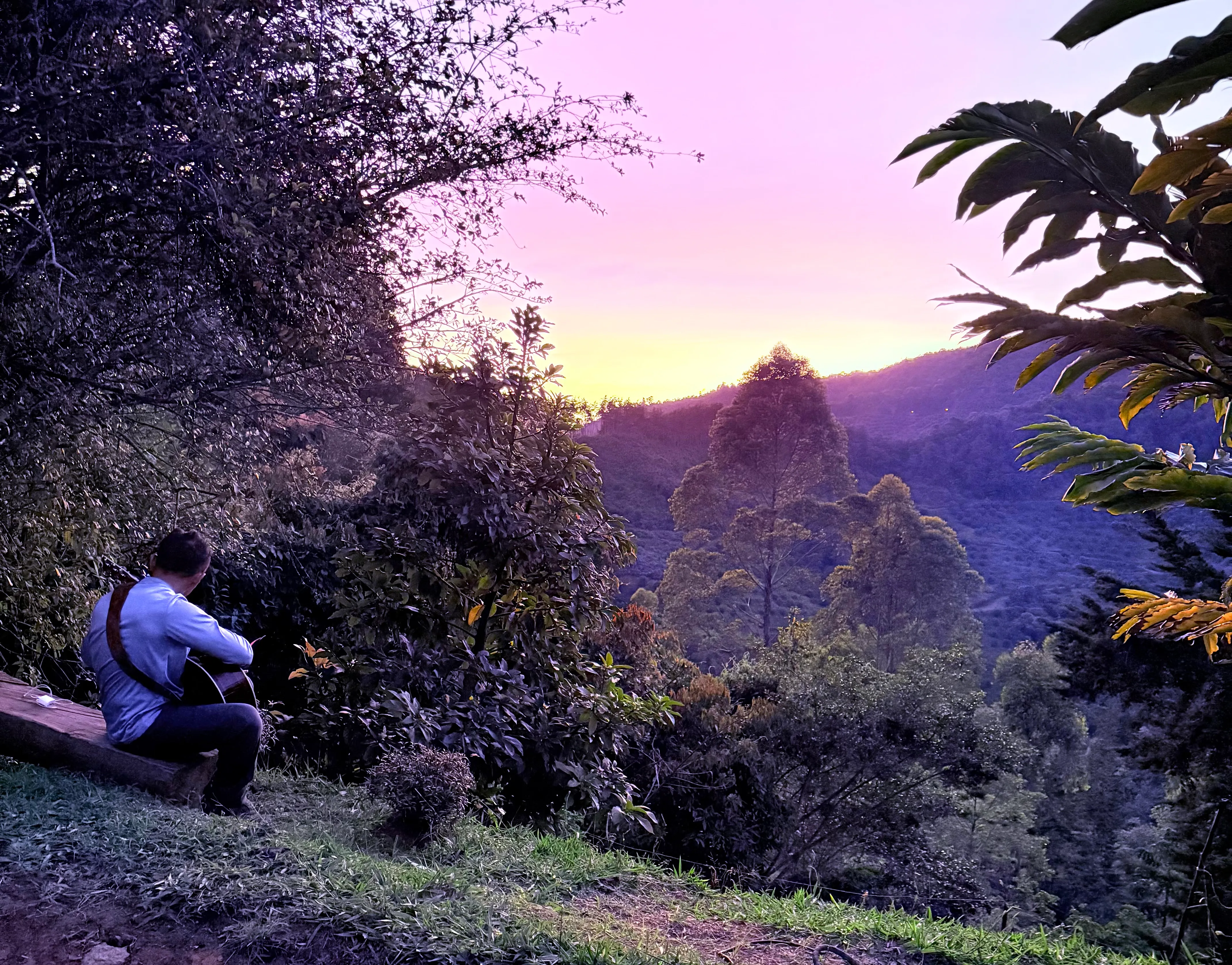
The ceremony is not the end of the work. Integration is where the experience becomes part of life.
“But I’ve heard the stories…”
They exist.
There are people who have had genuinely hard experiences. Some have been destabilized. This is true.
When those experiences are examined carefully, they often share recognizable features: no real screening, inexperienced or untrained facilitators, large anonymous groups, poor preparation, or no integration support afterward.
The difficulty was not random.
It had context.
That does not mean every hard ceremony is someone’s fault. The medicine does not guarantee ease for anyone. Some people encounter something genuinely difficult even in careful settings.
But “I heard it can be intense” is not the same as “it will go badly.”
Those are different things.
Collapsing them is how fear of the unknown becomes avoidance of something that might actually matter.
A final honest thing
People who come to this work with a real relationship to their fear tend to have the most meaningful experiences.
Not fearless.
Not paralyzed.
Just willing to tell the truth.
People who arrive certain it will be fine sometimes get humbled in ways they did not expect. People who are so afraid they spend the whole ceremony fighting rather than receiving may miss what was there for them.
The people who arrive saying, I am nervous, I do not fully know what is coming, and I am willing to be honest about what arises, often find something real.
As Taita Diego says:
“This isn’t a place to come and escape. It is a place to recharge — and then continue the journey.”
The medicine does not exist to entertain you.
It does not promise comfort.
It asks for honesty.
If you have been sitting with this question for a while, that itself is information. Not everyone is ready right now. Not everyone needs this path. But if something in you keeps returning to it, that is worth paying attention to.
If you feel called to learn more, you can read about how we approach ceremony at our ayahuasca retreat near Medellín, explore our Colombia ayahuasca retreat, or begin with the application process to understand what screening and readiness actually look like.
