
The short answer: ayahuasca, known in Colombia as yagé, is openly practiced in Colombia within traditional and ceremonial contexts.
But that does not mean it should be treated casually.
Colombia is not the same as the United States, the United Kingdom, or many European countries, where ayahuasca is often treated through the legal status of DMT. In Colombia, yagé has a long Indigenous history, especially in Amazonian traditions connected to Putumayo and other regions.
Still, legality is not the same as safety. It is not the same as proper training. It is not the same as ethical practice.
For someone considering a retreat, the better question is not only, "Is ayahuasca legal in Colombia?"
The better question is:
Where are you drinking, who is holding the ceremony, and what safeguards are in place?
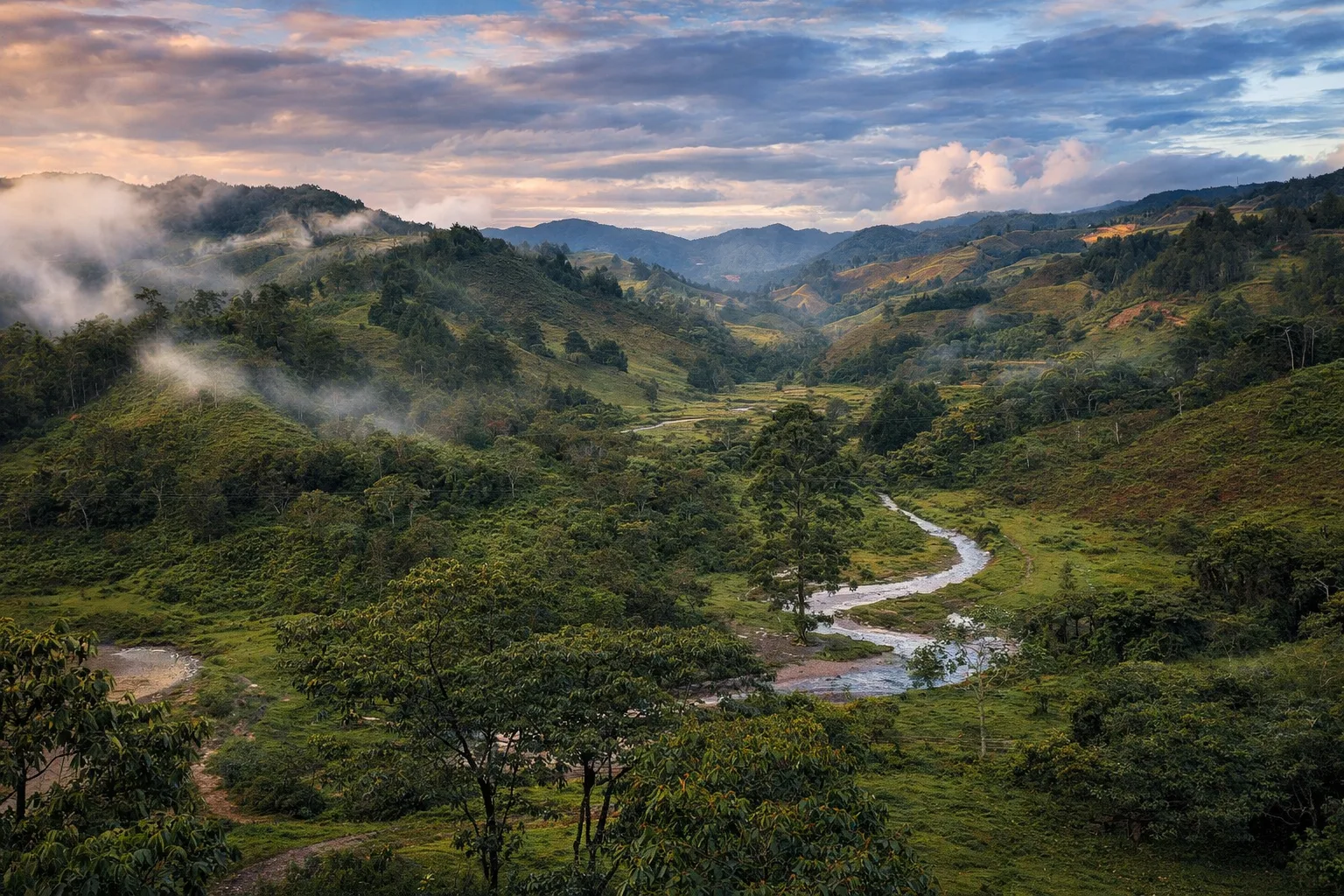
Colombia offers a living yagé tradition, but the setting and the people holding the work matter deeply.
The Practical Answer for Travelers
In practical terms, international travelers do attend ayahuasca and yagé ceremonies in Colombia, and many retreat centers operate openly.
This is very different from countries where ayahuasca is treated as clearly illegal because it contains DMT. Colombia has a living Indigenous context for yagé, and the medicine is not approached only as a chemical substance.
That said, travelers should avoid simplistic claims such as:
- "Ayahuasca is legal everywhere in Colombia"
- "Any retreat is legally protected"
- "Because it is legal, it is safe"
- "You can travel internationally with yagé"
- "You can buy it casually and take it home"
Those are not responsible conclusions.
Colombia may be one of the more culturally grounded places to encounter yagé, but it is still your responsibility to choose carefully.
If you are researching retreats, start with the broader context of an ayahuasca retreat in Colombia, then look closely at safety, screening, lineage, and integration.
Ayahuasca, Yagé, and the Colombian Context
In Colombia, the word yagé is often more culturally appropriate than ayahuasca.
"Ayahuasca" is the term more commonly used internationally, especially in Peru and in English-speaking retreat culture. "Yagé" is the Colombian term, especially connected with traditions from the Colombian Amazon and Putumayo.
This distinction matters.
It reminds us that the medicine is not just a psychedelic substance. It belongs to living traditions, families, elders, songs, diets, ethics, and ways of seeing life.
At Camino al Sol, we speak of yagé because our work is connected to Colombian tradition. Ceremonies are held by Taita Diego Marmolejo, a traditional doctor from Putumayo, and the retreat is based in the mountains of Antioquia, near Medellín.
Taita Diego says:
"The important thing is where you are going to drink, and who you are going to drink with."
That sentence matters more than any legal shortcut.
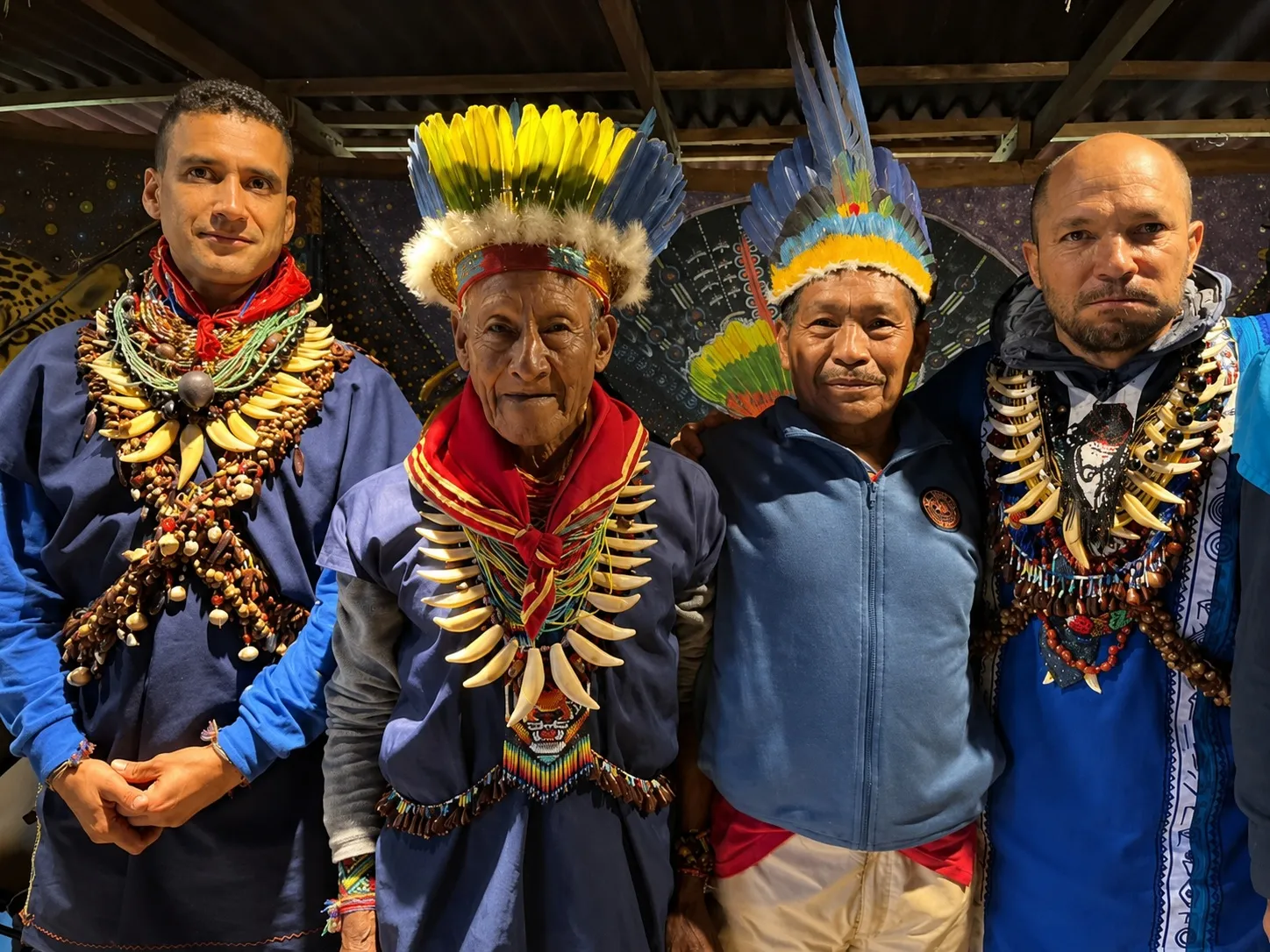
Yagé in Colombia belongs to living traditions, not to casual psychedelic tourism.
Why DMT and Ayahuasca Are Not the Same Legal Question
Ayahuasca contains plants that may include naturally occurring DMT.
That is where much of the legal confusion begins.
Internationally, DMT is controlled under the 1971 Convention on Psychotropic Substances. But plant materials and traditional preparations have often been treated differently from isolated or synthetic DMT.
The 2010 Annual Report of the International Narcotics Control Board explains that while some active ingredients in plants are controlled under international conventions, the plants themselves are not currently controlled under the 1971 or 1988 conventions, and decoctions made from those plants are also not under international control.
That does not automatically decide Colombian domestic law in every situation. National law still matters.
But it helps explain why ayahuasca is not always treated the same way as extracted DMT.
For travelers, the practical rule is simple:
Do not treat yagé as something to buy, carry, export, mail, or experiment with privately.
Participating in a traditional ceremony in Colombia is one thing. Trying to transport medicine across borders is another. That can create serious legal problems.
Is It Legal to Attend an Ayahuasca Retreat in Colombia?
Foreigners do attend ayahuasca and yagé retreats in Colombia.
The more important question is whether the retreat is operating responsibly.
A responsible retreat should be able to explain:
- Who leads the ceremony
- What tradition or lineage the work comes from
- Whether applicants are screened before acceptance
- What medical or psychological conditions may make participation unsafe
- Whether medication use is reviewed carefully
- What preparation is required
- What support is available after ceremony
- What happens if someone is not accepted
If a retreat offers instant booking, avoids medical questions, promises guaranteed healing, or treats the medicine like an exotic experience, that is a warning sign.
A legal setting does not remove risk.
It only changes the legal context.
For safety-specific questions, read our ayahuasca safety guide before applying.
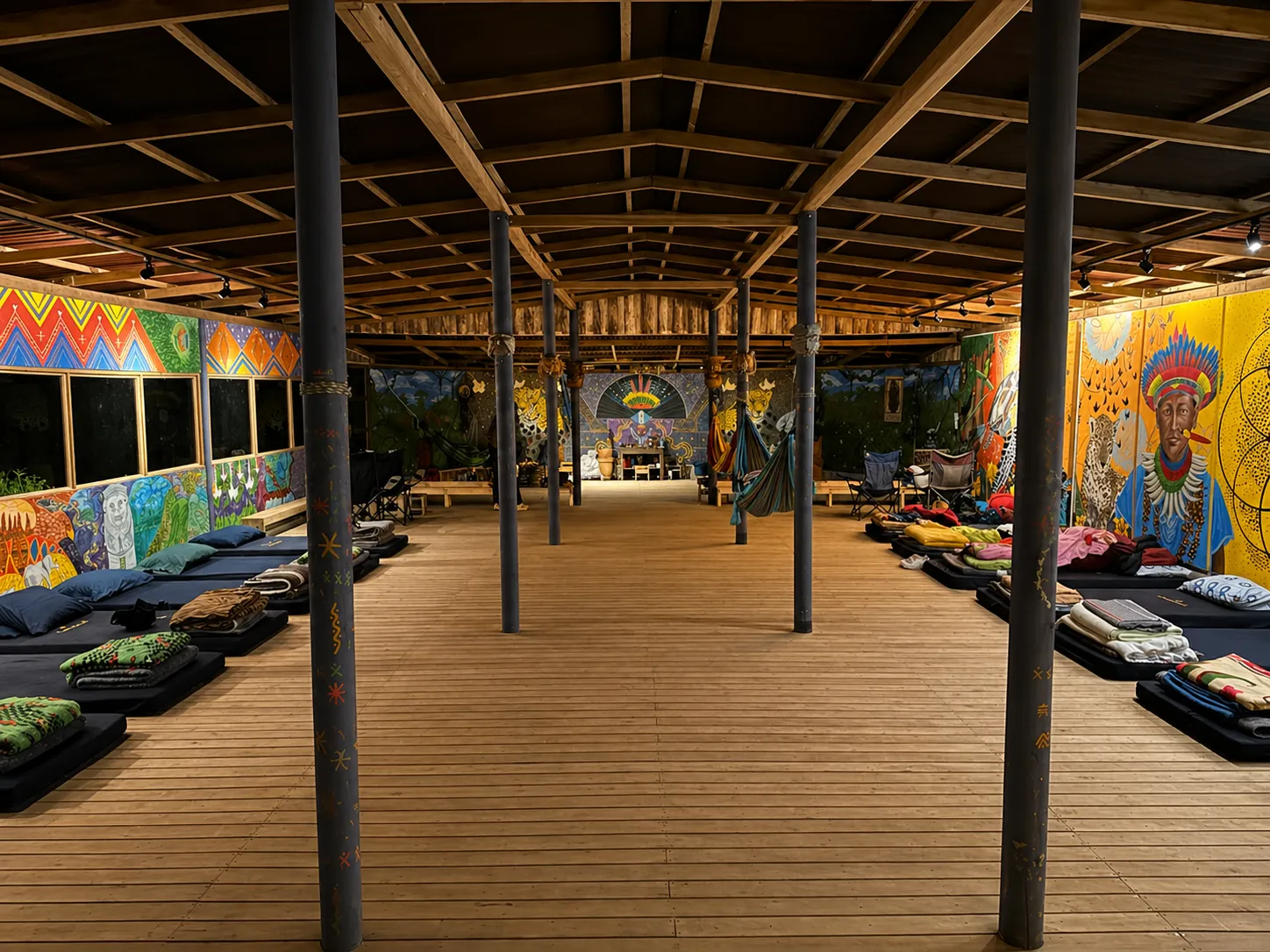
The ceremony space matters, but the preparation and screening before ceremony matter just as much.
What Legality Does Not Guarantee
This is where many travelers make mistakes.
They assume that if ayahuasca is available in a country, the retreats must be safe, regulated, or professionally monitored.
That is not necessarily true.
Ayahuasca retreats vary widely. Some are held with deep training, cultural grounding, and careful screening. Others are improvised, commercial, or poorly prepared.
Legal access does not guarantee:
- A trained traditional doctor
- Ethical conduct
- Safe dosage
- Medical screening
- Psychological screening
- Emergency planning
- Proper integration support
- Respect for Indigenous knowledge
- Honest communication about risks
The Associated Press has reported that psychedelic retreats around the world vary in safety procedures, staffing, screening, and aftercare. That is why the retreat itself must be evaluated carefully.
This page is educational and does not replace medical or legal advice. Do not stop or change medication without speaking with a qualified medical professional.
If you are in crisis, experiencing suicidal thoughts, psychosis, chest pain, severe withdrawal, or another urgent medical issue, seek emergency care immediately.
Can You Bring Ayahuasca Into or Out of Colombia?
You should not attempt to bring ayahuasca, yagé, or related plant preparations across international borders.
Even if a ceremony is openly practiced in Colombia, another country may treat ayahuasca as illegal because of its DMT content. Customs authorities may not distinguish between traditional plant medicine and controlled substances in the way a retreat center does.
Avoid:
- Flying internationally with yagé
- Mailing ayahuasca
- Buying medicine to take home
- Carrying plant concentrates, powders, or bottles
- Asking a provider to ship medicine abroad
This is not an area to improvise.
If your question involves import, export, possession, or transport, speak with a qualified legal professional in the relevant country.
How Camino al Sol Approaches This Responsibility
At Camino al Sol, we do not treat yagé as a product.
We do not offer instant booking.
Every applicant goes through a screening process before acceptance. This includes medical and psychological review because some people should not drink yagé, or should only consider it after professional clearance.
Our work is held in small groups, near Medellín, with preparation and integration support. The point is not to create an extreme experience. The point is to approach the medicine with respect, responsibility, and enough structure to reduce unnecessary risk.
If someone is not a good fit, the responsible answer is no.
That matters.
A retreat should be willing to turn people away.
If you feel called to this work, begin with the application and screening process. It is free to apply, and applying does not commit you to attend.
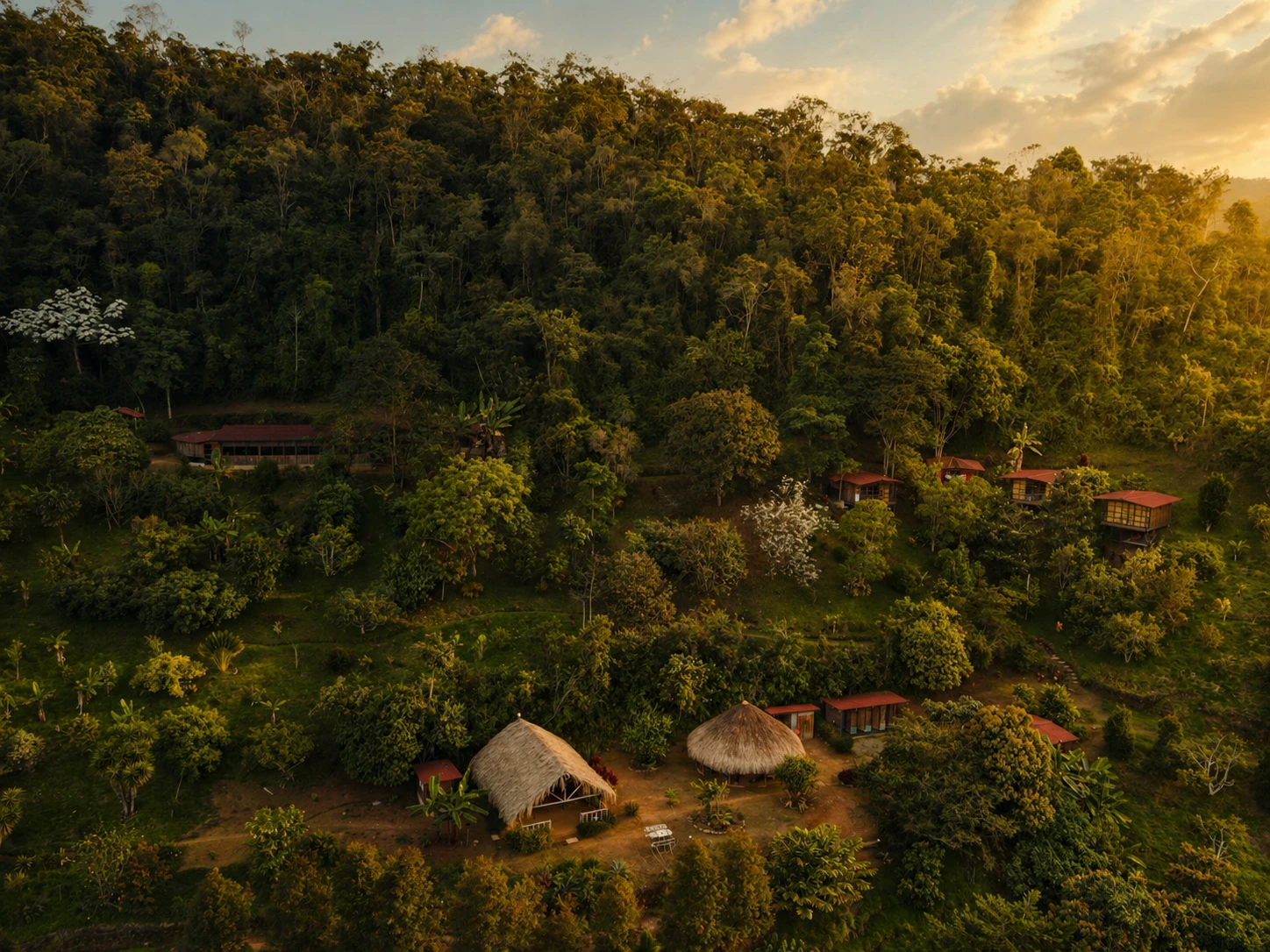
The right retreat should give you space to ask serious questions before you make a decision.
A Simple Way to Think About It
Is ayahuasca legal in Colombia?
For traditional ceremonial participation, Colombia is one of the countries where yagé is openly practiced and culturally rooted.
But that answer is not enough.
The real decision is about responsibility.
Are you medically and psychologically prepared?
Is the retreat screening people before ceremony?
Is the medicine held by someone with years of formation?
Is there preparation before and integration after?
Is the center honest about risks?
That is the level of care this work deserves.
Legal access may open the door.
It does not tell you whether you should walk through it.
