
Something in you knows the past is not finished.
Maybe you do not call it trauma. Maybe there is no diagnosis, no single event, no clean story you can explain in one sentence. But there are patterns you keep repeating. A grief that never fully moved. A relationship wound that changed how you trust. A childhood you survived, but never really processed.
So the question becomes simple, even if the answer is not:
Can ayahuasca help heal trauma?
The honest answer is: it may help some people, but it is not a cure, not a shortcut, and not right for everyone.
At Camino al Sol, we work with yagé, the Colombian name for ayahuasca, in a traditional ceremonial setting in the mountains of Antioquia near Medellín. We have seen people come with grief, childhood wounds, relational pain, shame, betrayal, and old emotional patterns that talk therapy alone did not fully reach.
But we do not treat trauma like a marketing promise.
Trauma work requires care. It requires screening. It requires integration. And it requires respect for the fact that opening something too quickly, in the wrong setting, can be destabilizing instead of healing.
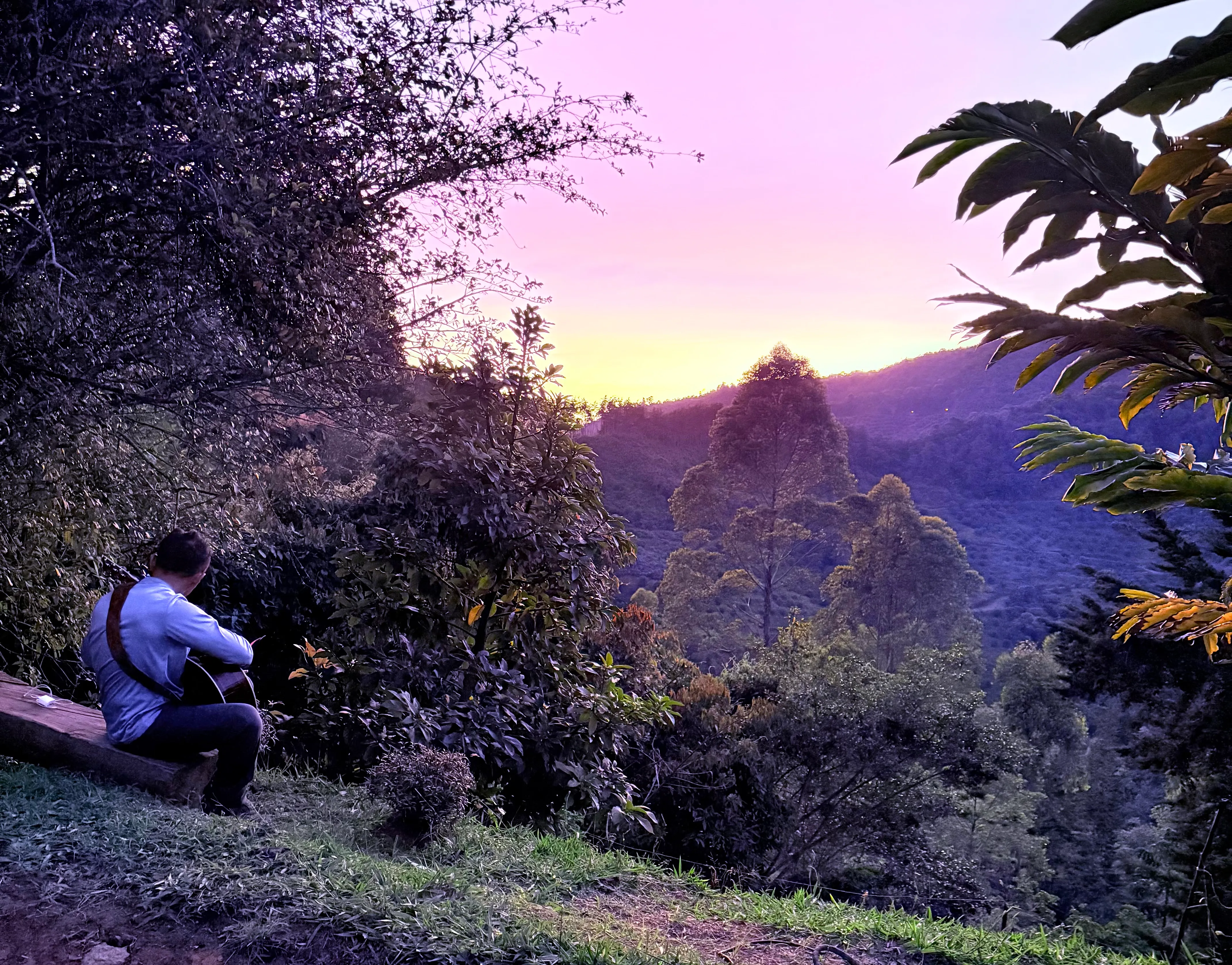
First, what do we mean by trauma?
Trauma is not only war, assault, or a life-threatening event.
For some people, trauma comes from what happened. For others, it comes from what never happened: safety, affection, protection, being seen, being believed, being allowed to feel.
People often come to yagé carrying things like:
- Childhood emotional neglect
- Grief after death, separation, or abandonment
- Betrayal in intimate relationships
- Family violence or instability
- Shame around sexuality, identity, or self-worth
- Patterns of avoidance, control, numbness, or overreaction
- A sense of being disconnected from the body
- Long-standing fear of being vulnerable
This is different from asking about PTSD specifically. PTSD is a clinical diagnosis with specific criteria. This page is for the broader question: can yagé help someone work with unresolved wounds, even if they do not have a formal diagnosis?
That distinction matters.
Not everything painful is PTSD. But unresolved pain can still shape your life.
Can ayahuasca actually help with trauma?
Ayahuasca may help some people approach trauma in a way that feels different from ordinary thinking.
In ceremony, people sometimes see old memories, relationship patterns, defensive habits, or emotional truths with unusual clarity. Something that was buried can become visible. Something that was only intellectual can become felt in the body.
That does not mean the medicine “fixes” trauma.
A better way to say it is this: yagé may help reveal what needs attention. What happens next depends on the person, the setting, the support, and the integration afterward.
Research is still developing. A 2024 study on childhood trauma and ayahuasca use found that people with childhood trauma histories were not more likely to report acute challenging ayahuasca experiences than people without those histories. The same study also made clear that longer-term risks and outcomes are not fully established. Read the study here.
That is the right level of honesty.
There is promise. There is also uncertainty.
What yagé may bring to the surface
Trauma often protects itself.
A person may know what happened, but not feel it. Or they may feel the effects every day without understanding where they come from. They may overreact, shut down, people-please, control everything, or avoid intimacy without knowing why.
In ceremony, the normal defenses can soften. Not always gently. Sometimes the medicine brings a person face to face with grief, fear, anger, guilt, or tenderness they have avoided for years.
This is why the setting matters.
The point is not to force a catharsis. The point is to create enough safety for the person to meet what is true without being overwhelmed by it.
If you want a more experiential sense of this, read about what ceremony actually feels like. That page goes more into the lived experience of yagé in Colombia.
This can be hard work
There is a dangerous fantasy around ayahuasca: that one ceremony will remove the wound.
Sometimes people do feel a major emotional release. Sometimes they leave with a sense of forgiveness, clarity, or peace they did not expect. But sometimes the medicine opens a process rather than completing one.
That can look like crying. Remembering. Feeling the body again. Seeing how anger protected sadness. Realizing that the problem was not weakness, but survival.
None of that is casual.
For someone with trauma, the wrong environment can make the work harder. Too many people, too little support, poor screening, ungrounded facilitators, or pressure to “surrender” can turn vulnerability into fear.
This is why we do not recommend choosing a retreat only by price, location, or how strong the ceremonies sound. For trauma work, choosing the right retreat for trauma healing is part of the medicine.
Ayahuasca is not right for everyone with trauma
Some people need more stabilization before ceremony.
That does not mean they are broken. It means timing matters.
If you are in an active mental health crisis, experiencing suicidal thoughts, psychosis, severe withdrawal, chest pain, or another urgent medical issue, seek emergency care immediately. Yagé is not emergency care.
There are also medical and psychiatric factors that require careful review before acceptance. These can include antidepressants such as SSRIs or SNRIs, MAOIs, lithium, antipsychotic medication, bipolar disorder, psychosis history, seizure history, heart conditions, and recent psychiatric hospitalization.
Do not stop or change medication to attend a retreat without speaking with a qualified medical professional.
This page is educational and does not replace medical advice. Do not stop or change medication without speaking with a qualified medical professional.
At Camino al Sol, the next step is not “book a ceremony.” It is screening. If you are unsure whether it's medically safe for your specific trauma history, start there first.
You can also read more about our approach to safety.
Healing is not only what happens in ceremony
Ceremony may open the door.
Integration is walking through it.
This is especially true for trauma. A person may see the root of a pattern in ceremony, but then life asks the real question: can you live differently afterward?
Can you set the boundary? Can you stop abandoning yourself? Can you tell the truth without collapsing? Can you rest without guilt? Can you ask for support before you are desperate?
That is where integration becomes essential.
Diego says:
“To count to one hundred, you have to start with one. We must value the basics.”
That is trauma healing.
Not dramatic. Not instant. Not something you can force in one night.
The basics matter: eating well, sleeping, speaking honestly, moving the body, spending time in nature, reducing harmful habits, repairing relationships slowly, and getting support when old patterns return.
Some people also benefit from somatic approaches alongside ceremony, because trauma is not only a story in the mind. It can live in posture, breath, tension, numbness, and the nervous system.
And when the retreat ends, the work continues. Read more about life after ceremony if you want to understand what integration can look like in ordinary life.
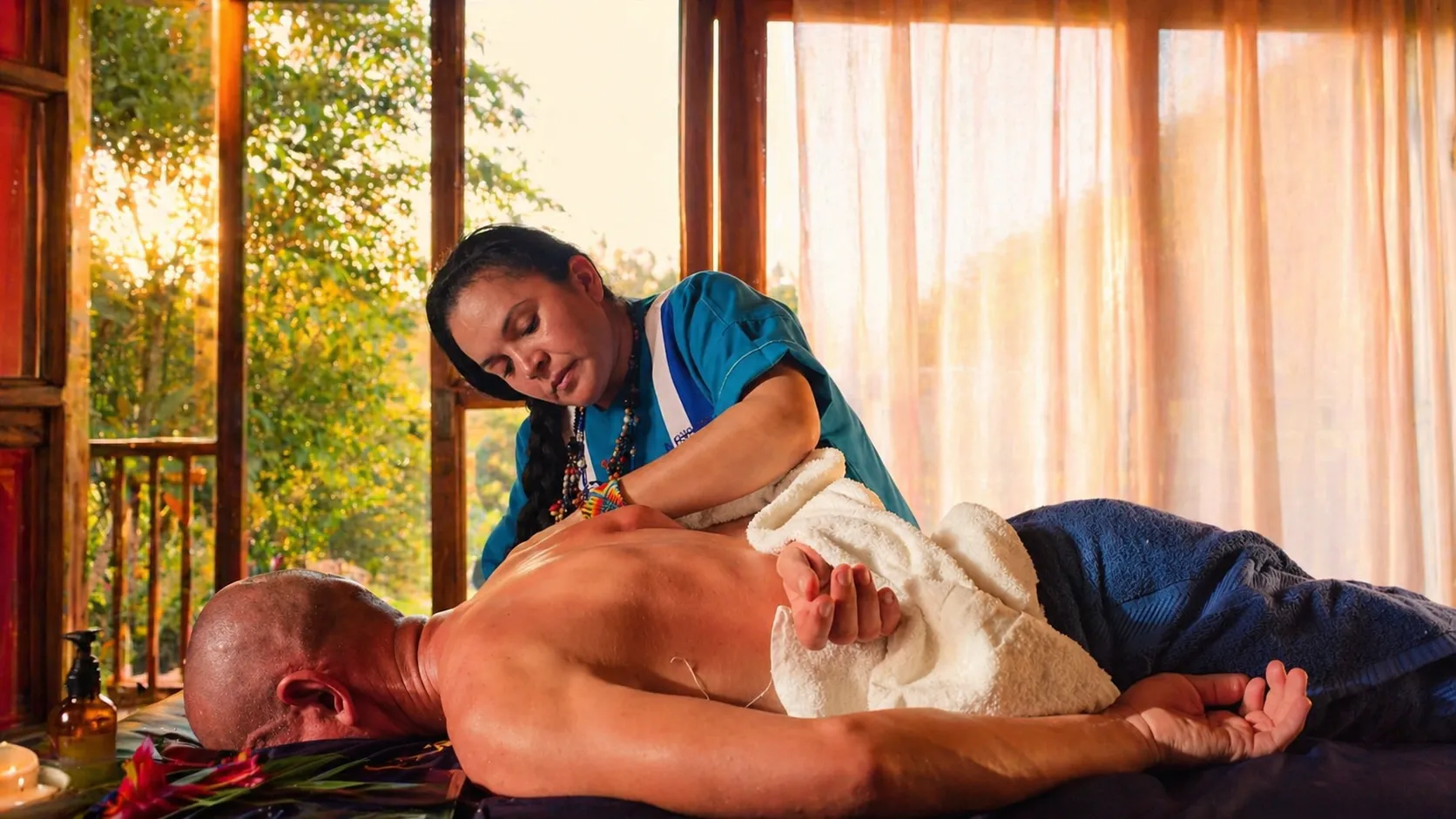
What helps make trauma work safer?
There is no way to make deep work completely predictable. But there are things that reduce risk and support a better process.
A serious trauma-oriented yagé retreat should include:
- Screening before acceptance
- Clear preparation guidance
- Experienced taitas and grounded facilitators
- Small groups rather than crowded ceremonies
- A calm natural environment
- No pressure to perform, confess, or “break through”
- Support before, during, and after ceremony
- Respect for medical and psychiatric contraindications
- Integration that continues after the ceremony ends
At Camino al Sol, our work is rooted in traditional Colombian yagé ceremony, experienced taitas, medicine music, small groups, preparation, and integration support. The retreat is held in the mountains of Antioquia, accessible from Medellín and the airport, with transport coordination available.
We use the word “healing” carefully.
Healing does not mean the past disappears. It means your relationship to the past may change. It means the wound may no longer lead your life in the same way.
So, can ayahuasca help heal trauma?
It can help some people.
Not because it erases trauma, but because it may help reveal what has been hidden, soften what has been defended, and bring the body and heart into a process the mind could not complete on its own.
But the medicine is not the whole answer.
The container matters. The timing matters. Your mental and physical health matter. The people holding the ceremony matter. The work you do afterward matters.
If you are carrying trauma, the first question is not “Will ayahuasca heal me?”
The better question is:
Am I ready to meet this with the right support?
If you feel called to explore this carefully, you can apply for screening. The screening process helps us understand your history, your current stability, your medications, and whether this work is appropriate for you now.
