
Something brought you here.
Maybe therapy helped, but not enough. Maybe medication made life more manageable, but did not touch the deeper pattern. Maybe the trauma is old, but your body still reacts like it happened yesterday.
So the question becomes direct:
Can ayahuasca help with PTSD?
The honest answer is this: ayahuasca may help some people process trauma, but it is not a guaranteed treatment, not a cure, and not a replacement for medical or psychological care. For someone with PTSD, the question is not only whether yagé can open something.
The question is whether you are ready, stable, screened, and supported enough to work with what opens.
This is not a shortcut around trauma
PTSD is not just a memory problem.
It can live in the nervous system, in sleep, in relationships, in the way a sound or smell can pull the body back into danger before the mind has time to explain what is happening.
That is why trauma work needs care.
Ayahuasca, or yagé as it is traditionally called in Colombia, can bring emotion, memory, fear, grief, and body sensation to the surface. For some people, that can feel meaningful. It can create a moment where old material is seen from a different place.
But seeing something is not the same as healing it.
The ceremony may show you what you have been carrying. Integration is where you learn how to carry yourself differently afterward.
What the research actually says
The research around ayahuasca and PTSD is still early.
There are studies and reports suggesting that ayahuasca may support emotional processing, psychological flexibility, and reductions in some symptoms related to depression, anxiety, stress, and trauma. There are also veteran and trauma-focused programs reporting promising outcomes.
But this is not the same as saying ayahuasca is an established PTSD treatment.
Current mainstream PTSD guidelines still point toward evidence-based trauma therapies such as EMDR, Cognitive Processing Therapy, Prolonged Exposure, and certain medications. Ayahuasca is not currently approved as a PTSD treatment by major medical authorities.
That matters.
A person with PTSD should not be told, “Drink ayahuasca and your trauma will be healed.” That is irresponsible. A more honest sentence is: ayahuasca may become part of a wider healing process for some people, but it requires careful screening, preparation, and integration.
Why trauma can come up strongly in ceremony
Yagé does not always show people what they expect.
Sometimes the experience is visual. Sometimes it is emotional. Sometimes it is physical. Sometimes it is quiet. For people with trauma histories, the medicine may bring forward memories, sensations, grief, anger, fear, or protective patterns that have been stored for years.
This can be powerful.
It can also be overwhelming.
That is why the setting matters. The people holding the ceremony matter. The group size matters. The preparation matters. And for PTSD specifically, the screening process matters before anything else.
At Camino al Sol, ceremonies are held in the Colombian yagé tradition with experienced taitas, small groups, preparation support, and medical screening before acceptance. You can read more about our safety approach here: ayahuasca safety.
When ayahuasca may not be appropriate
This is where it gets specific.
Ayahuasca is not safe for everyone. For someone with PTSD, the concern is not only the diagnosis. It is the whole picture.
Important risk factors can include:
- Current suicidal thoughts or recent crisis
- Psychosis or history of psychotic episodes
- Bipolar disorder or mania history
- Severe dissociation or instability
- Certain heart conditions or uncontrolled blood pressure
- Heavy substance use or withdrawal risk
- Certain psychiatric medications, especially antidepressants and MAOI-related concerns
- Lack of support after the retreat
This page is educational and does not replace medical advice. Do not stop or change medication without speaking with a qualified medical professional.
If you are in crisis, experiencing suicidal thoughts, psychosis, chest pain, severe withdrawal, or another urgent medical issue, seek emergency care immediately.
Medication needs a real conversation
Many people exploring ayahuasca for PTSD are taking antidepressants, sleep medication, anxiety medication, mood stabilizers, or other psychiatric prescriptions.
That does not mean the door is automatically closed.
It does mean there needs to be a careful review.
Some medications may interact dangerously with ayahuasca. Others may require a medical professional’s guidance before any decision is made. What should never happen is someone stopping medication quickly just to attend a ceremony.
That is not preparation. That is risk.
If you are taking medication, the next step is not guessing from a blog post. The next step is screening. You can begin that process here: apply for screening.
What ayahuasca may help some people see
People with trauma often live inside patterns that once protected them.
Avoidance. Hypervigilance. Numbness. Control. Anger. Collapse. The body learned those patterns for a reason.
In ceremony, some people see those patterns clearly for the first time. Not as personal failure. Not as weakness. As survival strategies that may no longer be helping.
That can be a meaningful moment.
But the medicine does not live your life after you leave. You do.
That is why we place so much importance on integration. The ceremony may open the door. Integration is where you decide what changes, what support you need, what habits must shift, and how to stay connected to what you saw when normal life returns.
PTSD work needs support after the retreat
For trauma, integration should not be vague.
It may mean continuing therapy. It may mean working with a trauma-informed professional. It may mean changing how you sleep, how you handle conflict, how you relate to alcohol, how you respond to triggers, or how you ask for support.
The point is not to chase another ceremony.
The point is to build a life that can hold what the ceremony revealed.
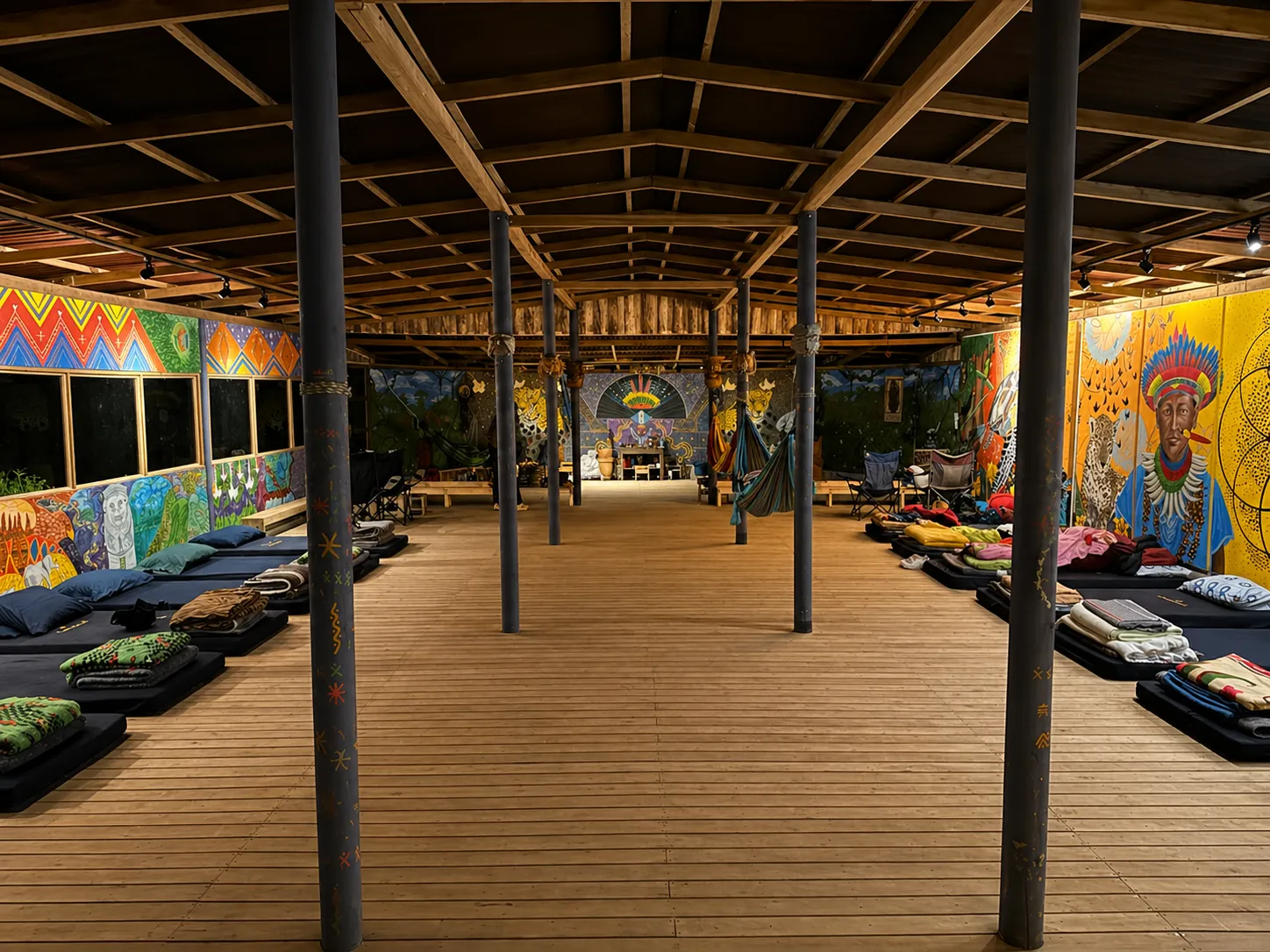
At Camino al Sol, our retreat setting in the mountains of Antioquia gives people space away from daily pressure, while still being accessible from Medellín and the airport. You can learn more about the retreat format here: ayahuasca retreat in Medellín or explore the broader Colombia retreat page here: ayahuasca retreat in Colombia.
So, can ayahuasca help with PTSD?
It may help some people.
But not because it magically erases trauma.
If it helps, it is usually because the ceremony creates a space where something buried can be felt, seen, and worked with. The medicine may interrupt old patterns. It may bring grief forward. It may show a person how much they have been holding.
But PTSD deserves respect.
A serious trauma history should never be handled with hype, pressure, or promises. It needs screening, skilled ceremony leadership, preparation, and integration after the experience.
If you are considering yagé for PTSD, the next step is not to decide from hope alone.
The next step is to find out whether it is appropriate for you.
Apply for screening and share your history honestly. That is where the real conversation begins.
