
You may have seen both words.
Taita.
Shaman.
They often appear beside the same medicine, the same ceremonies, the same promises online. But they do not mean the same thing. And if you are considering drinking yagé or ayahuasca, the difference is not just linguistic.
It points to something deeper.
Who is holding the ceremony?
Where does their knowledge come from?
Who recognized them?
What responsibility do they carry?
That is where the real question begins.
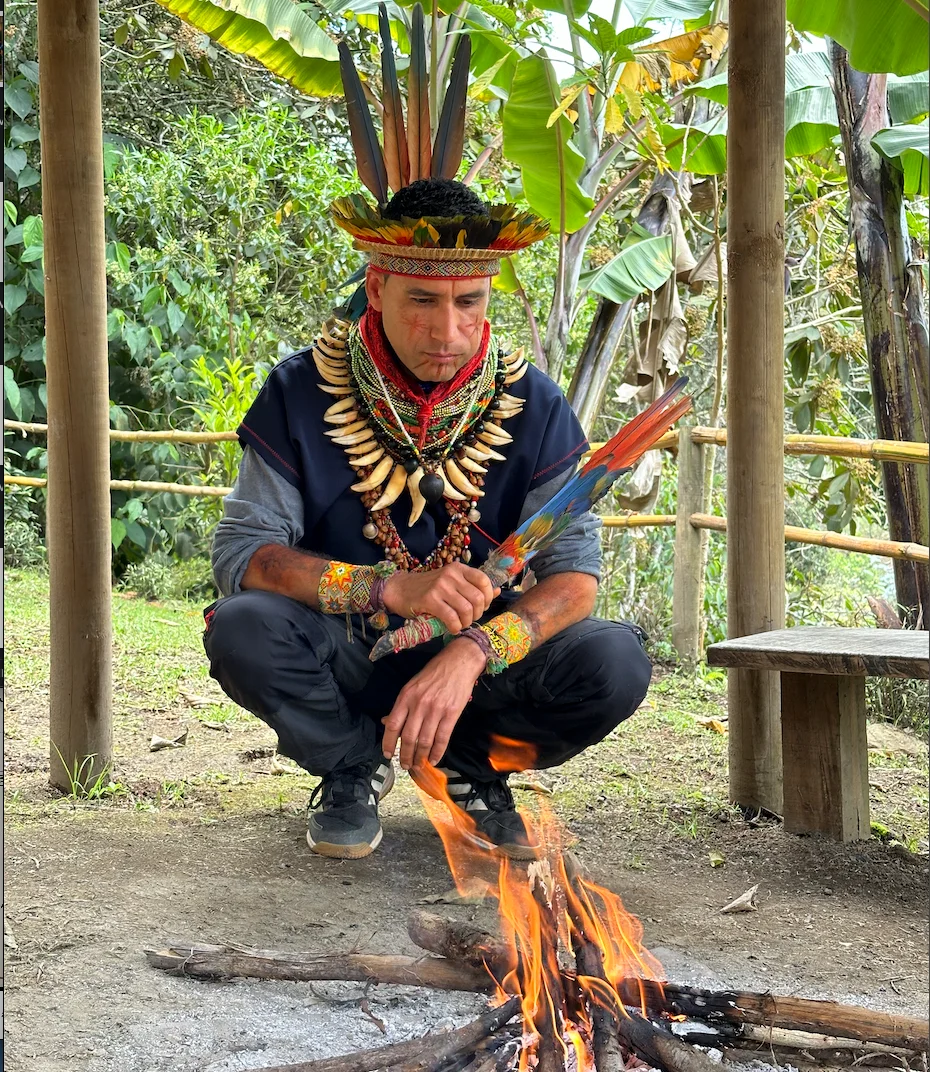
Taita Diego at Camino al Sol in the mountains near Medellín.
“Shaman” is a broad word
In English, “shaman” has become a general word for a spiritual healer, ceremonial guide, or person who works between the visible and invisible worlds.
It is used across many cultures. Sometimes carefully. Sometimes loosely.
That is the problem.
The word can describe many different traditions, but it can also flatten them. A Shipibo Onanya in Peru, a Colombian Taita, a Siberian ritual specialist, and a modern Western facilitator may all be called “shamans” online, but they are not the same thing.
Their training is different.
Their language is different.
Their ceremony is different.
Their relationship with the medicine is different.
So when someone says “ayahuasca shaman,” you still do not know much yet.
You need to ask what tradition they come from.
A Taita belongs to a specific Colombian yagé tradition
In Colombia, especially within yagé traditions connected to Indigenous peoples of the Amazon and Putumayo, the word Taita carries a specific meaning.
A Taita is a traditional doctor (médico tradicional).
Not just someone who serves medicine. Not someone who attended a few ceremonies and started calling themselves a guide. Not a title that should be used as a costume.
It is a role of responsibility.
In rural Putumayo and across the Amazon basin, where hospitals are often days away, a traditional doctor is the community's primary physician. Their training begins with plants: working the chagra, learning how to identify remedies in the primary forest, treating snakebites, fevers, and physical illnesses, and spending decades in apprenticeship under elder abuelos and abuelas.
Ceremony is not a performance separate from daily life; it is an extension of territorial and botanical knowledge.
At Camino al Sol, we use the word Taita because our ceremonies are held in the Colombian yagé tradition. Yagé is the Colombian name for the medicine more widely known internationally as ayahuasca. You can read more about that tradition in our guide to Yagé in Colombia.
Taita Diego Marmolejo describes it plainly:
“For a traditional doctor, the plants are fundamental: they are part of our daily work and the way knowledge stays alive. Being a traditional doctor is years of formation. A constant study. The elders only say ‘you can give the medicine to people’ after years of guidance and practice.”
That matters.
Because in this work, experience is not decoration. It is protection.
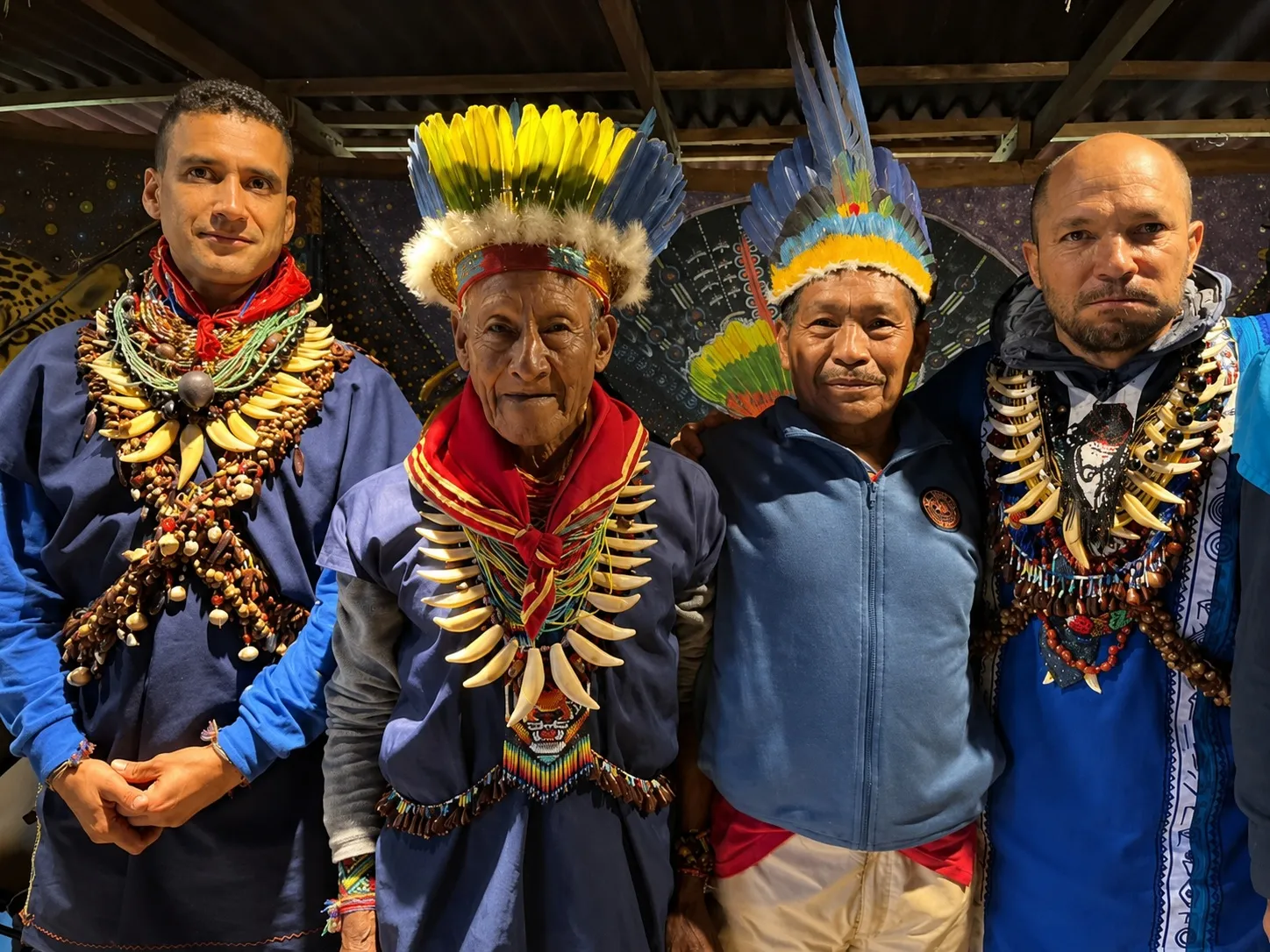
Lineage and responsibility are central to the Colombian yagé tradition.
The difference shows up in how ceremony is held
A ceremony is not just the moment someone drinks.
It is the preparation before.
The music during.
The way fear is handled.
The way silence is held.
The way someone is cared for when things become difficult.
A Taita does not only “administer” yagé. In the Colombian tradition, the Taita holds the space through prayer, medicine music, energetic work, attention, and discipline learned over many years.
That does not mean every ceremony led by a Taita is automatically right for every person.
It means the title should point to lineage, formation, and accountability.
The word alone is not enough. But it should lead you to better questions.
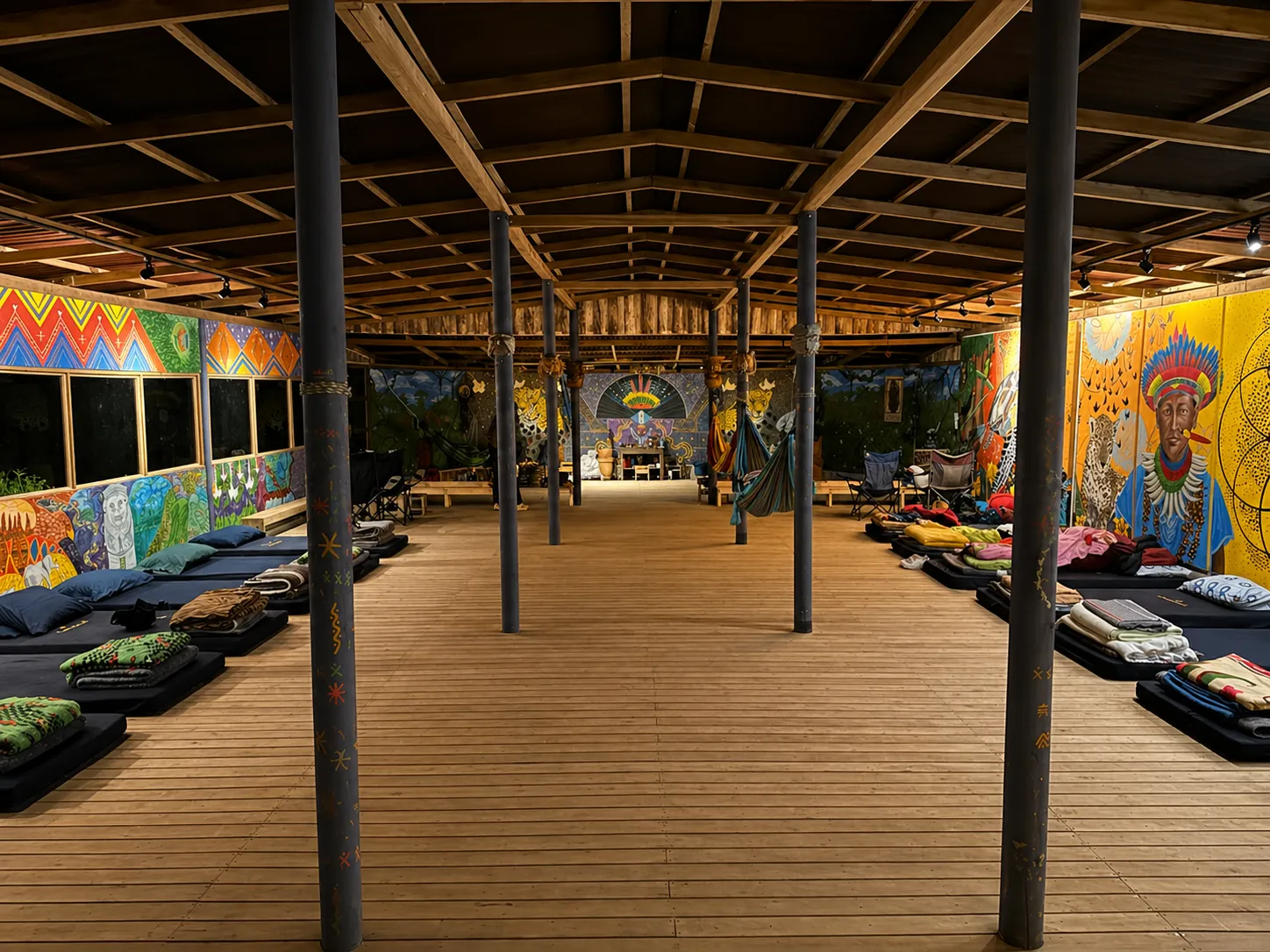
The ceremony space is prepared before guests arrive.
Why Camino al Sol says Taita, not shaman
At Camino al Sol, we do not use “shaman” as our main word because it is too general for what we are describing.
Our work is rooted in Colombian yagé ceremony.
The retreat takes place at Yaugara, a nature reserve and botanical garden in the mountains of Antioquia, near Medellín. Ceremonies are held by Taita Diego Marmolejo, a traditional doctor from Putumayo with roots in the Colombian yagé tradition.
So we say Taita.
Not because the word is exotic.
Because it is more precise.
Precision is respect.
When people are seeking medicine work, it is easy to blur traditions together. Peru, Brazil, Colombia, Ecuador, Shipibo, Siona, Santo Daime, neo-shamanic circles — all placed under one big “ayahuasca” umbrella.
But traditions are not interchangeable.
If you are drinking in Colombia, with a Colombian traditional doctor, in a Colombian yagé context, the word Taita gives you a clearer map.
The real question is who you drink with
The title matters.
But the title is not the whole answer.
A person can use impressive words and still not hold a safe or responsible space. A website can look beautiful and still avoid the hard questions. A retreat can speak about healing while skipping screening, preparation, or integration.
So ask directly.
Who leads the ceremony?
What is their lineage or training?
Are groups small or crowded?
Is there medical and psychological screening before acceptance?
What happens if someone is not a good fit?
What support exists after the ceremony?
Taita Diego says:
“The important thing is where you are going to drink, and who you are going to drink with.”
That sentence should stay with you.
Because yagé is not casual. It can be beautiful, difficult, clarifying, unsettling, and demanding. The setting matters. The person holding ceremony matters. Your own readiness matters.
If you are comparing retreat options, start with our Ayahuasca Retreat Colombia page or our Ayahuasca Retreat near Medellín page.
Safety is not separate from tradition
Some people imagine tradition and safety as two different things.
They are not.
A responsible retreat does not rely only on spiritual language. It also asks practical questions. Medical history. Mental health history. Current medications. Recent substance use. Pregnancy. Heart conditions. Psychiatric risk factors.
This is not bureaucracy.
It is care.
Ayahuasca and yagé are not appropriate for everyone. They may interact dangerously with some medications and health conditions. They do not replace medical treatment, therapy, or emergency care.
This page is educational and does not replace medical advice. Do not stop or change medication without speaking with a qualified medical professional.
If you are in crisis, experiencing suicidal thoughts, psychosis, chest pain, severe withdrawal, or another urgent medical issue, seek emergency care immediately.
At Camino al Sol, every applicant goes through medical and psychological screening before acceptance. There is no instant booking. That is intentional.
You can learn more on our Ayahuasca Safety page.
Integration is where the ceremony becomes life
A Taita can hold the ceremony.
But nobody can live your integration for you.
That part belongs to you.
What you see in ceremony matters. But what you do with it afterward matters more. The conversation you finally have. The habit you stop feeding. The grief you stop running from. The discipline you begin again, quietly, without announcing it to anyone.
Integration is not an optional add-on.
It is where the medicine becomes practical.
That is why Camino al Sol includes preparation and integration support around the retreat process. The ceremony may open something, but your life is where that opening is tested.
You can read more about this on our Integration page.
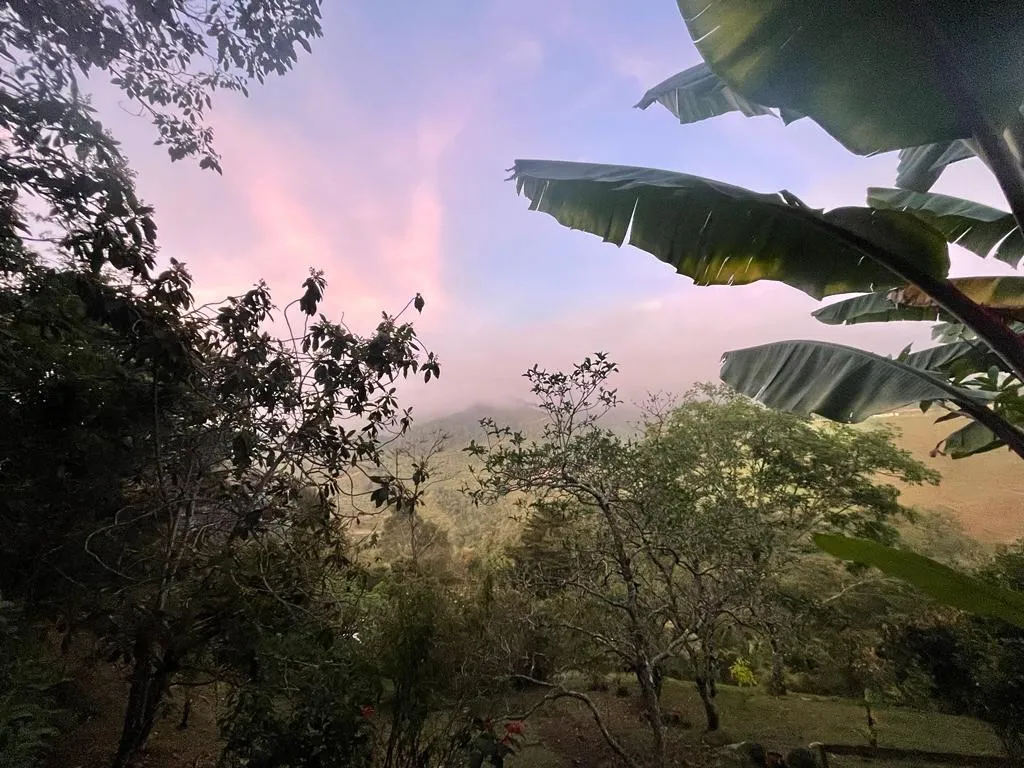
Morning light over the mountains at Yaugara.
So, is a Taita the same as a shaman?
Not exactly.
“Shaman” is a broad word used across many cultures and, today, across many websites.
“Taita” is more specific. In the Colombian yagé tradition, it refers to a traditional doctor formed through lineage, practice, guidance, and responsibility.
For the reader, the difference is simple:
Do not choose a retreat because someone uses a powerful title.
Choose by looking at the tradition, the person, the screening, the care, and the way the work continues after ceremony.
The word can guide you.
But responsibility is what matters.
If this resonates, you can explore upcoming Yagé retreats near Medellín or begin the screening process through the application page.
