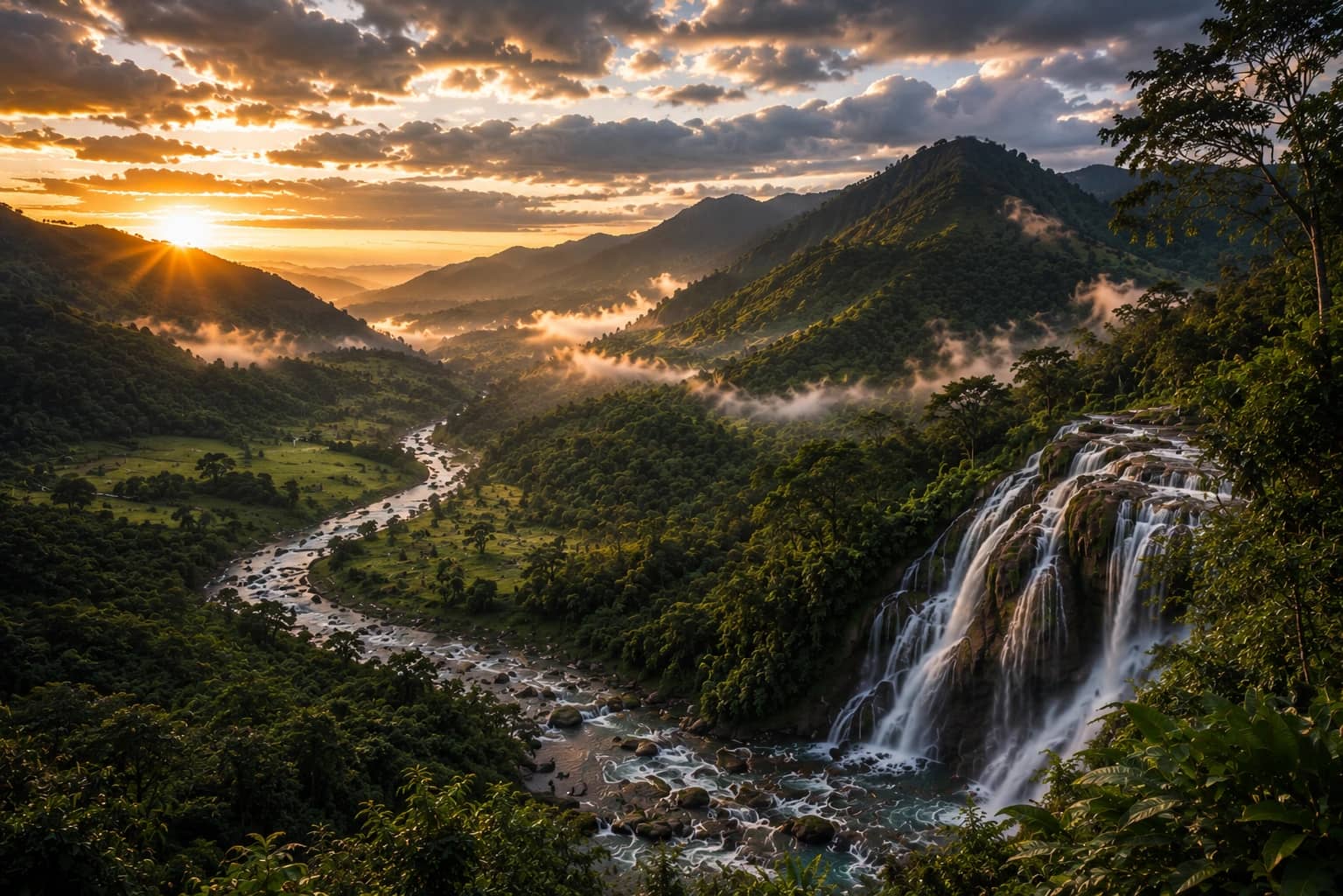
More people are coming to Colombia not only to travel, but to reconnect.
They're looking for mountains, silence, real food, ceremony, music, nature, and a rhythm that feels different from the one they live with at home. That interest is real. It also asks for responsibility, especially when traditional Yagé is part of the conversation.
Colombia has a real opportunity in holistic wellness tourism. But traditional Yagé should never be reduced to a wellness product.
For the full context, read our guide to holistic wellness tourism in Colombia. This shorter article is a reflection on what the country's wider wellness movement means for people approaching traditional Yagé with care.
Colombia's wellness tourism opportunity is real. But if traditional Yagé becomes just another wellness product, the heart of it is lost.
Wellness has to belong to a place
The strongest version of wellness tourism in Colombia is not a copy of global spa or resort culture.
It comes from the land itself: mountains outside Medellín, forests, rivers, food, music, local hospitality, ancestral memory, and the relationship between people and territory.
The Global Wellness Institute defines wellness tourism around travel connected with maintaining or enhancing personal wellbeing. That definition is useful, but in Colombia it needs more roots. Wellness here should not be only about how a traveler feels during a trip. It should also ask how the experience respects the place that receives them.
That is where Colombia has something different to offer. Not just services. Not just treatments. Not just a beautiful view. A real relationship with place.
Yagé asks for more than interest
Traditional Yagé is not a generic wellness activity.
It belongs to living ancestral traditions. It carries preparation, prayer, music, guidance, community care, and territory. It also carries real suitability questions.
Some people should not drink Yagé. Some people need to wait. Some people need medical or psychological review before even considering it.
That is why responsible Yagé retreats should not be promoted as medical programs, psychedelic adventures, or guaranteed transformation experiences. They should be presented honestly: as traditional and spiritual retreat contexts that require screening, preparation, and integration.
The order matters.
- Screening first.
- Preparation first.
- Clear contraindications first.
- No medical cure claims.
- No promises of healing.
- No pressure to book.
Where Camino al Sol fits in this movement
Camino al Sol is not "the" model for Colombian wellness tourism.
It is one way this can be held with care: traditional ceremony, nature, live medicine music, preparation, screening, and integration, all treated with respect.
Our retreat takes place in the mountains of Antioquia, near Medellín. That setting matters. Guests are not coming only for an isolated ceremony. They are entering a slower rhythm: rural air, simple food, music, silence, conversation, rest, and time to integrate what opens.
If you're still researching, don't rush toward booking. Start with safety. Read our Yagé safety standards. Understand who Yagé is not for, how screening works, and what preparation involves. Look at how a Yagé retreat near Medellín is structured, and why integration after ceremony matters.
Medicine music is not an extra
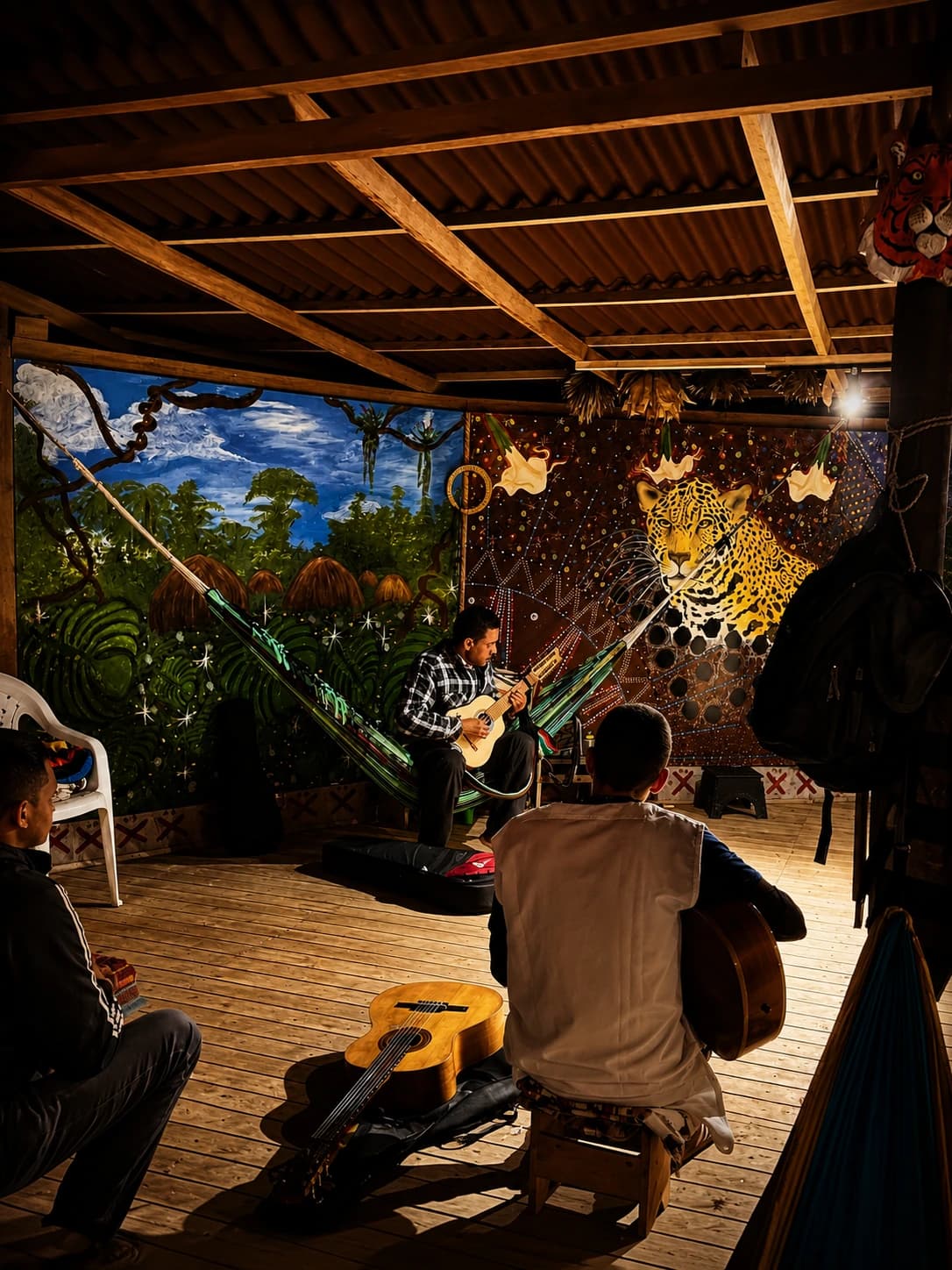
This is one of the reasons traditional Yagé should not be treated like a wellness activity that can be added casually to a travel itinerary. The music, the healer, the group, the preparation, the silence, and the land all form part of the container.
When those pieces are missing, something important is lost.
For partners, the question is responsibility
For NGOs, veteran organizations, wellness travel planners, and tourism professionals, the question is not whether Yagé can be turned into another wellness product.
The better question is whether a retreat context communicates risk clearly, avoids medical promises, respects lineage, screens carefully, supports integration, and benefits the territory that receives the traveler.
Colombia's official tourism pages are useful background for understanding the country's broader direction around wellness, sustainability, territory, and culture. MinCIT's tourism product page helps show that national context. It should not be read as an endorsement of Camino al Sol, Yagé, ayahuasca, or any specific retreat center.
That distinction matters. Colombia can become a strong destination for holistic wellness tourism. But the sacred should not be flattened into a product.
Read the full guide
Our full pillar page goes deeper into Colombia's wellness context, responsible Yagé care, safety standards, partner questions, FAQ, and source references.