
Something brought you here.
Maybe it is depression. Maybe anxiety. Maybe grief, trauma, addiction, burnout, or the quiet feeling that you are still carrying something you cannot quite name.
You may have heard that ayahuasca can help.
That may be true for some people. But it is not true in the simple way the internet often makes it sound.
Ayahuasca does not cure your mind. It does not replace therapy. It does not erase trauma. It does not make pain disappear just because you drink it in ceremony.
What it may do is show you something clearly.
And clarity can be powerful.
But clarity also needs safety, preparation, and support. Especially when mental health is part of the reason you are looking.
This page is educational and does not replace medical advice. Do not stop or change medication without speaking with a qualified medical professional.
If you are in crisis, experiencing suicidal thoughts, psychosis, chest pain, severe withdrawal, or another urgent medical issue, seek emergency care immediately.
This is not a shortcut
There is a dangerous idea around ayahuasca.
It says that one ceremony can fix years of depression, anxiety, trauma, addiction, or grief.
That idea sells retreats. It does not protect people.
Mental health is not simple. A person can be suffering deeply and still be strong. A person can be functional and still be close to collapse. A person can feel ready for ceremony and still need more support before drinking Yagé.
That is why the first question should not be, “Will ayahuasca heal me?”
The better question is:
Am I in the right condition to meet what may come up?
At Camino al Sol, every applicant goes through medical and psychological screening before acceptance. Not as a formality. As part of the work.
Some people are ready.
Some people need more preparation.
Some people should not drink.
That is not rejection. It is care.
What the research actually suggests
Modern research into ayahuasca and mental health is growing. Some studies suggest that ayahuasca may be associated with reductions in depression symptoms, improvements in emotional flexibility, and changes in how people relate to difficult memories or patterns.
But the evidence is still early.
Many studies are small. Some do not use control groups. Retreat settings vary. Dosing varies. Screening varies. Integration varies. The people who choose to attend ayahuasca ceremonies are not always the same as people in clinical treatment.
So the honest answer is this:
Ayahuasca may support mental health for some people, in the right setting, with the right preparation and follow-up.
It is not a proven cure.
It is not a guaranteed treatment.
It is not appropriate for everyone.
The medicine can open the door. You still have to walk through it with your life.
For readers who are new to the medicine itself, start with what ayahuasca is before making any decision.
Depression: hope, but not a promise
Many people come to ayahuasca after living with depression.
Sometimes they describe it as heaviness. Sometimes numbness. Sometimes the feeling that they are watching life from behind glass.
Ayahuasca may bring emotion back to the surface. It may show grief that has been buried. It may reveal old patterns of self-protection. Some people describe a renewed connection to life, family, nature, or purpose.
But depression also needs careful screening.
Someone with severe depression, suicidal thoughts, recent hospitalization, unstable medication changes, or very low support at home may need professional care before considering ceremony.
Ayahuasca can be intense. It can bring difficult material forward quickly. That can be meaningful when someone is resourced and supported. It can be destabilizing when someone is already near the edge.
There is no shame in needing more support first.
The medicine is not going anywhere.
Anxiety: the same medicine can feel very different
People with anxiety often hope ayahuasca will help them surrender.
Sometimes it does.
But anxiety can also become stronger during ceremony. The body may resist. The mind may search for control. Old fear can rise before it releases.
This does not mean anxiety automatically makes someone unsuitable. It means the details matter.
A screening conversation needs to understand the kind of anxiety someone lives with. General worry is different from panic attacks. Social anxiety is different from dissociation. Fear of ceremony is different from a recent mental health crisis.
Medication matters too.
Benzodiazepines, antidepressants, stimulants, sleep medication, and other psychiatric medications must be disclosed during screening. Never stop medication on your own to attend a retreat.
At Camino al Sol, the responsible path is not guessing. It is screening before ceremony.
Trauma and PTSD: opening is not the same as healing
Trauma is often stored beneath words.
This is one reason people feel called to ayahuasca. The medicine may bring images, memories, emotions, sensations, or body-level knowing into awareness.
That can be profound.
It can also be too much.
Trauma work requires pacing. Not every memory needs to be opened at once. Not every person benefits from intensity. Some nervous systems need stabilization before deep ceremony work.
A safe retreat does not promise to “release trauma” in one weekend.
A safe retreat asks better questions.
Are you currently stable? Do you have support after the retreat? Are you in therapy? Have you experienced dissociation, psychosis, mania, or recent crisis? What helps you regulate when difficult emotions arise?
The ceremony is only one part. What happens afterward matters just as much.
That is why integration is not optional language for us. It is the bridge between what you see and how you live.
Addiction and compulsive patterns
Some people come to Yagé because they are tired of repeating the same pattern.
Alcohol. Substances. Work. Relationships. Avoidance. Numbing. Control.
Ayahuasca may help some people see the roots of these patterns more clearly. It may bring remorse, forgiveness, grief, or a direct recognition of what a habit has cost.
But addiction is also a safety topic.
Active substance use, severe withdrawal risk, mixing substances, or recent relapse may make ceremony unsafe or inappropriate. Alcohol, opioids, stimulants, recreational drugs, and many medications can create serious risks.
A retreat is not a detox clinic.
If someone needs medical detox, psychiatric care, or addiction treatment, that should come first. Ceremony may have a place later, but not as a substitute for urgent care.
For people considering Yagé after a period of stabilization, screening helps determine whether the timing is responsible.
Who should be especially careful
This is where honesty matters.
Ayahuasca may not be appropriate for people with certain mental health histories or current conditions. These can include:
- Psychosis or a history of psychotic episodes
- Schizophrenia or close family history of schizophrenia
- Bipolar disorder, especially mania or hypomania
- Recent suicidal thoughts or self-harm risk
- Recent psychiatric hospitalization
- Severe dissociation
- Unstable medication changes
- Severe panic or crisis states
- Active substance dependence or withdrawal risk
- Serious heart conditions, uncontrolled blood pressure, or seizure history
This list is not complete.
It also does not mean every person with a mental health history is automatically excluded. It means the decision needs careful review.
“The medicine is wise,” Taita Diego says. “It knows what to show and what not to show.”
But the people holding ceremony must also be wise.
That means knowing when not to serve.
Medication is not a small detail
Ayahuasca contains compounds that affect serotonin and monoamine oxidase systems. This means interactions with medication can be serious.
Antidepressants, especially SSRIs, SNRIs, MAOIs, tricyclics, and other psychiatric medications, must be reviewed before ceremony. So do stimulants, mood stabilizers, antipsychotics, sleep medications, migraine medications, opioids, cough medicines, and many other substances.
Do not hide medication use.
Do not stop medication suddenly.
Do not taper medication because a retreat told you to.
Medication changes should only happen with a qualified medical professional who understands your history. A retreat should never pressure you to come off medication so you can attend.
At Camino al Sol, if medication or health history raises concern, the next step is review. Not assumptions.
You can learn more on our ayahuasca safety page.
Why setting matters so much
Ayahuasca is not just chemistry.
Where you drink matters. Who serves matters. The group matters. The preparation matters. The music matters. The aftercare matters.
Taita Diego says, “The important thing is where you are going to drink, and who you are going to drink with.”
For mental health, this is not poetic. It is practical.
A person in a large, chaotic, poorly screened retreat may have a very different experience from someone in a small, carefully held ceremony with experienced traditional leadership and support afterward.
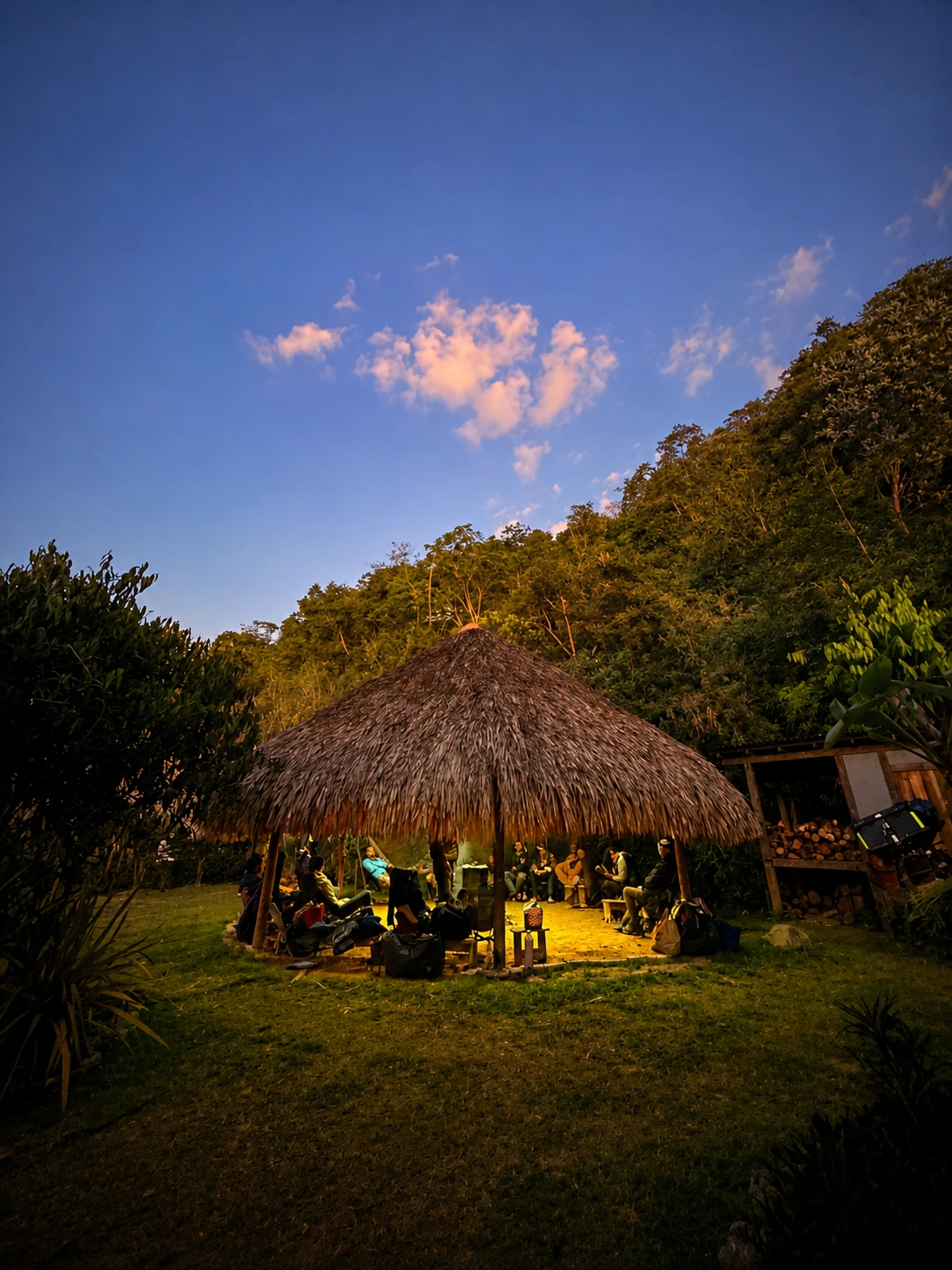
At Camino al Sol, Yagé is held in the Colombian tradition, with ceremony led by Taita Diego Marmolejo from Putumayo lineage. The retreat takes place at Yaugara, a nature reserve and botanical garden in the mountains of Antioquia, near Medellín.
This does not guarantee a certain outcome.
It creates a more responsible container.
And with mental health, the container matters.
Ceremony is not therapy
Ayahuasca can feel therapeutic.
But ceremony is not the same as psychotherapy. A Taita is not the same as a Western therapist. A retreat is not the same as a clinic. A spiritual experience is not the same as a treatment plan.
This distinction protects everyone.
If you are in therapy, ceremony may bring material that can later be worked with in therapy. If you have a psychiatrist, medication history should be discussed with them before any changes. If you have a diagnosis, that diagnosis should be part of your screening.
Yagé may speak in images, sensations, emotions, and memory.
Mental health care helps you place those experiences inside your actual life.
Both can matter.
But they are not interchangeable.
Integration is where the work becomes real
Many people focus on the ceremony night.
They ask what they will see. How strong it will be. How long it will last. Whether they will cry, purge, meet something, remember something, release something.
Those questions are understandable.
But the deeper question is what happens after.
Can you live differently after seeing what you saw? Can you repair the relationship? Change the habit? Rest instead of running? Tell the truth? Get support? Return to therapy? Stop pretending you are fine?
Integration is the part where insight becomes behavior.
Without integration, ayahuasca can become another powerful experience that fades into memory.
At Camino al Sol, we point guests toward integration support because the medicine does not do your life for you.
It shows you where to begin.
How Camino al Sol approaches mental health
Camino al Sol is not a mental health clinic.
We are a traditional Yagé retreat center near Medellín, Colombia. We work with small groups, experienced taitas, preparation, medical and psychological screening, ceremony, and integration support.
That means we take mental health seriously without pretending ayahuasca is a medical treatment.
Our approach is simple:
First, screening.
Then preparation.
Then ceremony, if appropriate.
Then integration.
No instant booking. No pressure. No promise that this will cure depression, anxiety, trauma, PTSD, addiction, or grief.
Some people are accepted. Some are asked for more information. Some are told that this is not the right time.
That is part of protecting the work.
If you are considering ceremony near Medellín, you can explore our ayahuasca retreat in Medellín or learn more about our wider ayahuasca retreat in Colombia.
The real question
Ayahuasca may help some people meet themselves with more honesty.
But honesty is not always comfortable.
If you are coming because of mental health, come slowly. Ask real questions. Tell the truth on your application. Disclose medication. Disclose diagnoses. Disclose recent crisis. Do not perform readiness.
Readiness is not bravery.
Readiness is responsibility.
If this feels like the right next step, you can apply for screening. Not to book instantly. To begin the conversation properly.
