
The weight of what remains
Grief is not something you fix. It is something you carry. When someone comes to a retreat looking to process profound loss, they are often carrying a weight that has become too heavy to hold alone. Maybe therapy hasn't touched the deepest part of the ache. Maybe the world expects you to move on, but you are still standing exactly where the loss happened.
People often seek out ayahuasca hoping it will take the pain away. It won't. What the medicine does is different, and often much harder. It asks you to feel exactly what you have been avoiding.
This isn't a shortcut around the pain
There is a misconception that plant medicine offers an escape. In reality, Yagé—as ayahuasca is known in the Colombian tradition—often brings you face-to-face with the reality of your loss. It does not erase the absence of the person or the life you are grieving.
Instead, the medicine often unblocks what has become frozen. Grief can solidify into numbness, anger, or a pervasive sense of being stuck. The ceremony creates a container where those emotions can thaw and finally move through the body. As Taita Diego Marmolejo, our traditional doctor from Putumayo, explains, "The medicine is wise. It knows what to show and what not to show."
What the medicine actually asks of you
During a ceremony, you may experience intense sadness, weeping, or what we call la purga (the purge). This physical and emotional release is not a side effect; it is the work. You are making space.
You won't leave the medicine house as someone who has forgotten their loss. But you may leave with a different relationship to it. The heavy, sharp edges of grief can soften into profound love and gratitude for what was.
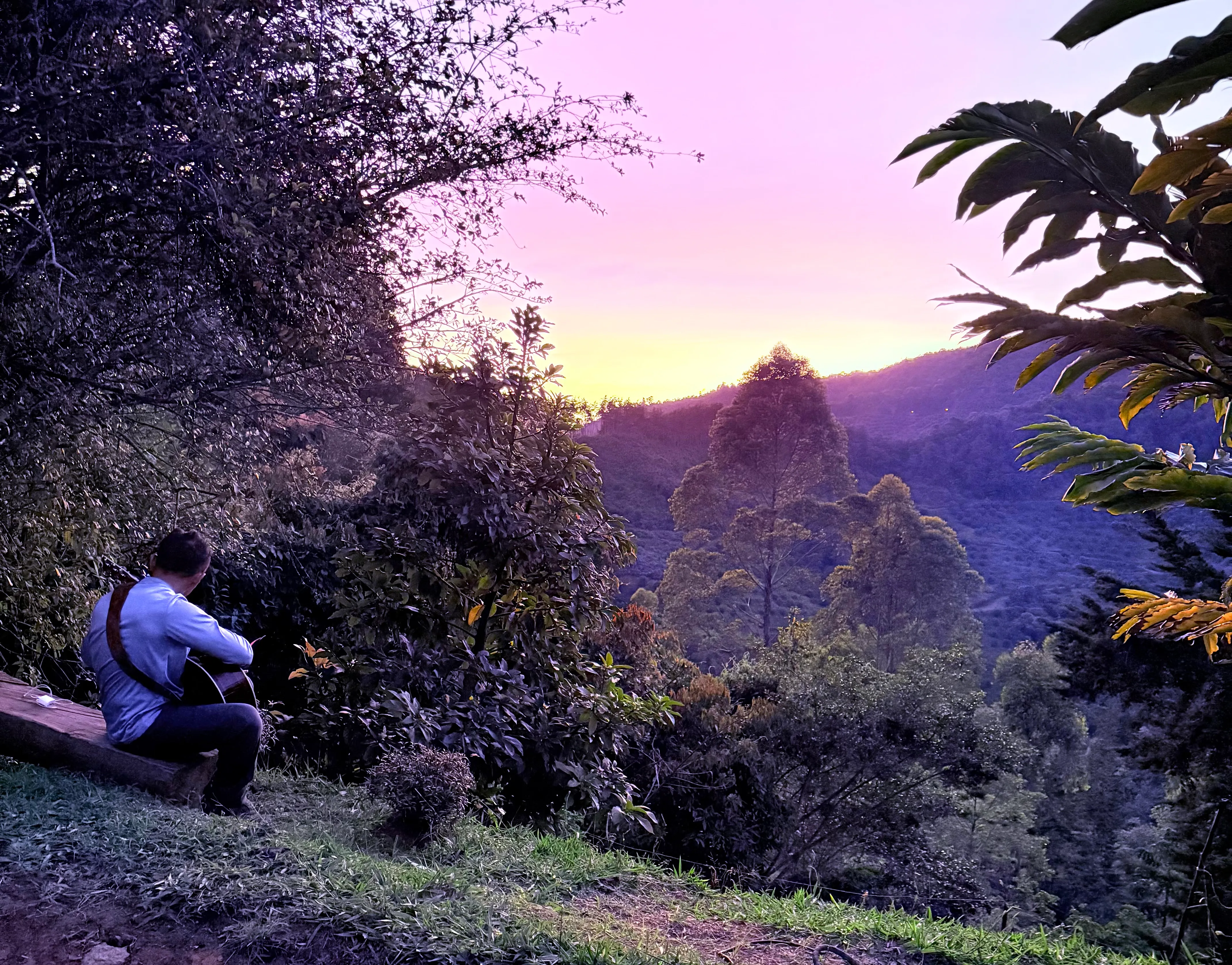 A quiet sunset view gives space for reflection after the retreat.
Why where you drink matters
Grief leaves you vulnerable. Navigating that vulnerability requires a safe, held environment. This is why medical and psychological screening is a mandatory first step before anyone is accepted at Camino al Sol. It is also why we keep our groups small.
The traditional Colombian Yagé ceremony is supported by live medicine music, which acts as a guide through difficult emotional terrain. You are not doing this work alone. The elders, the facilitators, and the fire are there to hold the space so you can safely surrender to the process.
Carrying the grief forward
The ceremony is just the beginning. The real work happens in the weeks and months that follow. Integration is how you take the insights from the medicine and weave them into your daily life.
Taita Diego reminds us, "This isn't a place to come and escape. It is a place to recharge - and then continue the journey." You return to your life, and the absence will still be there. But the way you carry it might be lighter. If you feel ready to explore this path and are looking for a grounded, responsible environment, you can apply for an upcoming retreat.
