
Something in you wants to know before you say yes.
Not just what ayahuasca is. Not just what people say happened to them afterward. You want to know what it actually feels like when the medicine begins to move through your body, your emotions, your memories, and your sense of control.
The honest answer is this:
Ayahuasca does not feel like one thing.
It can feel physical. Emotional. Visionary. Confusing. Peaceful. Uncomfortable. Beautiful. Frightening. Quiet. Overwhelming. Clear.
Sometimes all in the same night.
In Colombia, the medicine is often called yagé. At Camino al Sol’s ayahuasca retreat near Medellín, we treat this question seriously because curiosity alone is not enough. The experience asks for preparation, respect, and screening before acceptance.
Some people encounter the same medicine through the phonetic spelling iowaska.
This page is educational and does not replace medical advice. Do not stop or change medication without speaking with a qualified medical professional.
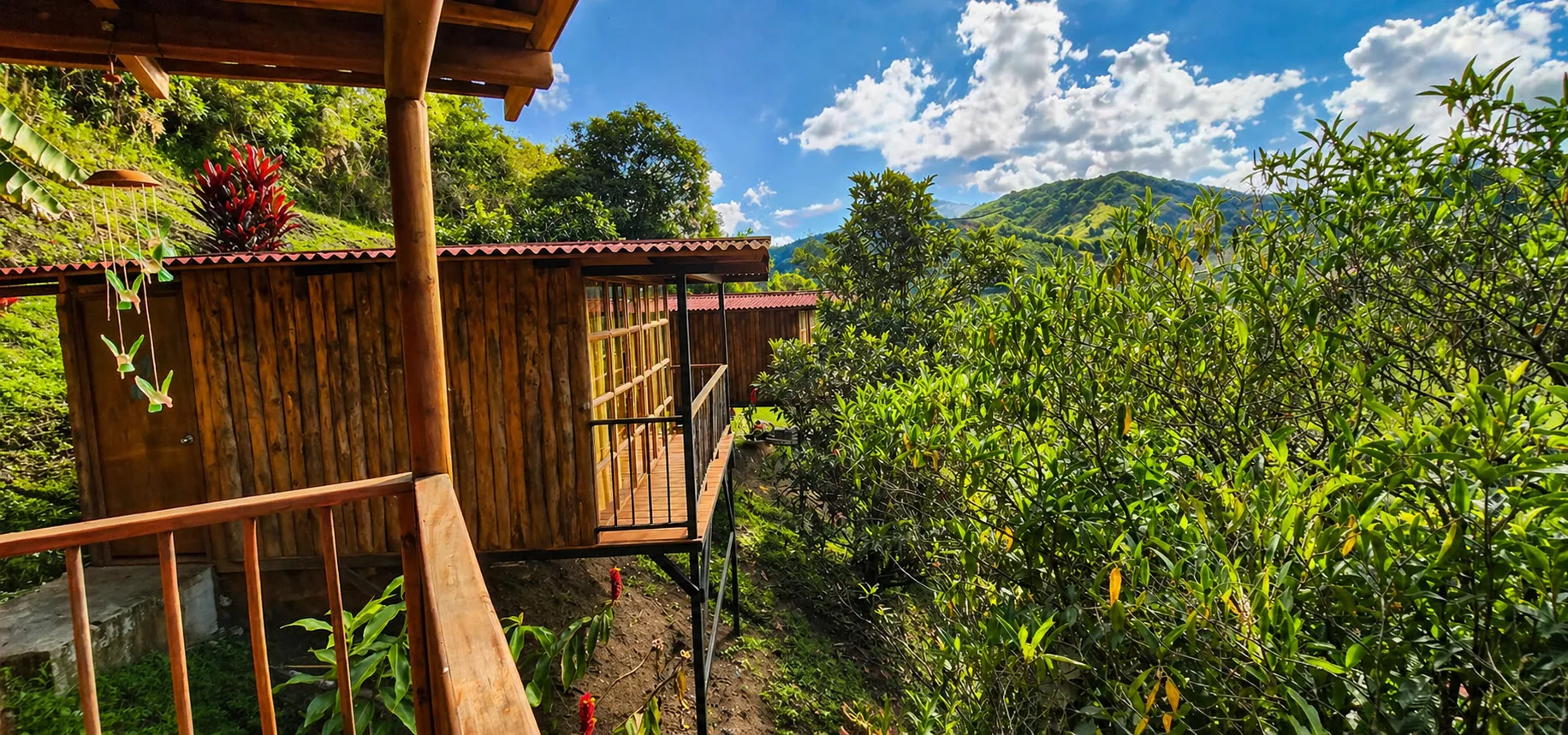
First, it usually starts in the body
For many people, yagé is felt in the body before it is understood in the mind.
After drinking, there may be a quiet waiting period. Some people feel very little at first. Others begin to notice warmth, pressure, heaviness, nausea, tingling, shaking, sensitivity to sound, or changes in the way the room feels.
The body may feel heavier than usual.
Or strangely open.
Some people feel the medicine in the stomach. Some feel it in the chest. Some feel waves moving through the body, almost like the body is trying to release something it has been holding for a long time.
This is not always comfortable.
Nausea, vomiting, diarrhea, sweating, trembling, crying, and physical discomfort can happen. In traditional settings, vomiting is often understood as part of la purga — a release or cleansing process. From a safety perspective, it is also a real physical effect that needs to be respected.
This is one reason preparation matters. Diet, rest, hydration, and disclosure of medications are not side details. They are part of the container. You can read more in our ayahuasca diet preparation guide.
Then the mind may become louder
Ayahuasca can bring thoughts, memories, emotions, and images forward with unusual force.
That does not mean every person sees dramatic visions. Some do. Some do not. Some people experience colors, patterns, animals, ancestors, childhood memories, symbolic scenes, or a sense of being shown parts of their life from a different angle.
Others mostly feel emotions.
Grief may come up. Fear may come up. Love may come up. Shame, anger, tenderness, regret, forgiveness, confusion — all of it can move through.
This is why ayahuasca is not something to approach like entertainment.
It may show you what you have avoided. It may make familiar stories feel less solid. It may bring you close to pain you thought you had already handled.
That can be meaningful.
It can also be hard.
It can feel like losing control — but not always in the way people imagine
Many first-time participants worry about losing control.
That fear is understandable.
Ayahuasca can change your ordinary sense of time, identity, and perception. You may feel like you are not directing the experience. You may realize that the medicine is not responding to your preferences, your image of yourself, or your plan for the night.
This can feel humbling.
Sometimes the work is not about controlling the experience. It is about learning how to breathe, listen, ask for support, and stay present while something difficult moves through.
That is why the setting matters.
A responsible ceremony is not just about drinking medicine. It includes experienced guidance, clear boundaries, preparation, support during the night, and integration afterward. At Camino al Sol, participation requires screening before acceptance, because not everyone is suited for yagé.
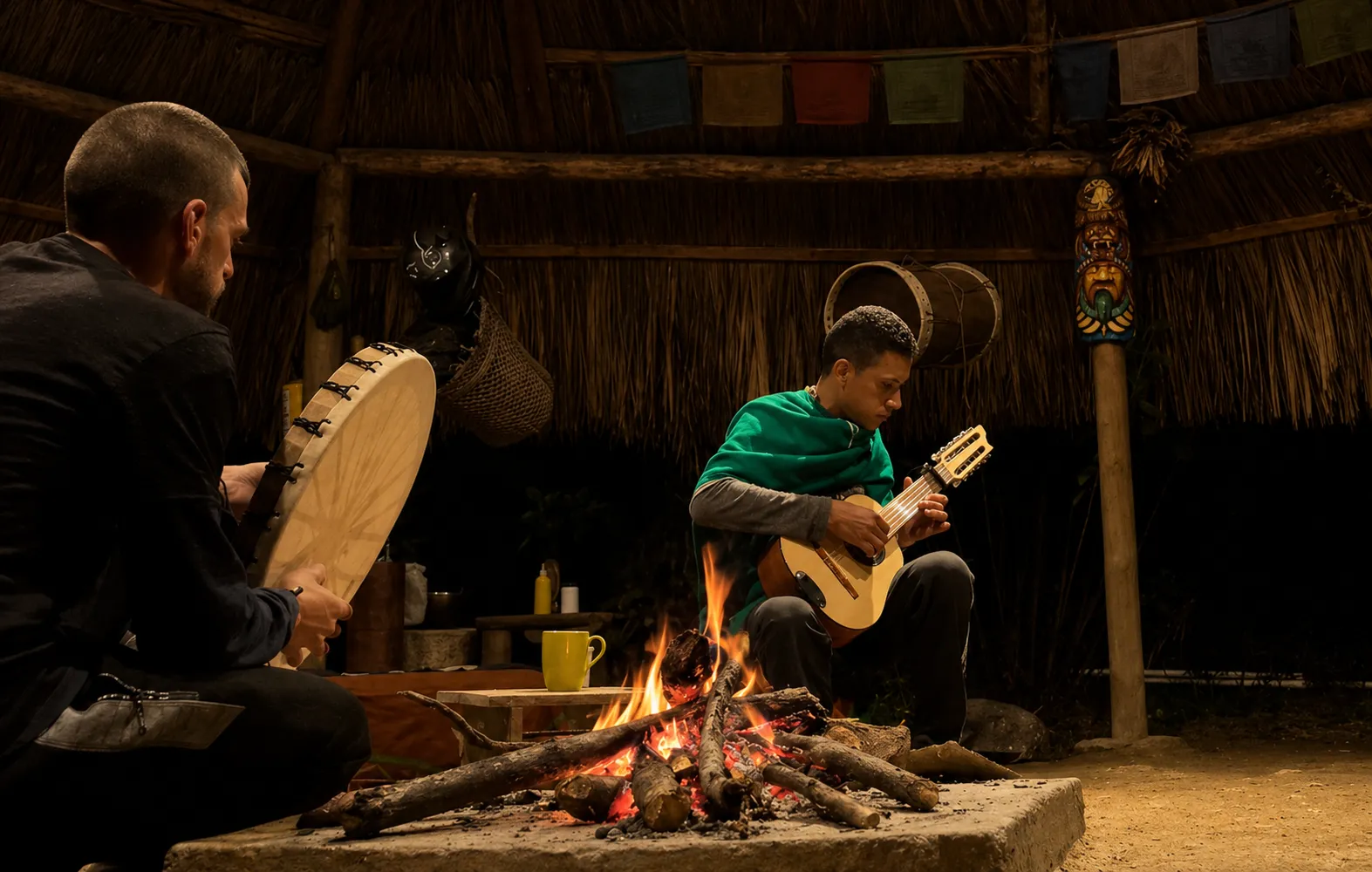
Music can change how the experience feels
In traditional ceremony, music is not background decoration.
Medicine music can guide the space, support emotional release, calm fear, and help participants stay connected when the experience becomes intense. A song may feel like it is speaking directly to something inside you. A rhythm may help you breathe. A voice may become the thread that helps you stay oriented.
Some people describe the music as protective.
Others experience it as a kind of map.
This does not mean music makes the experience easy. But in a well-held ceremony, it can help the night feel less isolated. You are not just alone with your mind. You are inside a container.
Difficult does not always mean bad
A difficult ayahuasca experience is not automatically a bad one.
But difficulty should not be romanticized either.
Fear, confusion, nausea, sadness, and intensity can happen. Some people meet parts of themselves they have avoided for years. Some feel resistance. Some want the experience to stop. Some feel like the medicine is asking more honesty than they expected.
This is where preparation and support become practical, not poetic.
A good retreat should not promise that everything will be beautiful. It should be able to explain how it screens participants, what support is available, what risks exist, and what happens if someone struggles.
For safety information, read our ayahuasca safety guide.
If you are in crisis, experiencing suicidal thoughts, psychosis, chest pain, severe withdrawal, or another urgent medical issue, seek emergency care immediately.
It can also feel quiet, loving, and simple
Not every ceremony is dramatic.
Sometimes ayahuasca feels like a deep quiet. A long exhale. A return to the body. A sense of being held by the earth, the music, the fire, or something older than language.
Some people feel gratitude.
Some feel forgiveness.
Some feel no big vision, but wake up with a clearer sense of what needs to change.
That matters too.
The value of a ceremony is not measured by how intense it was. Sometimes the medicine is subtle. Sometimes the insight is simple. Sometimes the real work begins after the ceremony, when you have to live differently with what you saw.
The next day can feel tender
After ceremony, people may feel open, tired, sensitive, peaceful, raw, emotional, clear, or physically drained.
This is normal.
The nervous system may need rest. The mind may need quiet. The heart may still be processing what happened. This is not the moment to rush back into noise, work, alcohol, conflict, or overstimulation.
Integration is where the experience becomes grounded.
Without integration, even a powerful ceremony can become just another intense memory. With support, reflection, and honest changes, the experience may become part of a longer process of healing and responsibility.
You can learn more on our integration page.
What ayahuasca does not feel like
Ayahuasca is not like taking a recreational drug.
It is not a predictable “high.” It is not a guaranteed mystical experience. It is not a shortcut around grief, therapy, accountability, or time.
It may bring beauty.
It may bring discomfort.
It may bring both.
The better question is not, “Will it feel good?” The better question is, “Am I prepared to meet what may come up, and is this the right setting for me?”
Who should be careful
Some people should not drink ayahuasca.
This can include people with certain heart conditions, psychiatric histories, active psychosis or mania, severe instability, or medication conflicts. Antidepressants, psychiatric medications, stimulants, opioids, Parkinson’s medications, and other substances may create serious risks.
Never stop medication just to attend a ceremony without medical guidance.
At Camino al Sol, we use medical screening before acceptance because safety cannot be assumed from a website, a testimonial, or someone else’s positive experience. Your body, history, medications, and current mental state matter.
So, what does ayahuasca feel like?
It can feel like your body is releasing.
It can feel like your mind is being shown its own patterns.
It can feel like grief moving through the chest, fear rising and passing, music holding you together, or silence becoming very alive.
It can feel beautiful.
It can feel difficult.
It can feel ordinary one moment and impossible to describe the next.
The medicine is not here to perform for you. It asks you to participate.
If you are considering yagé in Colombia, start with preparation, safety, and honesty. Learn about our ayahuasca retreat near Medellín, review the safety guidelines, and when you are ready, apply for screening.
