
Something brought you here.
Maybe depression has made life smaller. Maybe the things that used to help no longer reach the place that hurts. Maybe you have tried therapy, medication, meditation, travel, discipline, silence — and still something feels heavy.
So the question becomes simple.
Can ayahuasca help with depression?
The honest answer is: it may help some people, but it is not a cure, not a replacement for medical care, and not safe for everyone.
That distinction matters.
At Camino al Sol, we work with Yagé, the Colombian name for ayahuasca in the tradition we follow. This is not recreational. It is not something to take because you are desperate for a dramatic experience. It requires respect, screening, preparation, and integration.
This page is educational and does not replace medical advice. Do not stop or change medication without speaking with a qualified medical professional.
If you are in crisis, experiencing suicidal thoughts, psychosis, chest pain, severe withdrawal, or another urgent medical issue, seek emergency care immediately.
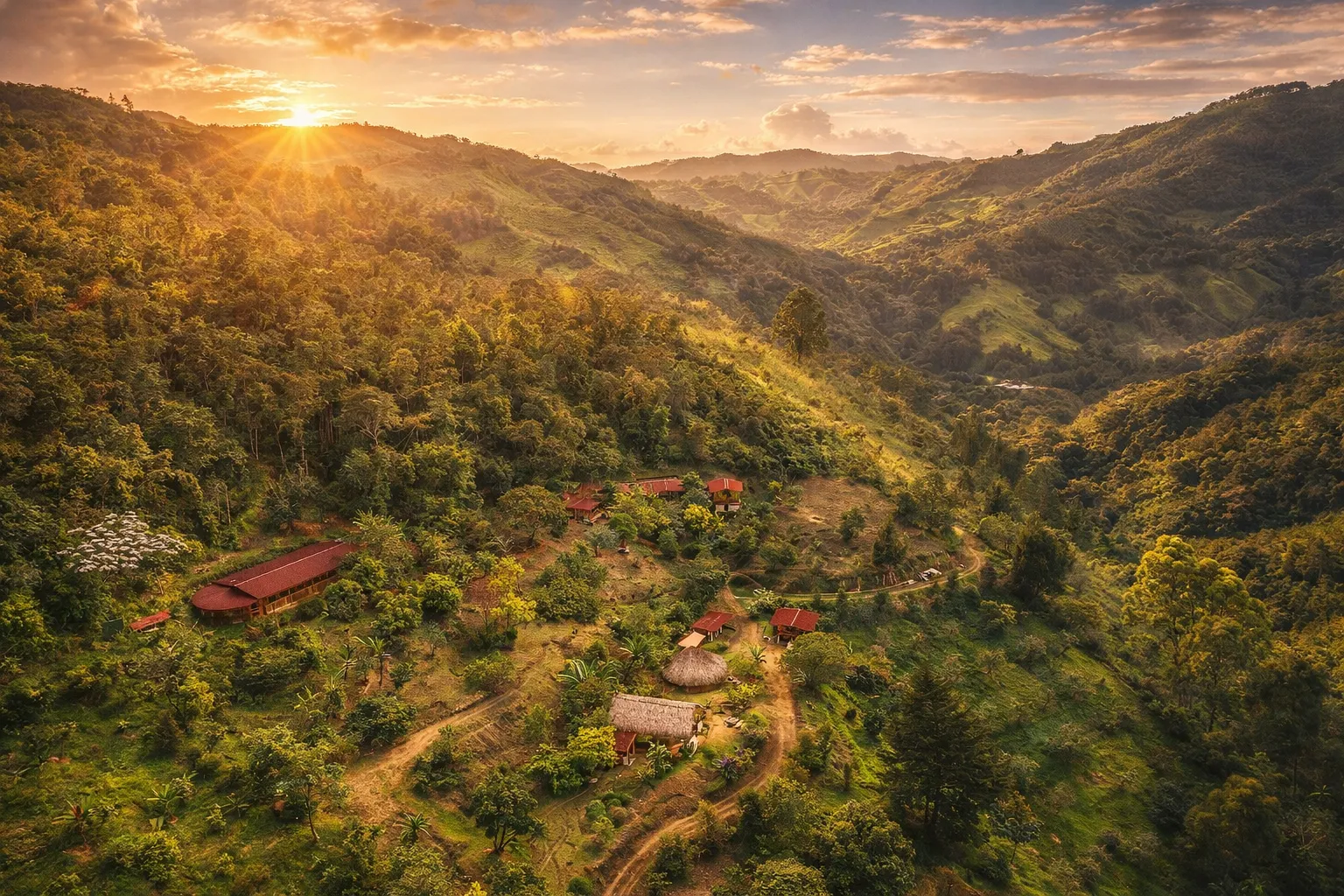
Morning light opens across the valley and retreat grounds.
The honest answer: ayahuasca may help, but it does not “fix” depression
Ayahuasca is being studied for depression because some early clinical research has shown reductions in depressive symptoms after carefully structured administration. One randomized placebo-controlled trial in people with treatment-resistant depression found stronger antidepressant effects in the ayahuasca group than placebo over the first 7 days after dosing.
That is meaningful.
But it is also not the same as saying ayahuasca cures depression.
The strongest research so far is still small. Many studies involve limited sample sizes, controlled clinical settings, and short follow-up periods. So the grounded answer is this:
Ayahuasca may help some people interrupt old patterns, feel buried emotion, see their life differently, or reconnect with meaning. But depression is complex. What helps one person may destabilize another.
That is why responsible centers do not offer instant booking. They screen first.
At Camino al Sol, every applicant goes through a medical and psychological review before acceptance. You can read more about this on our ayahuasca safety page, or begin with the application for screening if you already know this work is calling you.
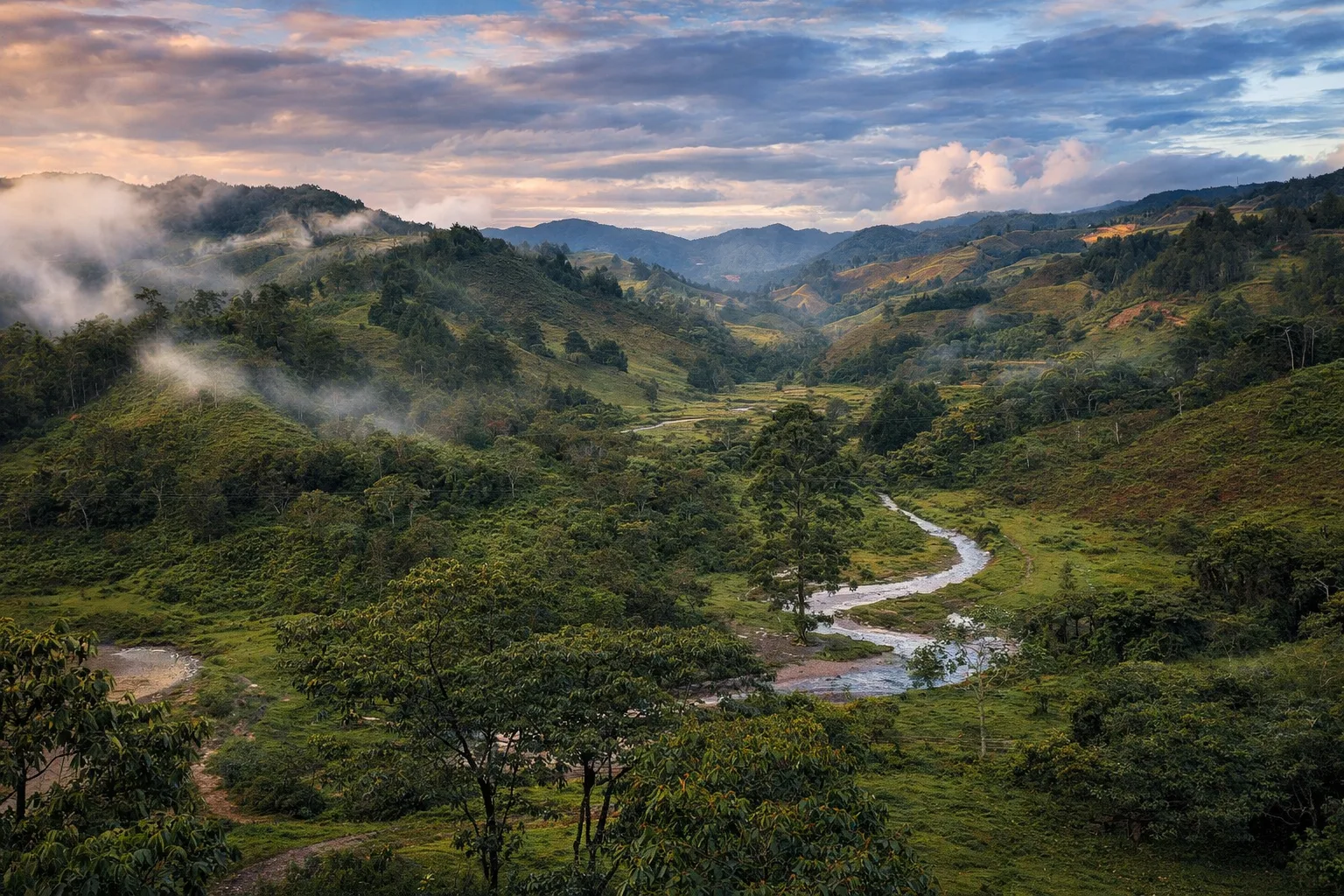
The retreat valley stretches out under morning clouds.
What the research actually says
The most cited clinical study on ayahuasca and depression was a small randomized placebo-controlled trial with 29 people diagnosed with treatment-resistant depression. Participants received either ayahuasca or placebo, and researchers measured depression severity at 1, 2, and 7 days after dosing. The ayahuasca group showed significantly lower depression scores than placebo at each measured point, with higher response rates by day 7.
That does not mean everyone improved. It does not mean the effect would last for months or years. It also does not mean a retreat is the same as a clinical trial.
The trial happened in a controlled setting with screening, psychiatric evaluation, support during the session, and follow-up assessment. Participants with certain risks were excluded, including suicidal risk, personal or family history of bipolar disorder or schizophrenia, pregnancy, neurological disorders, and certain medical conditions.
This is the part many people skip.
The promise of ayahuasca cannot be separated from the container around it.
A ceremony without screening is not the same thing as responsible care. A powerful medicine in the wrong setting can cause harm. A person with depression does not need more chaos. They need clarity, support, and honest review.
At Camino al Sol, the first question is not “Are there spaces available?”
The first question is: Is this appropriate for you?
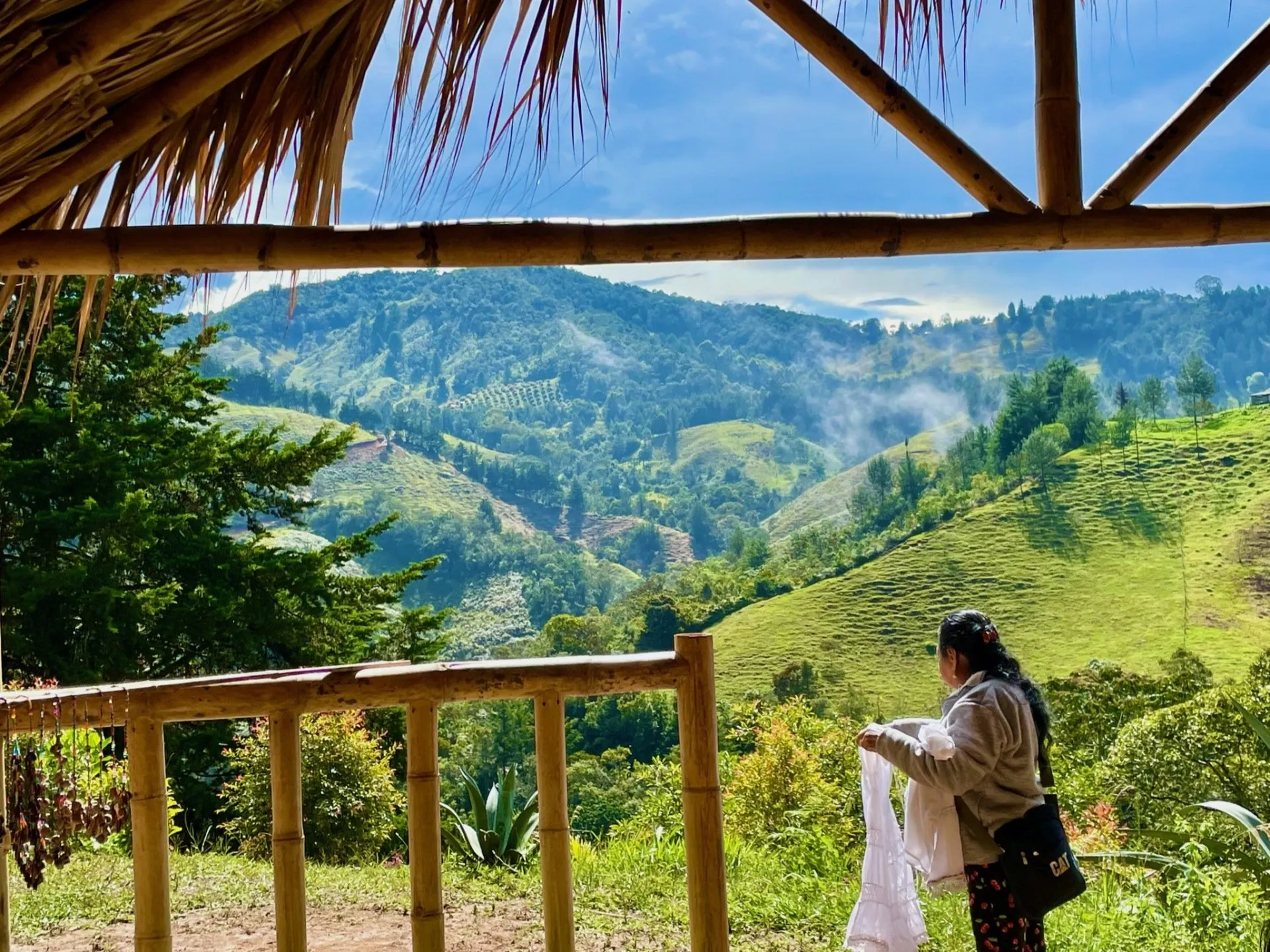
View from the kitchen in Yaogará.
Why some people feel a shift after ayahuasca
Depression can narrow perception.
Life becomes repetitive. The same thoughts return. The same shame, grief, fear, numbness, or exhaustion sits in the body. A person may know, intellectually, what they need to change — but still feel unable to move.
Ayahuasca may create a temporary opening in that pattern.
For some people, the medicine brings emotion to the surface. For others, it reveals the cost of living out of alignment. Some people see grief they have avoided. Some feel love, remorse, forgiveness, or a sense of connection that depression had blocked.
But this is not magic.
It is not always gentle. It is not always beautiful. And insight does not automatically become healing.
Taita Diego says, “The medicine is wise. It knows what to show and what not to show.”
Still, what you do with what is shown matters.
If ayahuasca reveals that your life is asking for change, the real question begins after ceremony. Will you change your relationships? Your habits? Your relationship with your body? Your way of speaking to yourself? Your willingness to ask for support?
This is why integration is not an optional extra. It is where the ceremony becomes life.
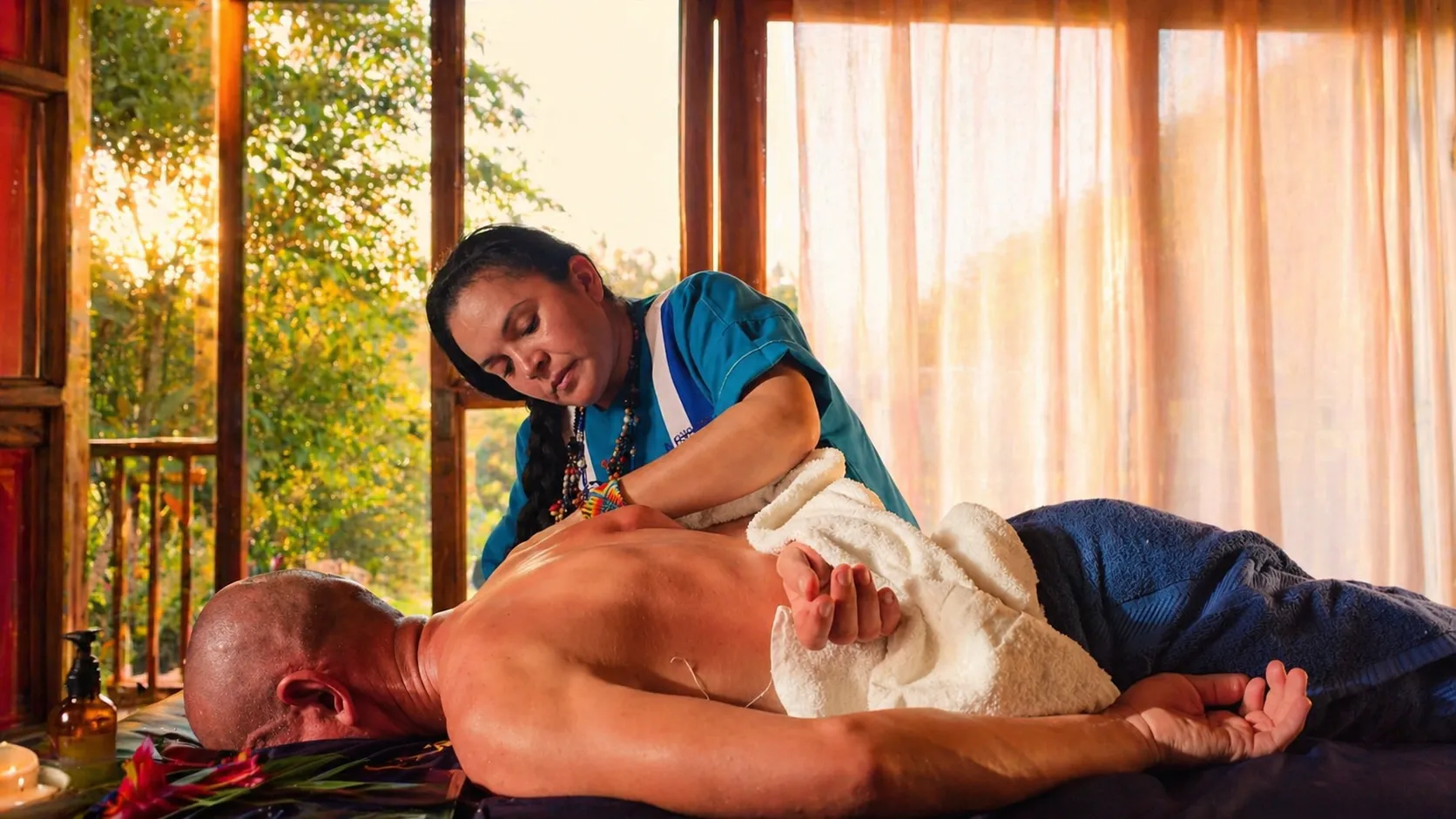
A calm bodywork moment that supports recovery and integration.
Depression is not one thing
This is where it gets specific.
“Depression” can mean many different things. For one person, it may be grief that never had space to move. For another, it may be trauma, burnout, isolation, addiction, hormonal changes, medication effects, chronic illness, or a long-standing mood disorder.
Ayahuasca does not treat all of those in the same way.
Some people arrive with sadness and numbness, but they are stable, supported, and able to prepare responsibly. Others arrive in acute crisis, with suicidal thoughts, psychosis risk, mania history, severe panic, or unstable medication changes. Those are very different situations.
A responsible retreat must be able to say no.
Not as rejection. As care.
There are times when ayahuasca is not the right next step. There are times when therapy, psychiatric support, medical stabilization, addiction treatment, or emergency care must come first.
This is why our process begins with screening. If you are exploring a Yagé or ayahuasca retreat in Colombia, do not only ask about the ceremony. Ask how the retreat reviews depression history, medication use, psychiatric history, and current stability.
The answer matters.
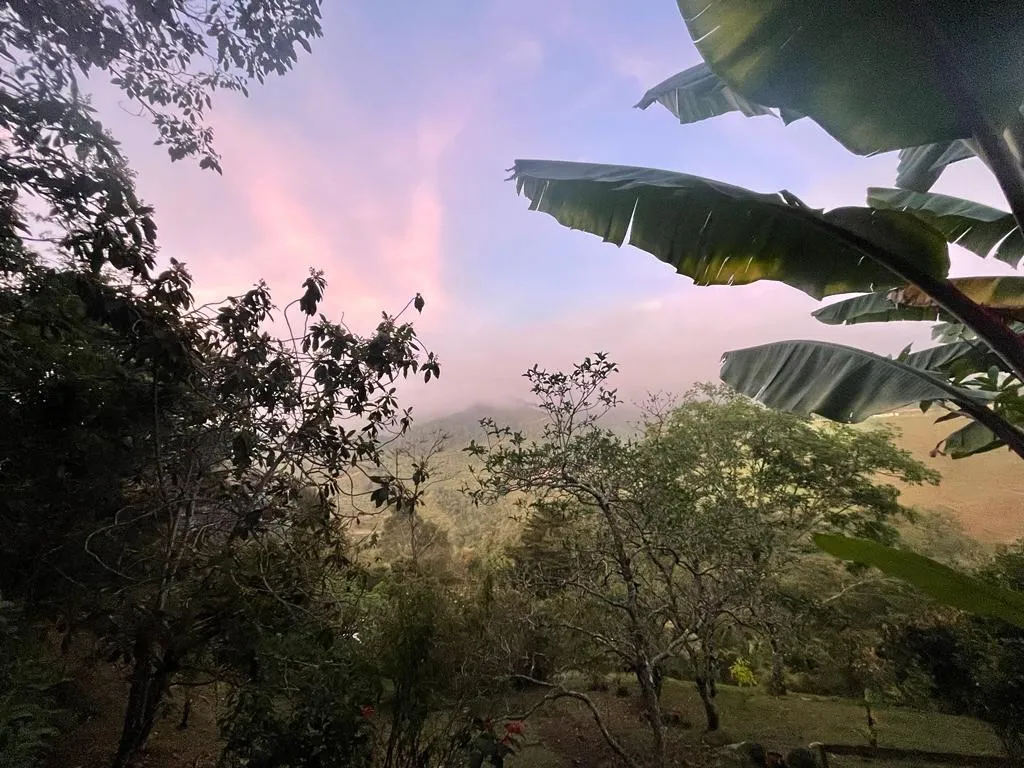
Sunrise colors frame the mountain view from the retreat.
Medication makes this even more important
Many people searching for ayahuasca and depression are taking antidepressants or other psychiatric medication.
This cannot be handled casually.
Ayahuasca contains compounds with monoamine oxidase inhibiting activity, and medical sources warn that it may interact with medications that affect serotonin and other neurotransmitter systems, including antidepressants and psychiatric drugs.
This does not mean everyone on medication can never drink Yagé.
It means nobody should guess.
Do not stop antidepressants on your own. Do not change dosage because a retreat website told you to. Do not hide medication use because you are afraid of being rejected.
The screening process exists to protect you.
At Camino al Sol, medication history is reviewed before acceptance. In some cases, a person may need medical guidance from their own prescribing doctor before a retreat can even be considered. In other cases, the answer may be that this is not the right time.
That answer can be disappointing.
It can also be the safest answer.
If you are preparing seriously, read our ayahuasca diet and preparation guide, but remember that preparation is not only food. It is also honesty.
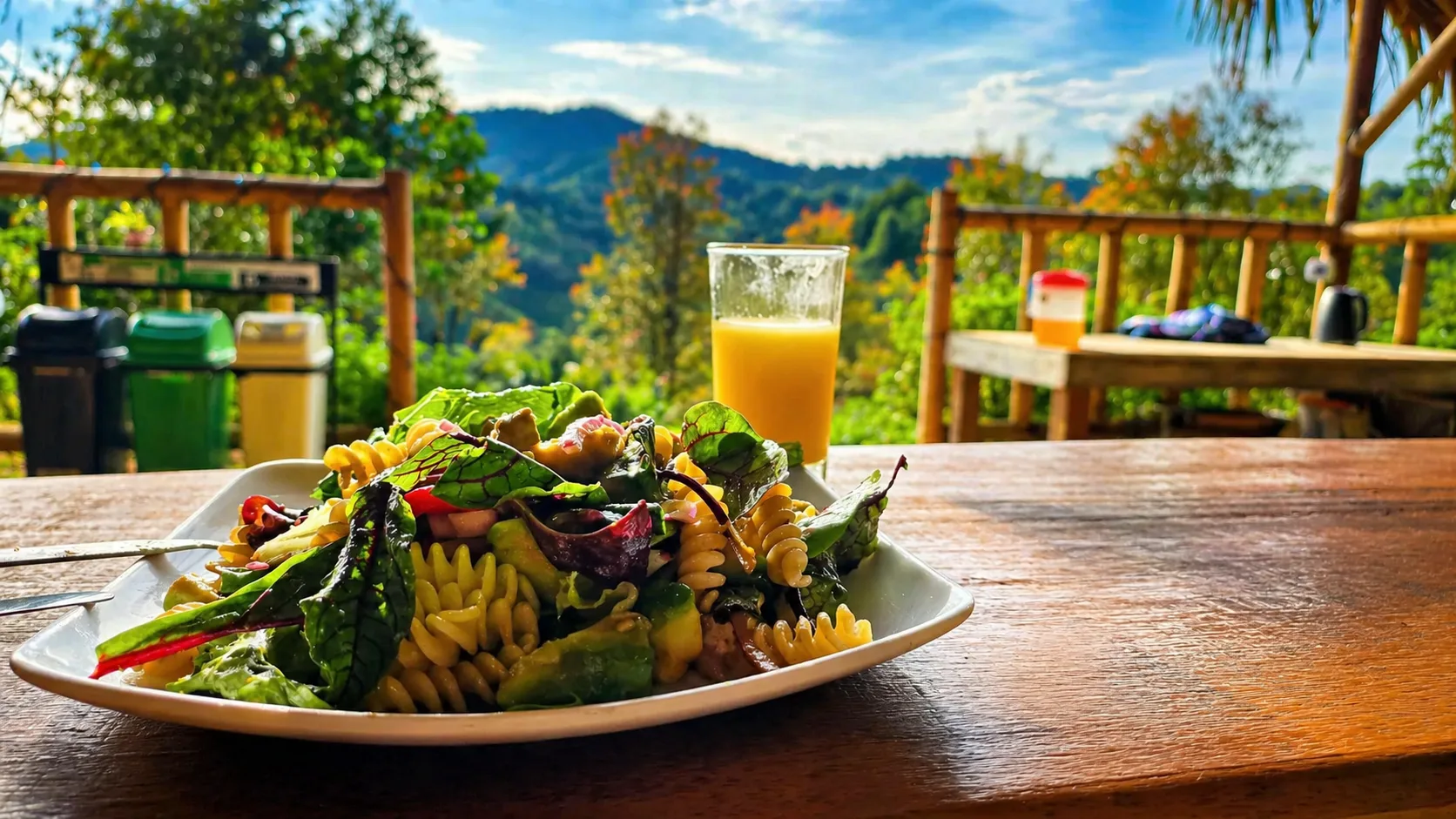
Meals at the retreat look out over the surrounding hills.
When ayahuasca may not be appropriate for depression
Ayahuasca is not safe for everyone.
A person may need to avoid or postpone ceremony if there is active suicidal crisis, psychosis, mania or bipolar risk, severe cardiovascular issues, uncontrolled high blood pressure, seizure history, pregnancy, severe substance withdrawal, or medication interactions that cannot be safely managed. This list is not complete. It is why individual review matters.
Depression can also bring a hidden danger: urgency.
When someone is suffering, they may want one powerful experience to end the pain. That urgency can make risky choices feel reasonable.
But Yagé is not an escape hatch.
It may show you what you are carrying. It may open grief. It may bring memory, fear, or truth to the surface. If your system is already unstable, that intensity may not be helpful.
The right question is not only, “Can ayahuasca help me?”
The better question is: Can I meet this medicine safely, honestly, and with enough support before and after?
If the answer is unclear, screening comes first.
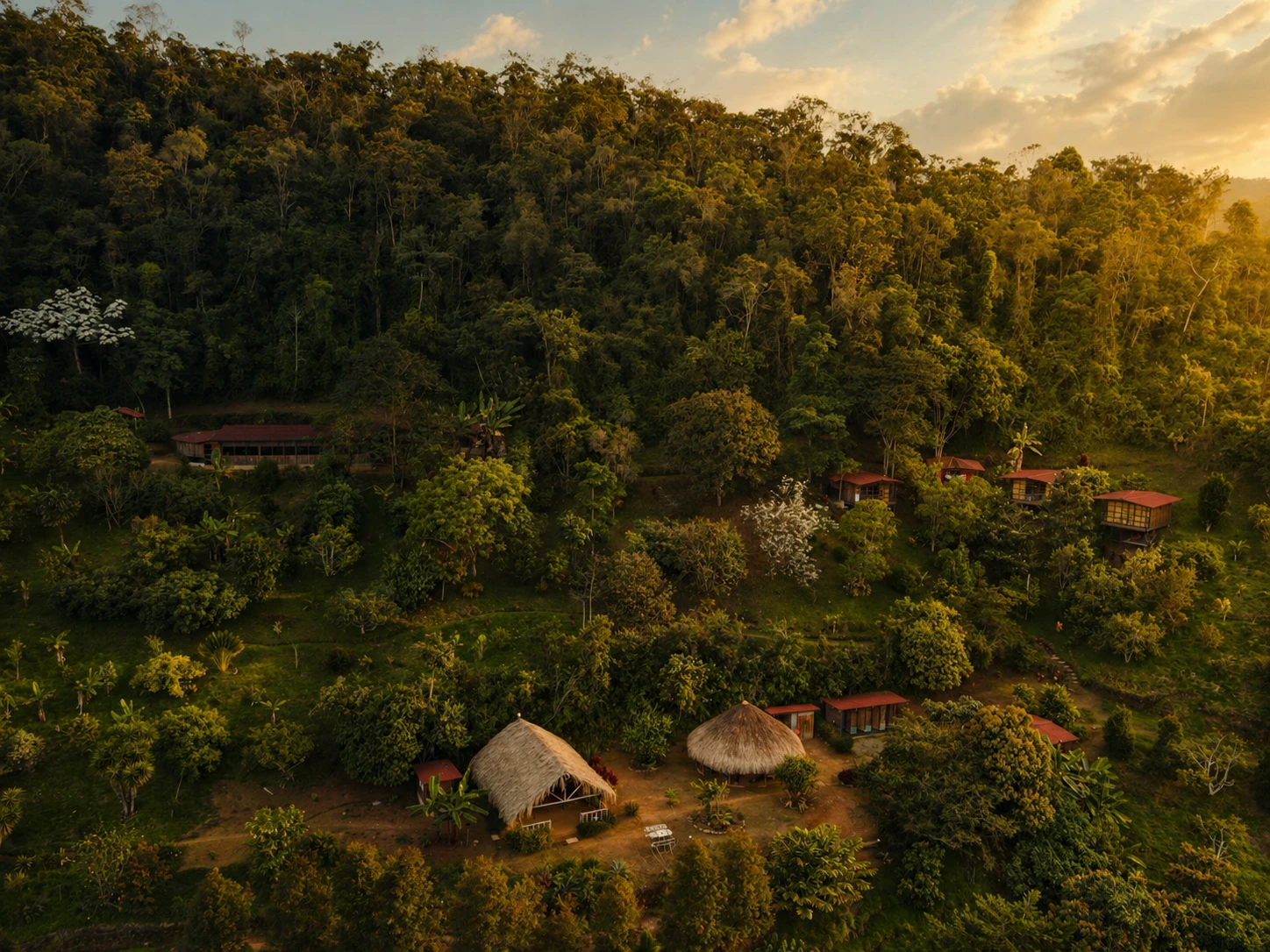
Golden light settles over the reserve and retreat cabins.
The retreat setting matters more than people think
Taita Diego says, “The important thing is where you are going to drink, and who you are going to drink with.”
For depression, this is not a poetic detail. It is practical.
A responsible setting should not rush you into ceremony. It should ask real questions. It should have a screening process. It should be clear about preparation, integration, group size, emergency boundaries, and who holds the ceremony.
At Camino al Sol, our retreats are held near Medellín, Colombia, at Yaugara, a nature reserve and botanical garden in the Andean mountains of Antioquia. The ceremony is held in the Colombian Yagé tradition by Taita Diego Marmolejo, with small groups and application-based acceptance.
This matters because depression often leaves people vulnerable.
You do not need hype. You do not need pressure. You do not need a place that promises transformation in a weekend.
You need a setting that respects the medicine, respects your nervous system, and respects the fact that healing cannot be forced.
If you are comparing options, our ayahuasca retreat near Medellín page explains the retreat setting, dates, and application process.
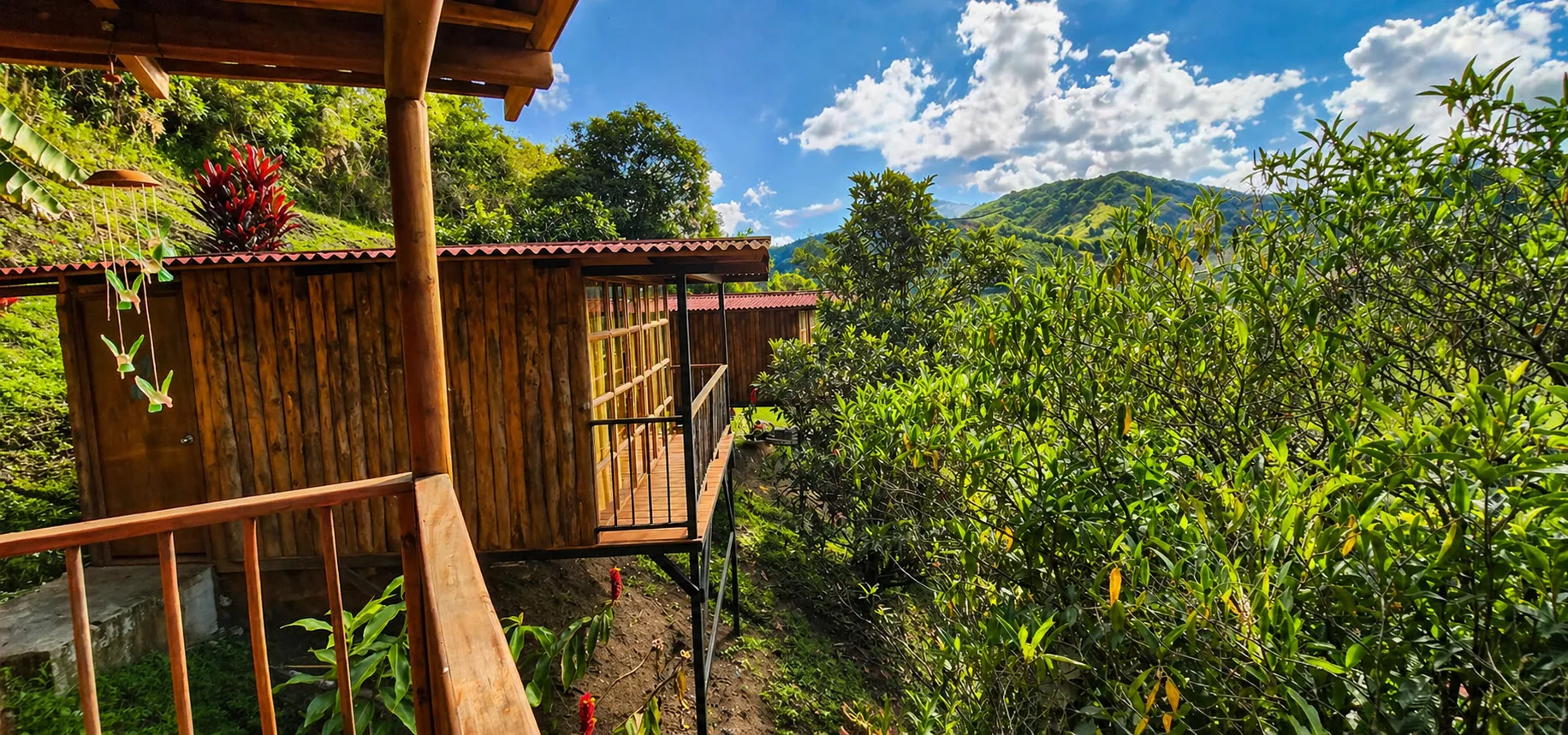
Cabins sit quietly within the forested retreat grounds.
Integration is where the work becomes real
Some people feel lighter after ceremony.
Some feel raw. Some feel confused. Some receive a clear insight, then return home and realize that daily life has not rearranged itself around that insight.
This is normal.
The ceremony is not the finish line. It is a mirror. What happens after is where the work either becomes real or fades into a memory.
For depression, integration may include therapy, honest conversations, sleep, movement, time in nature, reducing isolation, changing harmful patterns, rebuilding discipline gently, or learning how to stay with emotion instead of collapsing under it.
Ayahuasca may show you where life is asking for responsibility.
But it will not live your life for you.
That is the hard truth. It is also the hopeful one. Because healing is not something that happens only in ceremony. It happens in the next morning. The next choice. The next conversation. The next time you do not abandon yourself.
If this resonates, spend time with our integration guide before making any decision.
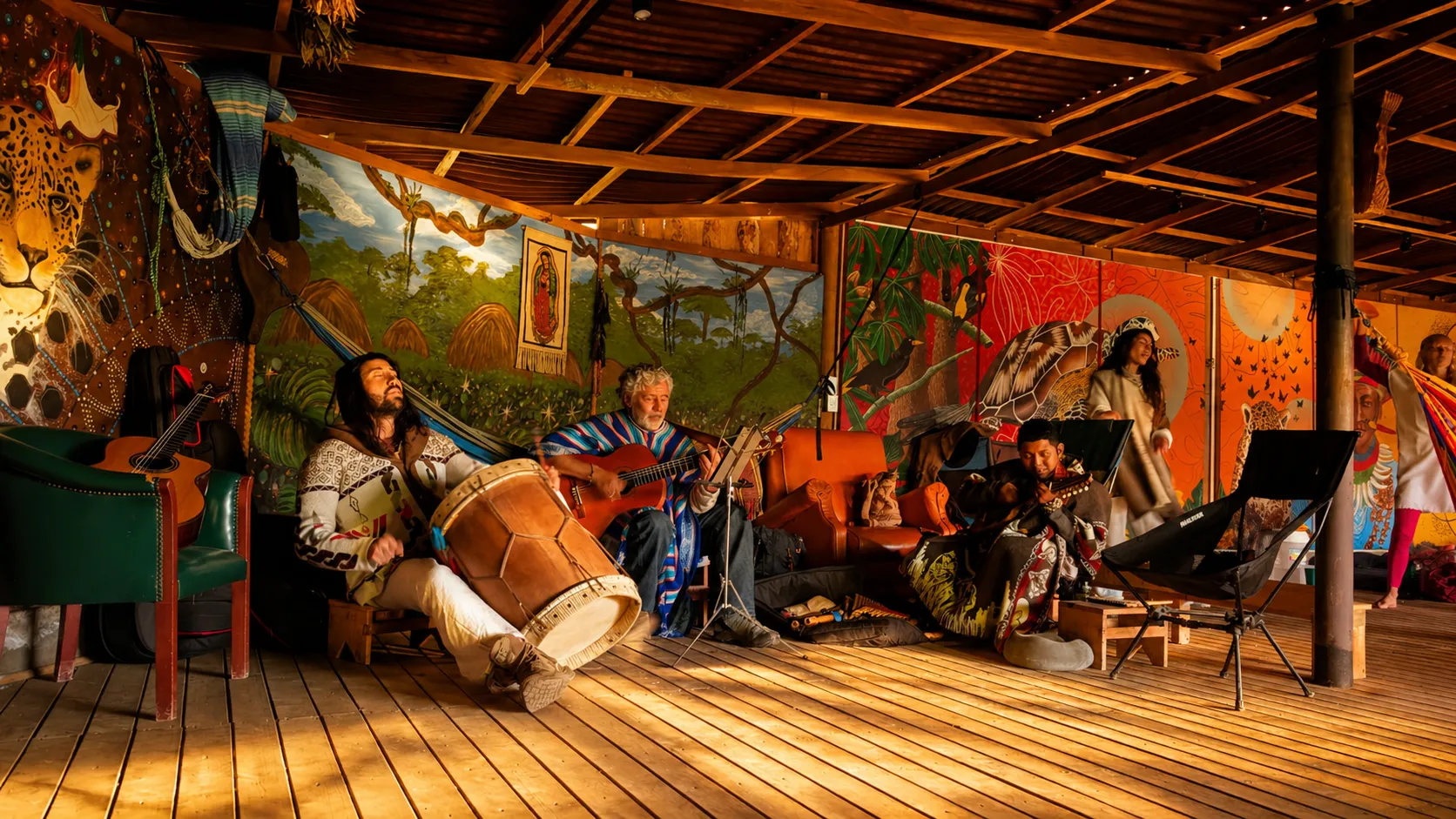
Music as Medicine.
A quieter next step
If you are asking whether ayahuasca can help with depression, the answer is not a simple yes or no.
It may help some people. The early research is promising. But depression is serious, and Yagé is powerful. The safest path is not to chase the strongest experience. It is to move carefully, with respect.
Start with screening.
At Camino al Sol, there is no instant booking. Every applicant is reviewed before acceptance. If this work feels aligned, you can apply for screening here. If you are still learning, begin with our pages on ayahuasca safety and retreats in Medellín.
No pressure.
Just the next honest step.
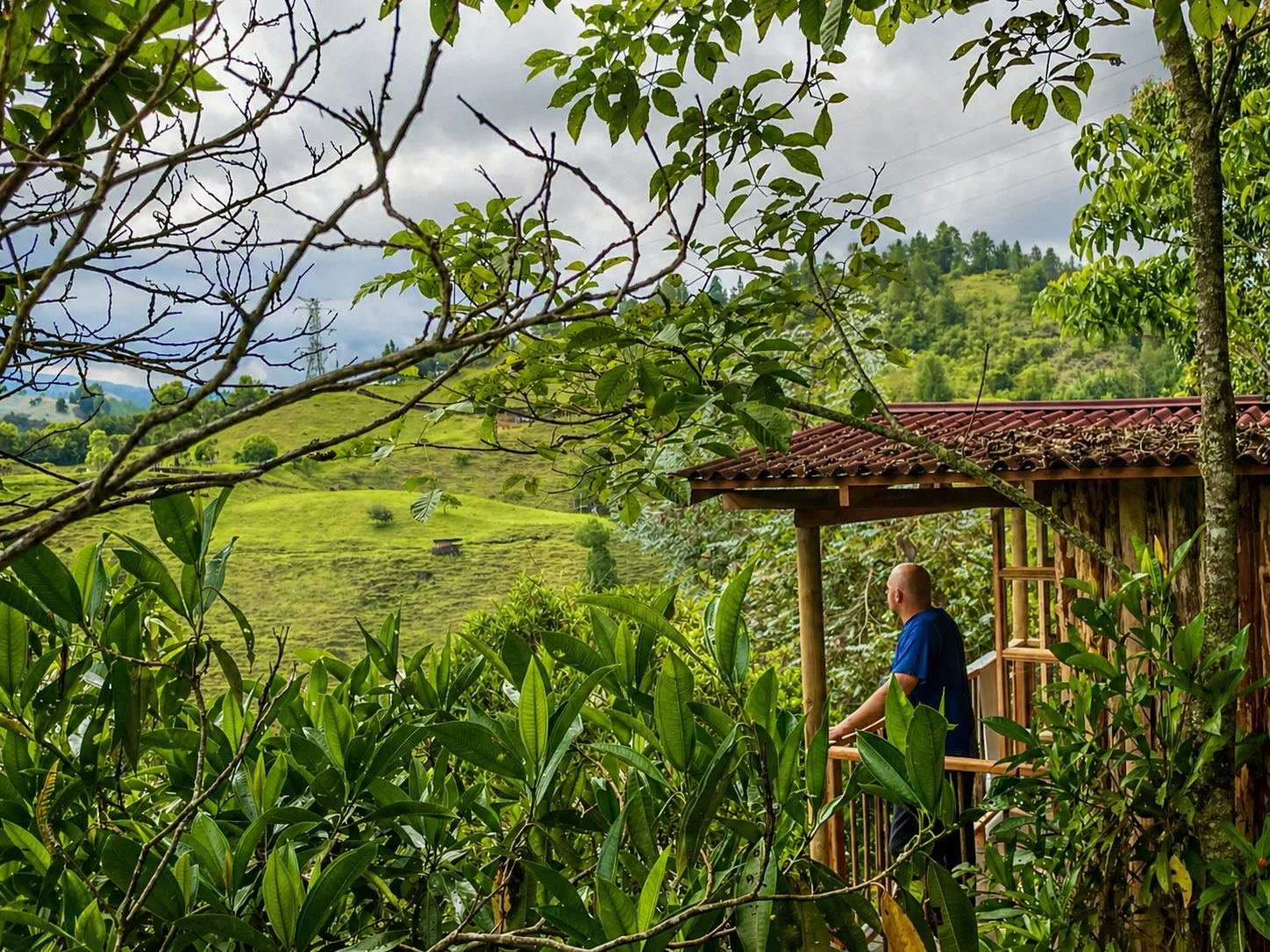
A quiet cabin setting in the hills supports a slower retreat rhythm.
