Stories in relationship
Stories carry memory through voice, setting, humor, gesture, and trust. Future resources can document public-facing narratives while respecting what should remain within community contexts.
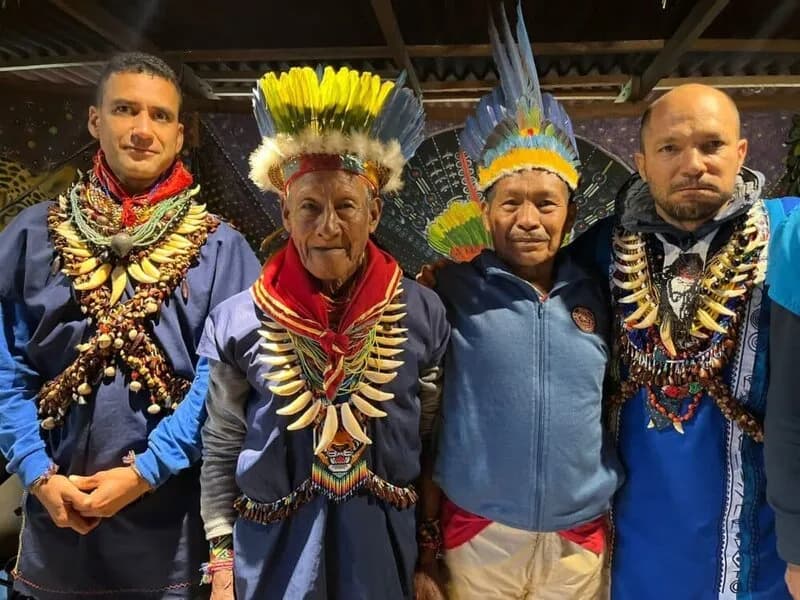
The living archive
Oral tradition is approached as a living archive rather than a library of extractable material. The prototype emphasizes listening, consent, context, and the difference between public education and community-held knowledge.
Stories carry memory through voice, setting, humor, gesture, and trust. Future resources can document public-facing narratives while respecting what should remain within community contexts.
Educational interviews should be framed with permission, clear purpose, attribution, and sensitivity to translation. This page can become a guide for researchers and media collaborators.
Language preserves worldview. Even when translated, oral traditions ask listeners to slow down and consider what may not fit institutional categories.
Continue exploring
A documentary introduction to ceremonial music, listening, rhythm, and the role of song in Colombian yage traditions.
Learn MoreAn institutional overview of cultural preservation, archival care, ecological responsibility, and public education.
Learn MoreA placeholder resource hub for talks, reading lists, documentary notes, interviews, and institutional reference materials.
Learn More